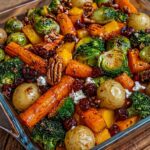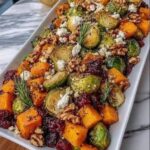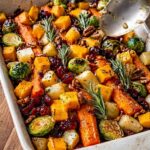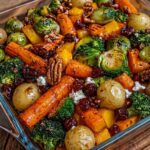

Roasted Butternut Squash with Feta, Cranberries & Walnuts
Prep Time: 20 minutes
Cook Time: 30–40 minutes
Servings: 6 side servings
Total Time: 50–60 minutes
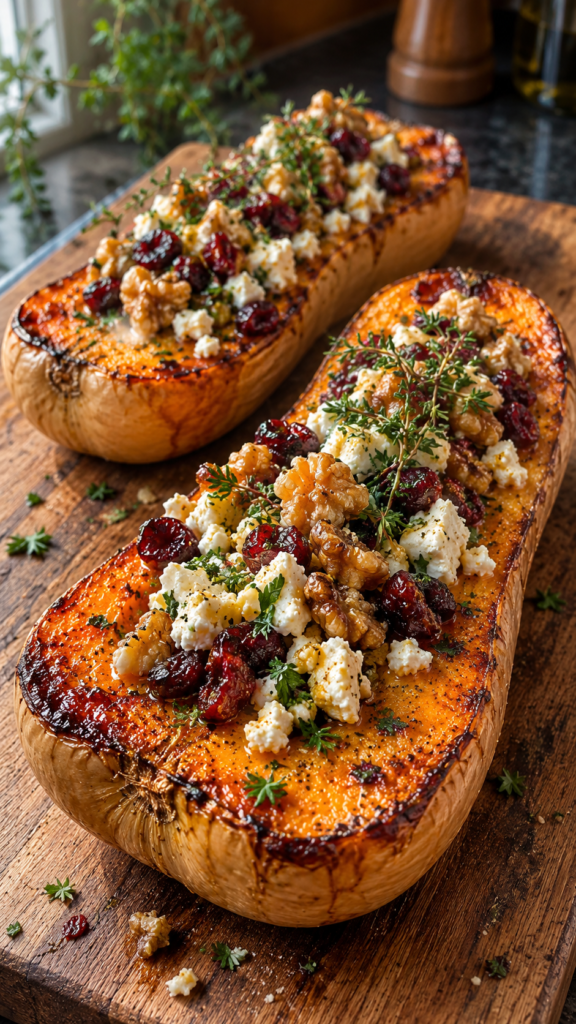
This Roasted Butternut Squash with Feta, Cranberries & Walnuts combines caramelized squash, tangy cheese, chewy dried cranberries, and crunchy toasted walnuts. A simple balsamic dressing brings the ingredients together, while fresh parsley adds color and freshness.
Roasting develops the squash’s natural sweetness and creates golden edges around its tender center. Salty feta balances that sweetness, so the finished dish works beautifully alongside savory main courses. It is equally suitable for an everyday dinner, a holiday spread, or a warm vegetarian lunch with lentils or chickpeas.
The key is to roast the squash with enough space around the pieces, then add the toppings afterward. This keeps the walnuts crisp, the cranberries pleasantly chewy, and the feta in distinct pieces.
Ingredients For roasted butternut squashwith feta
1 large butternut squash, about 3 pounds whole, yielding approximately 2 pounds (900 g) peeled and seeded squash
2 tablespoons olive oil
½ teaspoon fine salt, plus more to taste
¼ teaspoon freshly ground black pepper
½ teaspoon garlic powder
1 teaspoon dried thyme
½ cup walnut halves or pieces (55 g)
⅓ cup dried cranberries (40 g)
4 ounces feta cheese (115 g), crumbled or cut into small cubes
1 tablespoon extra-virgin olive oil
1 tablespoon balsamic vinegar
1 teaspoon pure maple syrup, optional
2 tablespoons chopped fresh parsley
Ingredient note: The recipe uses approximately 900 g of prepared squash. If your squash is considerably larger or smaller, weigh the peeled pieces and adjust the seasoning accordingly. Sweetened dried cranberries are common; unsweetened varieties will give a sharper flavor.
Instructions for roasted butternut squash with feta
Step 1: Preheat the Oven
Preheat your oven to 425°F (220°C), or 400°F (200°C) fan.
Prepare a large rimmed baking sheet by lightly greasing it or lining it with parchment suitable for the temperature. Have a second sheet available if needed.
A shallow metal tray encourages browning because moisture can escape. A deep casserole dish is better used for serving than for roasting the squash.
Step 2: Peel and Cut the Squash
Place the squash on a stable cutting board. Trim a thin slice from the top and bottom, then separate the long neck from the rounded base.
Peel both sections with a sturdy vegetable peeler. Cut the base in half and scoop out the seeds and stringy flesh with a spoon.
Cut the peeled squash into approximately 1-inch cubes. Aim for consistent pieces so they soften at the same rate. Use a sharp knife and keep a flat cut surface against the board whenever possible.
Step 3: Season the Squash
Transfer the squash cubes to a large bowl. Add 2 tablespoons olive oil, the salt, black pepper, garlic powder, and dried thyme.
Toss thoroughly until the cubes are evenly coated. The surfaces should have a light sheen without sitting in excess oil.
Spread the squash over the prepared baking sheet in a single layer. Leave small gaps between pieces and divide between two trays if necessary.
Step 4: Roast Until Tender and Golden
Roast for 20 minutes, then turn the pieces with a wide spatula.
Continue roasting for another 10–20 minutes, until the squash is tender when pierced with a fork and golden around the edges. If using two trays, rotate them and switch their rack positions when turning the squash.
Check smaller pieces toward the end and remove any that finish early. The squash should hold its shape while yielding easily to a fork.
Step 5: Toast the Walnuts
While the squash roasts, place the walnuts in a dry skillet over medium-low heat.
Toast for 3–5 minutes, stirring frequently, until fragrant and slightly darker. Transfer them immediately to a plate to stop the cooking.
Allow them to cool briefly, then roughly chop any large halves. Toasting separately prevents the walnuts from burning during the squash’s longer cooking time.
Step 6: Make the Dressing
In a small bowl, whisk together the remaining tablespoon of olive oil, balsamic vinegar, and optional maple syrup.
Taste before adding the syrup. Roasted squash and dried cranberries already provide sweetness, so you may prefer the dressing without it.
The dressing should taste lightly tangy. It is intended to complement the vegetables rather than soak them.
Step 7: Assemble the Dish
Let the roasted squash rest on the tray for approximately 5 minutes.
Transfer it to a wide serving bowl or platter. Drizzle with the dressing, add the cranberries, and fold gently with a broad spoon.
Scatter the feta and toasted walnuts over the squash. Fold once or twice if desired, taking care not to mash the tender cubes or break up all the cheese.
Step 8: Garnish and Serve
Sprinkle with chopped parsley and a little extra black pepper.
Taste before adding more salt because feta can be quite salty. Serve warm, with a large spoon so each portion includes squash, cheese, cranberries, and nuts.
For the most attractive presentation, reserve a little feta, parsley, and walnuts to scatter over the top just before serving.
Tips for roasted butternut squash with feta
Measure the prepared squash. Whole squash vary in seed cavity size and peeling loss.
Dry the cubes before seasoning. Surface water creates steam and slows browning.
Keep the pieces evenly sized. Very small cubes can become mushy before larger ones cook.
Avoid crowding the tray. Two spacious trays work better than one tightly packed tray.
Let the squash brown before turning. Frequent stirring can prevent a golden surface from developing.
Add cheese and nuts after roasting. This preserves their contrasting textures.
Dress lightly. Too much dressing can soften the browned edges.
Handle gently. Fully cooked squash is tender and can break apart if vigorously tossed.
Recipe Notes and Variations
Use another squash: Peeled pumpkin or a firm winter squash can replace butternut squash. Cooking times may differ, so check tenderness rather than relying only on the clock.
Change the nuts: Pecans offer a slightly sweeter flavor and work well in the same quantity. For a nut-free variation, use toasted pumpkin seeds, checking labels where allergies are a concern.
Try a different cheese: Soft goat cheese makes a creamy, tangy alternative. Add it in small pieces after the squash has cooled slightly.
Make it vegan: Omit the feta or use a suitable dairy-free alternative. Taste the finished dish and adjust the salt or vinegar as needed.
Add protein: Fold in cooked lentils or well-drained chickpeas to make a more substantial vegetarian meal. Increase the dressing slightly if the additional ingredients make the dish feel dry.
Change the herbs: Chopped rosemary can replace thyme in a smaller quantity. Fresh mint can replace some of the parsley for a brighter finish.
Storage and Reheating for roasted butternut squash with feta
Refrigerate leftovers within 2 hours in a shallow, airtight container. Use within 3–4 days.
For preparation ahead, store the roasted squash separately from the walnuts, feta, and parsley. This keeps the nuts from softening and allows the squash to reheat more evenly.
Reheat the squash on a baking sheet at 375°F (190°C) for approximately 10–15 minutes, until hot throughout. Reheated leftovers should reach 165°F (74°C). Add the reserved toppings afterward.
Freeze plain roasted squash for up to 2 months for best quality. Its texture will be softer after thawing. Freezing the fully assembled dish is less successful because the toppings lose their fresh texture.
https://ketosl.com/amazing-maple-balsamic-roasted-vegetables/
Serving Ideas for roasted butternut squash with feta
Serve this dish alongside roast chicken, turkey, baked salmon, or grilled meat. The sweet squash and tangy toppings complement simply seasoned proteins.
For a vegetarian lunch, spoon it over quinoa or lentils. A handful of arugula underneath adds a peppery contrast; let the squash cool slightly first if you want the greens to remain crisp.
It also makes a colorful addition to a holiday table alongside green vegetables and a savory main course. Leftovers work well in grain bowls the next day.
Estimated Nutritional Information for roasted butternut squash with feta
Per serving, based on six side servings and including the optional maple syrup:
Calories: Approximately 280
Protein: 6 g
Carbohydrates: 29 g
Fat: 17 g
Saturated Fat: 4 g
Fiber: 4 g
Sodium: Approximately 400 mg
These are estimates. Feta brands, cranberry sweetening, and the amount of squash used will affect the final values.
Nutrition Benefits
Butternut squash contributes fiber and beta-carotene, which the body can convert to vitamin A. Walnuts and olive oil provide mostly unsaturated fats, while feta contributes calcium and some protein.
The dish contains carbohydrates from squash and cranberries. It is a vegetable side rather than a high-protein main course; beans, lentils, fish, or chicken can help make it a fuller meal.
Frequently Asked Questions for roasted butternut squash with feta
Can I use precut squash?
Yes. Use approximately 2 pounds (900 g), and cut any oversized pieces to match the others.
Can I use frozen squash?
Yes, although it may turn out softer. Roast from frozen, leave plenty of space, and adjust the cooking time.
Why is my squash mushy?
It may be overcooked, cut too small, or crowded during roasting. Turn gently and remove it when just tender.
Can I serve this cold?
Yes. Refrigerate promptly after preparing, then serve chilled as a squash salad.
Do the cranberries need soaking?
Usually not. If unusually hard, soak briefly in warm water, drain, and pat dry before adding.
FOR COOK BOOK
http://eliteproteinkitchen.gumroad.com/l/Recipes