
# Garlic Herb Butter Steak with Rosemary
Prep Time: 15 minutes
Resting Time: 20–30 minutes
Cook Time: 15–20 minutes
Servings: 4
## Description
Garlic Herb Butter Steak with Rosemary is a rich, restaurant-style steak recipe featuring thick, juicy steaks with a deeply browned crust, plenty of fresh garlic, rosemary, parsley, and melting herb butter.
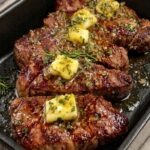
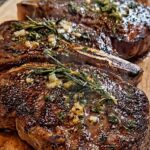
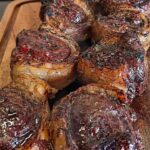
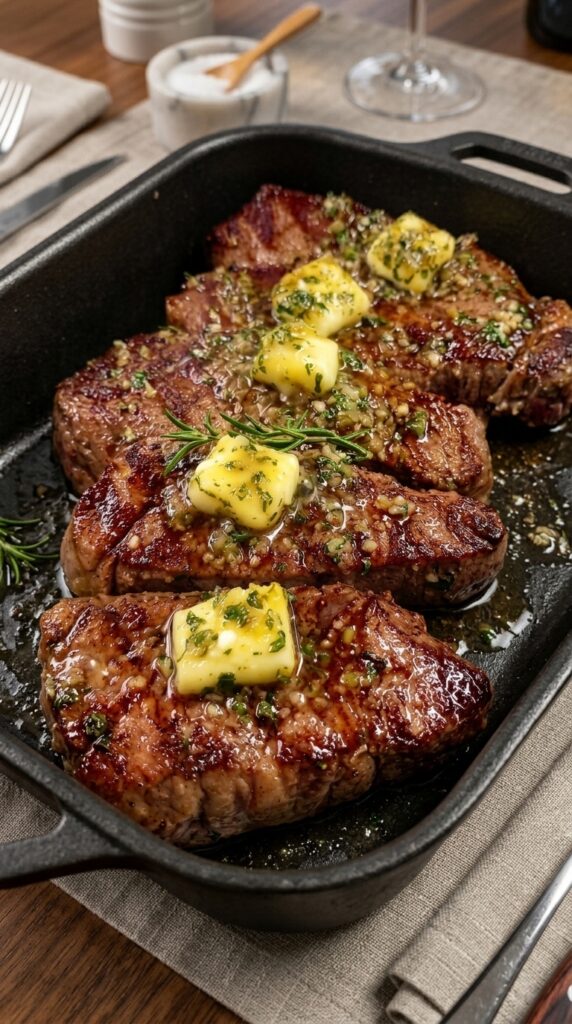
The dish in the photo appears to feature several thick steaks seared until beautifully caramelized, then finished in the same pan with garlic-herb butter. Small cubes of seasoned butter melt slowly over the hot steaks, mixing with the natural beef juices and minced garlic to create a glossy, flavorful pan sauce. Fresh rosemary adds a warm, aromatic flavor that pairs especially well with beef.
This recipe works particularly well with New York strip steaks, although ribeye, sirloin, or filet mignon can also be used. The secret to getting that dark golden-brown exterior while keeping the center juicy is to thoroughly dry the steaks, use a very hot heavy skillet, and avoid moving the meat too much during the initial sear.
The garlic herb compound butter is another important part of the recipe. Instead of simply adding plain butter, softened butter is mixed with garlic, parsley, rosemary, thyme, and a touch of lemon. A cube is placed on each steak while it is still piping hot, allowing the butter to melt naturally into every browned ridge and crevice.
## Ingredients
### For the Steaks
– 4 New York strip steaks, about 8–10 oz each and 1–1½ inches thick
– 1½ tablespoons olive oil or avocado oil
– 2 teaspoons kosher salt
– 1½ teaspoons freshly cracked black pepper
– 1 teaspoon garlic powder
– ½ teaspoon onion powder
– ½ teaspoon smoked paprika
– 1 tablespoon unsalted butter
– 4 garlic cloves, finely minced
– 3 sprigs fresh rosemary
– 3 sprigs fresh thyme
– 1 tablespoon finely chopped fresh parsley
### For the Garlic Herb Butter
– ½ cup unsalted butter, softened
– 3 garlic cloves, finely minced
– 1 tablespoon chopped fresh parsley
– 1 teaspoon finely chopped rosemary
– 1 teaspoon fresh thyme leaves
– ½ teaspoon salt
– ¼ teaspoon freshly ground black pepper
– 1 teaspoon fresh lemon juice
– ½ teaspoon lemon zest, optional
## Instructions
Step 1: Prepare the garlic herb butter first. Place the softened butter in a small bowl and add the minced garlic, parsley, rosemary, thyme, salt, black pepper, lemon juice, and optional lemon zest.
Step 2: Mix everything thoroughly with a spoon until the herbs and garlic are evenly distributed throughout the butter.
Step 3: Transfer the butter mixture onto a piece of parchment paper or plastic wrap. Shape it into a small log, wrap it tightly, and refrigerate for approximately 20–30 minutes. Once firm, cut it into 4 thick cubes or rounds.
Step 4: Remove the steaks from the refrigerator approximately 20–30 minutes before cooking. Letting them lose some of their refrigerator chill helps them cook more evenly.
Step 5: Pat every side of each steak thoroughly dry using paper towels. This step is very important because a dry steak develops a much stronger browned crust than a wet steak.
Step 6: Rub the steaks lightly with olive oil. Season both sides generously with kosher salt, cracked black pepper, garlic powder, onion powder, and smoked paprika.
Step 7: Gently press the seasoning into the meat so it stays attached during cooking.
Step 8: Place a large cast-iron skillet or heavy-bottomed skillet over medium-high to high heat. Let it preheat for several minutes. The skillet should be extremely hot before the steaks are added.
Step 9: Carefully place the steaks into the skillet. Make sure they are not overlapping. If your skillet is not large enough to hold all four steaks without crowding, cook them in two batches.
Step 10: Leave the steaks completely undisturbed for approximately 3–4 minutes. Moving them too soon can prevent a proper crust from developing.
Step 11: Once the first side is deeply browned, flip each steak with stainless-steel tongs. Sear the second side for another 3–4 minutes.
Step 12: If the steaks have thick fatty edges, use the tongs to hold those edges against the skillet for approximately 30–45 seconds. This helps render and brown the fat.
Step 13: Reduce the heat to medium. Add 1 tablespoon of butter, the minced garlic, rosemary sprigs, and thyme sprigs to the skillet.
Step 14: Allow the butter to melt and foam around the steaks. As soon as the garlic becomes fragrant, slightly tilt the pan so the melted butter collects at one side.
Step 15: Using a large spoon, repeatedly scoop the hot garlic-herb butter and pour it over the steaks. Continue basting for approximately 1–2 minutes.
Step 16: Check the internal temperature of the steaks using an instant-read meat thermometer. For medium-rare, remove them when they reach approximately 125–130°F. For medium, remove them around 135–140°F. The temperature will continue rising slightly while they rest.
Step 17: Turn off the heat. Place one chilled cube or thick slice of prepared garlic herb butter directly on top of each steak.
Step 18: Sprinkle chopped fresh parsley and a little extra minced garlic around the steaks. Spoon some of the hot pan juices over each piece.
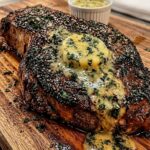
Step 19: Allow the steaks to rest for approximately 8–10 minutes. During this time, the herb butter will slowly melt across the steaks, creating the glossy garlic-butter coating shown in the photo.
Step 20: Spoon the remaining garlic-herb pan juices over the steaks immediately before serving. Garnish with fresh rosemary if desired.
## Notes
New York strip is an excellent choice for this recipe because it offers a good combination of tenderness, beefy flavor, and enough fat to remain juicy during high-heat cooking.
Ribeye can be substituted if you prefer even more marbling and richness. Sirloin is a leaner and generally more economical option.
Try to choose steaks of approximately the same thickness so they finish cooking at roughly the same time.
The butter should be softened when preparing the compound butter but refrigerated afterward. Starting with cold herb butter allows it to melt slowly when placed on the hot meat rather than disappearing immediately into the pan.
Fresh herbs give the most aromatic result, but dried herbs can be substituted when necessary. Use roughly one-third as much dried herb as fresh.
## Tips for Perfect Garlic Butter Steak
Drying the steak properly is one of the most important steps. Moisture creates steam, while a dry surface encourages browning.
Use a heavy skillet capable of holding heat. Cast iron works especially well because its temperature does not fall dramatically when the cold meat is added.
Do not overcrowd the pan. Crowding traps steam around the meat and makes browning more difficult.
Use freshly cracked black pepper rather than very finely ground pepper for a rustic steakhouse appearance and more noticeable pepper flavor.
Add fresh garlic near the end of cooking rather than at the beginning. Garlic can burn quickly in an extremely hot skillet and develop an unpleasant bitter flavor.
Once the butter is added, reduce the heat slightly. Butter contains milk solids that can burn if exposed to very high temperatures for too long.
Always use a thermometer when precise doneness matters. Steak cooking times vary considerably depending on thickness, starting temperature, pan type, and heat level.
Resting is essential. Cutting the steak immediately after cooking causes much more of its juice to run onto the plate.
For an even more intense herb flavor, prepare the compound butter the night before. Refrigerating it overnight allows the garlic and herbs to flavor the butter more thoroughly.
## Storage
Allow leftover steak to cool before transferring it to an airtight container.
Refrigerate cooked steak for up to 3–4 days.
Store any remaining garlic herb butter separately in an airtight container for approximately 1 week in the refrigerator.
Compound butter can also be frozen. Wrap it tightly and freeze for up to 2–3 months. Slice off individual portions whenever you need them.
For reheating, place the steak in a skillet over low heat with a teaspoon of butter or a splash of beef broth. Cover and warm gently until heated through.
You can also reheat the steak in a low-temperature oven at about 275°F until warmed. High heat can quickly turn previously cooked steak tough and dry.
## Serving Ideas
These garlic herb butter steaks pair beautifully with creamy mashed potatoes. Spoon some of the buttery pan juices over the potatoes for extra flavor.
Other excellent sides include roasted baby potatoes, garlic Parmesan potatoes, crispy fries, baked potatoes, sautéed mushrooms, roasted asparagus, green beans, grilled zucchini, creamed spinach, or roasted broccoli.
For a lighter meal, serve the steak with a simple green salad dressed with lemon vinaigrette.
Garlic bread also works particularly well because it can be used to soak up the flavorful garlic-herb butter remaining on the plate.
For a steakhouse-style dinner, serve each steak with mashed potatoes, asparagus, and sautéed mushrooms.
## Nutritional Information
Approximate nutritional information per serving, based on four servings:
Calories: 620–720
Protein: 48–55 g
Total Fat: 45–53 g
Saturated Fat: 19–23 g
Carbohydrates: 2–4 g
Fiber: Less than 1 g
Sugar: Less than 1 g
Sodium: 700–900 mg
Iron: Approximately 4–5 mg
Potassium: Approximately 600–750 mg
These values are estimates. Nutrition can vary considerably depending on the size and cut of steak and how much garlic herb butter is served.
## Nutrition Benefits
### High in Protein
Steak provides a substantial amount of complete protein. Protein contains the essential amino acids needed for building and maintaining muscles and other body tissues.
A serving of this steak can provide roughly 48–55 grams of protein, depending on the steak size.
### Good Source of Iron
Beef naturally provides heme iron. This type of iron is generally absorbed efficiently by the body and contributes to normal red blood cell production and oxygen transport.
### Provides Vitamin B12
Beef is naturally rich in vitamin B12, which contributes to normal nervous-system function and red blood cell formation.
### Source of Zinc
Steak contains zinc, an essential mineral involved in many normal biological processes, including immune function and protein synthesis.
### Provides Selenium
Beef also supplies selenium, an essential trace mineral that contributes to normal antioxidant and thyroid-related processes.
### Garlic and Fresh Herbs
Fresh garlic, rosemary, parsley, and thyme contribute additional flavor, meaning the steak does not require sugary marinades or heavily processed sauces.
Because both steak and compound butter can contribute substantial calories and saturated fat, portion size can be adjusted according to individual dietary needs.
## Frequently Asked Questions
### What type of steak works best for this recipe?
New York strip steak is an excellent option because it develops a beautiful crust while remaining juicy inside. Ribeye is another excellent choice if you want additional marbling and richness.
### Can I use sirloin steak?
Yes. Sirloin works very well and is usually leaner than ribeye or New York strip. Because it contains less fat, take extra care not to overcook it.
### Why should I pat the steak dry?
Surface moisture turns into steam when it reaches the hot skillet. Drying the steak helps it make direct contact with the pan, producing a stronger caramelized crust.
### Do I need a cast-iron skillet?
No, but cast iron works exceptionally well. A heavy stainless-steel skillet can also produce excellent results.
### How do I prevent the garlic from burning?
Do not add finely minced garlic at the beginning of the high-heat searing process. Add it after reducing the heat and adding butter.
### How can I tell when my steak is medium-rare?
Use an instant-read thermometer. Remove it from the heat around 125–130°F and allow it to rest. Carryover heat will usually bring it close to the desired final temperature.
### Why does the steak need to rest?
Resting helps retain more moisture when the steak is sliced. It also gives the compound butter time to melt slowly over the surface.
### Can I prepare the herb butter ahead?
Yes. Garlic herb butter can be prepared several days in advance and kept refrigerated. It is also freezer-friendly.
### Can I cook these steaks in the oven?
Yes. For very thick steaks, sear both sides in an oven-safe skillet and then transfer the skillet to a 400°F oven. Cook until the steaks reach your preferred internal temperature.
### What gives the steak the glossy finish shown in the picture?
The glossy appearance comes primarily from melted butter mixed with beef juices, garlic, and herbs. Basting the steaks with this mixture and placing compound butter on top immediately before resting creates that rich, shiny finish.
### What can I do with leftover steak?
Thinly slice leftover steak and use it in sandwiches, wraps, steak-and-egg breakfasts, salads, quesadillas, pasta, or rice bowls. It is especially good served cold or gently reheated rather than cooked again over high heat.