
# Garlic Herb Butter Ribeye Steak with Creamy Pan Sauce
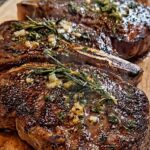
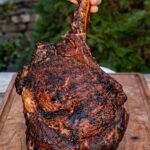
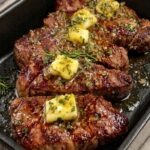
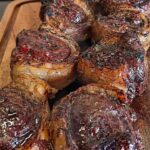
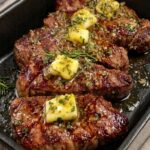
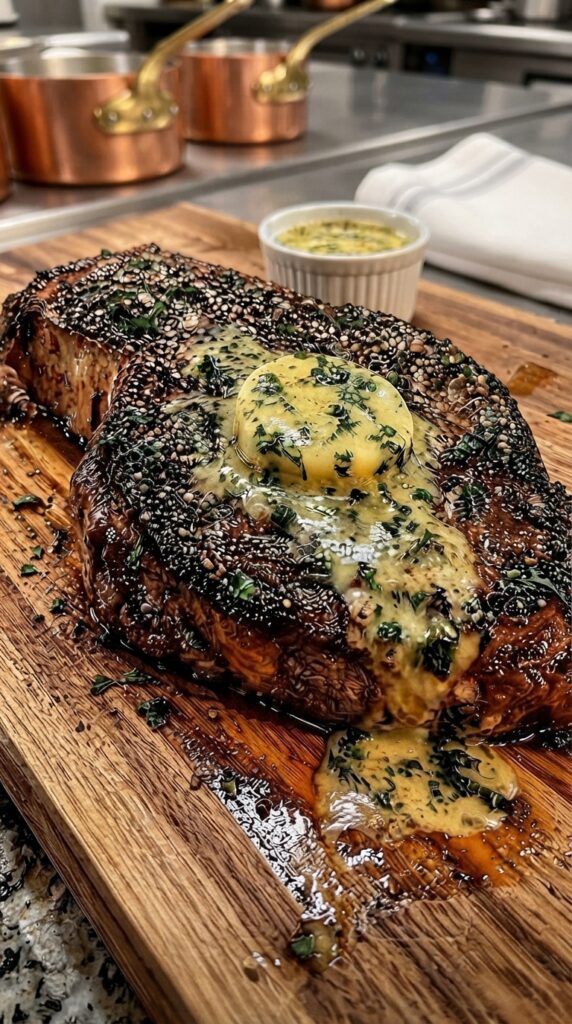
This Garlic Herb Butter Ribeye Steak is inspired by the thick, deeply seared steak shown in the image. The steak has a dark caramelized crust, plenty of cracked black pepper and seasonings, fresh herbs, and a generous round of garlic-herb compound butter melting over the hot surface. As the butter melts, it combines with the flavorful steak juices to create a rich, glossy sauce that runs over the meat and onto the serving board.
The key to this recipe is using a thick-cut ribeye, bringing it close to room temperature before cooking, and searing it in a very hot skillet. Ribeye is naturally well-marbled, so the fat melts during cooking and keeps the meat juicy and tender. A simple seasoning of salt, pepper, garlic, and herbs allows the beef flavor to remain the star. The homemade compound butter adds the luxurious restaurant-style finish seen in the photo.
Prep Time: 20 minutes
Resting Time: 30 minutes
Cook Time: 15–20 minutes
Servings: 4
## Ingredients
For the Steaks
– 2 thick-cut ribeye steaks, about 1½–2 inches thick
– 2 tablespoons olive oil or avocado oil
– 1½ teaspoons kosher salt
– 1½ teaspoons coarsely cracked black pepper
– 1 teaspoon garlic powder
– ½ teaspoon onion powder
– ½ teaspoon smoked paprika
– 1 teaspoon dried thyme
– 1 tablespoon finely chopped fresh parsley
– 2 tablespoons unsalted butter
– 3 garlic cloves, lightly crushed
– 3 sprigs fresh thyme
– 2 sprigs fresh rosemary
For the Garlic Herb Butter
– ½ cup unsalted butter, softened
– 2 garlic cloves, finely minced
– 1 tablespoon finely chopped fresh parsley
– 1 teaspoon chopped fresh thyme
– 1 teaspoon chopped fresh rosemary
– ½ teaspoon salt
– ¼ teaspoon black pepper
– 1 teaspoon fresh lemon juice
For the Creamy Herb Pan Sauce
– 1 tablespoon butter
– 2 cloves garlic, minced
– ½ cup heavy cream
– ¼ cup beef broth
– 1 teaspoon Dijon mustard
– 1 teaspoon chopped fresh parsley
– ½ teaspoon fresh thyme leaves
– ¼ teaspoon black pepper
– Salt to taste
– 1 tablespoon grated Parmesan cheese, optional
## Instructions
Step 1: Prepare the garlic herb butter. Add the softened butter, minced garlic, parsley, thyme, rosemary, salt, black pepper, and lemon juice to a small bowl. Mix until the herbs and seasonings are evenly distributed throughout the butter.
Step 2: Place the herb butter onto a piece of parchment paper or plastic wrap. Shape it into a small log, wrap tightly, and refrigerate for at least 20–30 minutes. Once firm, slice it into thick rounds. Keep refrigerated until you are ready to serve the steaks.
Step 3: Remove the ribeye steaks from the refrigerator about 30 minutes before cooking. Allowing very cold steak to warm slightly helps it cook more evenly.
Step 4: Pat the steaks extremely dry with paper towels. Removing surface moisture is important because excess moisture can prevent the steak from developing the dark, caramelized crust visible in the picture.
Step 5: Rub both sides of the steaks lightly with olive oil. Season generously with kosher salt, cracked black pepper, garlic powder, onion powder, smoked paprika, and dried thyme. Gently press the seasonings onto the steaks so they adhere well.
Step 6: Heat a large cast-iron skillet or heavy stainless-steel skillet over medium-high to high heat. Let the skillet become very hot before adding the meat. You should see a slight shimmer from the surface when it is ready.
Step 7: Place the steaks into the hot skillet without overcrowding them. Cook for approximately 3–4 minutes on the first side without moving them. Leaving the steak alone allows a deep brown crust to develop.
Step 8: Flip the steaks and cook the second side for another 3–4 minutes. Use tongs to briefly hold the fatty edges against the pan for about 30–60 seconds so the fat can brown and render.
Step 9: Reduce the heat to medium. Add 2 tablespoons of butter, the crushed garlic cloves, rosemary sprigs, and thyme sprigs to the skillet.
Step 10: Once the butter melts and begins to foam, slightly tilt the skillet. Use a spoon to repeatedly scoop the hot garlic-herb butter and pour it over the steaks for approximately 1–2 minutes. This process adds flavor and creates a glossy restaurant-style surface.
Step 11: Check the internal temperature with an instant-read thermometer. For medium-rare, remove the steaks at approximately 125–130°F. For medium, remove them around 135–140°F. Remember that the temperature usually rises a few degrees while the steak rests.
Step 12: Transfer the steaks to a wooden cutting board or warm serving plate. Place a thick round of the chilled garlic herb butter directly on top of each hot steak.
Step 13: Allow the steaks to rest for 8–10 minutes. During this time, the compound butter will slowly melt over the crust and mix with the natural steak juices.
Step 14: While the steaks are resting, prepare the creamy pan sauce. Remove excess grease from the skillet while leaving approximately 1 tablespoon of flavorful drippings behind.
Step 15: Add 1 tablespoon butter and the minced garlic. Cook for about 30 seconds until fragrant, being careful not to burn the garlic.
Step 16: Pour in the beef broth and scrape the browned bits from the bottom of the skillet. These caramelized bits contain concentrated beef flavor and make the sauce richer.
Step 17: Stir in the heavy cream, Dijon mustard, parsley, thyme, and black pepper. Simmer gently for 2–4 minutes until the sauce becomes slightly thickened.
Step 18: Add Parmesan cheese if desired. Taste the sauce and adjust the salt and pepper. Do not boil aggressively after adding the cream.
Step 19: Spoon some creamy herb sauce over the steak or serve it in a small ramekin alongside the meat, similar to the presentation in the picture.
Step 20: Sprinkle the finished steaks with additional freshly chopped parsley and cracked black pepper. Serve immediately while the herb butter is still melting.
## Notes
Choose ribeye steaks with visible white streaks of marbling throughout the meat. Marbling melts as the steak cooks and contributes greatly to tenderness, flavor, and juiciness.
A thick steak works especially well for this cooking method because it allows you to create a strongly browned exterior without overcooking the center.
If your steaks are extremely thick, you can sear them on the stovetop and then finish them in a 400°F oven for approximately 4–8 minutes, depending on their thickness and desired doneness.
A meat thermometer is highly recommended. Cooking time alone is not always reliable because steak thickness, pan temperature, and starting temperature can vary.
## Tips for the Best Ribeye Steak
Pat the steak dry before seasoning. A dry surface browns much more effectively than a wet surface.
Use coarse black pepper rather than very finely ground pepper if you want the dramatic pepper-crusted appearance shown in the photo.
Make sure the skillet is properly preheated. Adding steak to a lukewarm pan can cause it to steam instead of sear.
Avoid constantly moving the steak around the skillet. Give each side enough uninterrupted contact with the hot surface to develop a proper crust.
Do not skip the resting period. Cutting into the steak immediately can cause much of the juice to run onto the cutting board rather than staying inside the meat.
Compound butter can be prepared several days in advance, which makes this recipe much easier when entertaining.
For even more flavor, add a small amount of finely grated lemon zest to the herb butter.
## Storage
Store leftover steak in an airtight container in the refrigerator for up to 3–4 days.
Keep leftover creamy sauce in a separate airtight container for up to 3 days.
The garlic herb compound butter can be refrigerated for approximately 1 week or frozen for up to 2–3 months.
To reheat steak without drying it out, place it in a covered skillet over low heat with a small amount of butter or beef broth. Heat gently until warmed through.
Avoid repeatedly microwaving the steak at high power because this can quickly overcook the meat and make it tougher.
## Serving Ideas
This rich ribeye steak pairs especially well with creamy mashed potatoes because the potatoes absorb the garlic-herb butter and pan sauce beautifully.
You can also serve it with roasted garlic potatoes, baked potatoes, crispy potato wedges, buttery asparagus, roasted green beans, sautéed mushrooms, creamed spinach, grilled vegetables, or a fresh garden salad.
For a restaurant-style presentation, place the whole steak on a wooden board, top it with a thick slice of garlic herb butter, spoon a little creamy sauce over one side, and scatter fresh herbs around the meat.
If serving for a special dinner, slice the rested steak against the grain into thick strips and arrange them slightly overlapping on a platter.
## Nutritional Information
Approximate nutrition per serving, based on four servings:
Calories: 650–750
Protein: 45–55 g
Fat: 50–58 g
Carbohydrates: 3–5 g
Fiber: Less than 1 g
Sugar: 1–2 g
Sodium: 650–850 mg
The exact nutrition will vary depending on the size and fat content of the steak, how much compound butter is used, and the amount of sauce served with each portion.
## Nutrition Benefits
Ribeye steak provides a substantial amount of high-quality protein, which supplies essential amino acids needed for maintaining and repairing body tissues.
Beef is also naturally rich in vitamin B12, an important nutrient involved in normal red blood cell formation and nervous-system function.
It supplies iron, particularly heme iron, which is generally more readily absorbed by the body than the type of iron found in many plant foods.
Beef also provides zinc, selenium, phosphorus, and several B vitamins.
Fresh garlic and herbs add flavor without requiring large amounts of additional sugar or processed sauces. Parsley, rosemary, and thyme also provide small amounts of plant compounds and micronutrients.
Because ribeye and the butter-based sauce are relatively high in saturated fat and calories, portion size can be adjusted according to individual dietary needs.
## Frequently Asked Questions
### What steak is shown in this style of recipe?
The image appears most consistent with a thick, heavily seared ribeye-style steak topped with garlic herb compound butter. Ribeye is especially suitable because its marbling keeps it juicy during high-heat cooking.
### Can I use another cut of beef?
Yes. New York strip, sirloin, filet mignon, porterhouse, or T-bone can be prepared using a similar method. Cooking times will vary depending on thickness and fat content.
### What makes the outside of the steak so dark?
The dark crust develops through high-temperature browning. Drying the steak thoroughly, using a hot skillet, and leaving the meat undisturbed during the initial sear encourages this caramelization.
### Can I prepare this without a cast-iron skillet?
Yes. A heavy stainless-steel skillet works well. Choose a pan capable of handling high heat rather than a thin pan that may heat unevenly.
### How do I know when the steak is medium-rare?
Use a meat thermometer. For medium-rare steak, aim for roughly 130–135°F after resting. Removing it from the heat a few degrees earlier helps account for carryover cooking.
### Why should steak rest before cutting?
Resting allows the temperature to stabilize and gives the juices time to redistribute through the meat. This helps the steak stay juicier when sliced.
### Can I make the garlic herb butter ahead of time?
Yes. It is actually ideal to prepare it ahead. Refrigerate it for up to a week or freeze it for longer storage.
### Can I leave out the creamy sauce?
Absolutely. The steak is flavorful with only the garlic herb butter. The creamy pan sauce simply adds another rich layer and recreates the luxurious presentation in the picture.
### What herbs are best with ribeye?
Rosemary, thyme, parsley, and garlic are classic choices. Chives or a small amount of oregano can also be added.
### What is the best side dish for this steak?
Creamy mashed potatoes are one of the best pairings, especially with the melting herb butter and pan sauce. Roasted vegetables or asparagus can be added for a complete steakhouse-style meal.