
# Garlic Butter Herb Pan-Seared Steak
## Description
Garlic Butter Herb Pan-Seared Steak is a rich, restaurant-style beef dinner featuring thick, juicy steaks with a beautifully browned crust and a luxurious garlic-herb butter sauce. The steaks are first seared at high heat to develop deep caramelization, then finished with butter, fresh garlic, rosemary, and parsley. As the butter melts, it combines with the steak juices and garlic to create a flavorful sauce that coats every piece of meat.
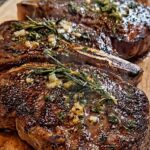
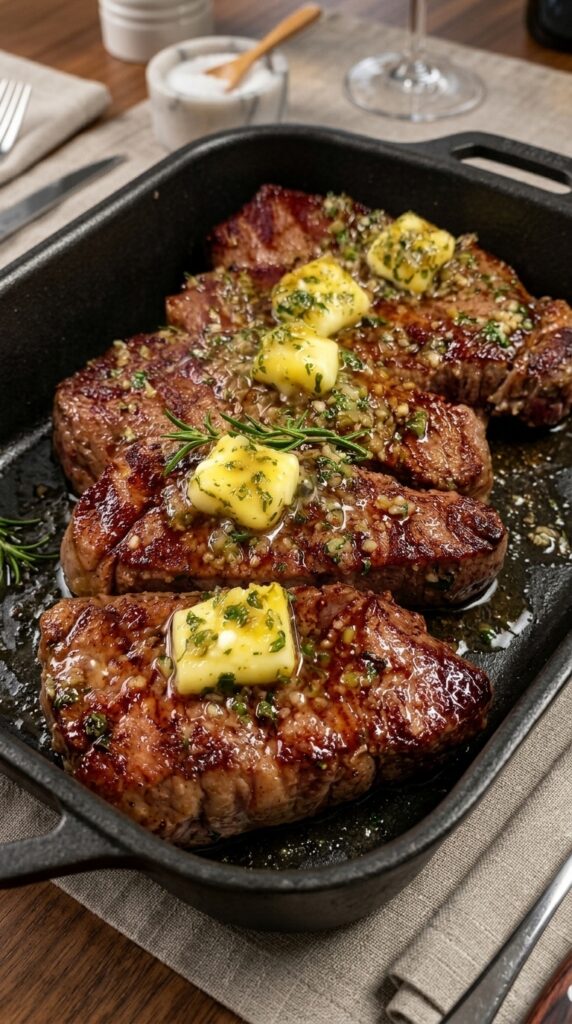
This recipe is inspired by the dish shown in the image, where thick steaks are arranged in a cast-iron skillet and topped with cubes of herb butter. The hot skillet slowly melts the butter over the browned steaks, giving them their glossy, juicy appearance.
Despite looking impressive, this dish requires only a handful of everyday ingredients. The most important elements are good-quality steaks, proper seasoning, a very hot skillet, and enough resting time after cooking. Serve the steaks with mashed potatoes, roasted vegetables, asparagus, rice, or a fresh salad for a complete meal.
## Prep Time
15 minutes
## Cook Time
15–20 minutes
## Servings
4 servings
## Ingredients
For the steaks:
– 4 thick-cut steaks, about 8–10 ounces each
– 1 1/2 tablespoons olive oil
– 1 1/2 teaspoons kosher salt
– 1 teaspoon freshly ground black pepper
– 1 teaspoon garlic powder
– 1/2 teaspoon onion powder
For the garlic herb butter:
– 6 tablespoons unsalted butter, softened
– 5 garlic cloves, finely minced
– 1 tablespoon fresh parsley, finely chopped
– 1 teaspoon fresh rosemary, finely chopped
– 1 teaspoon fresh thyme leaves
– 1/4 teaspoon salt
– 1/4 teaspoon black pepper
For finishing:
– 2 tablespoons butter
– 2 fresh rosemary sprigs
– 2 garlic cloves, lightly crushed
– Extra chopped parsley or chives for garnish
## Instructions
### Step 1: Bring the steaks to room temperature
Remove the steaks from the refrigerator approximately 25–30 minutes before cooking. Allowing the meat to lose some of its refrigerator chill helps it cook more evenly.
Pat each steak thoroughly dry with paper towels. Removing excess surface moisture is important because wet steak tends to steam rather than develop a beautiful brown crust.
### Step 2: Prepare the garlic herb butter
Place the softened butter in a small bowl.
Add the minced garlic, parsley, rosemary, thyme, salt, and black pepper.
Mix until the herbs and garlic are evenly distributed throughout the butter.
You can leave the butter soft for spooning onto the steaks or shape it into small cubes similar to those shown in the image.
Place the prepared herb butter aside while you cook the steaks.
### Step 3: Season the steaks
Drizzle the steaks lightly with olive oil.
Season both sides generously with salt, black pepper, garlic powder, and onion powder.
Press the seasoning gently into the meat so it stays attached during cooking.
For the strongest flavor, season the sides of thick steaks as well.
### Step 4: Preheat the skillet
Place a large cast-iron skillet over medium-high to high heat.
Allow it to become very hot before adding the steaks. This usually takes about 3–4 minutes.
A properly heated pan is one of the secrets to obtaining the deeply browned exterior seen in the photo.
Add the olive oil and carefully swirl it around the skillet.
### Step 5: Sear the first side
Place the steaks into the hot skillet without overcrowding them.
Once the steaks touch the skillet, avoid moving them immediately.
Cook for approximately 3–4 minutes on the first side, depending on thickness.
The underside should develop a dark golden-brown crust before you turn it.
### Step 6: Flip the steaks
Using stainless steel tongs, turn each steak over.
Cook the second side for another 2–4 minutes.
For particularly thick steaks, briefly hold the steaks with the tongs and sear the edges for approximately 30 seconds.
### Step 7: Add garlic, rosemary, and butter
Reduce the heat slightly.
Add 2 tablespoons butter, the crushed garlic cloves, and fresh rosemary sprigs to the skillet.
As the butter melts, gently tilt the skillet so the melted butter collects on one side.
Using a large spoon, repeatedly spoon the bubbling garlic-herb butter over the steaks for about 1–2 minutes.
This process adds moisture, richness, and additional flavor.
### Step 8: Add the herb butter
Place a generous cube or spoonful of prepared garlic herb butter onto each steak.
Allow the heat from the steak to slowly melt the butter over the surface.
The butter should mix naturally with the garlic, herbs, steak juices, and browned bits in the skillet, forming a glossy sauce.
### Step 9: Check the temperature
For accurate results, check the internal temperature with a meat thermometer.
Approximate temperatures are:
– Rare: 120–125°F
– Medium-rare: 130–135°F
– Medium: 140–145°F
– Medium-well: 150–155°F
– Well-done: 160°F or higher
Remember that the steak will continue cooking slightly after it is removed from the skillet.
### Step 10: Rest the steaks
Transfer the steaks to a plate or cutting board.
Allow them to rest for 5–10 minutes before serving or slicing.
Resting gives the juices time to redistribute throughout the meat rather than immediately spilling onto the plate.
### Step 11: Finish and serve
Spoon some of the garlic butter and skillet juices over each steak.
Sprinkle with chopped parsley or chives.
Serve immediately while the steaks are warm and the herb butter is still melting over the surface.
## Tips
Choose steaks that are at least 1 to 1 1/2 inches thick. Thick steaks are easier to sear without overcooking the inside.
Ribeye, New York strip, sirloin, and filet mignon can all work well for this recipe. Ribeye will generally produce the richest result because of its higher fat content.
Always pat the steaks dry before seasoning. Surface moisture is one of the biggest obstacles to getting a dark steakhouse-style crust.
Do not constantly flip or move the steaks. Give the first side enough uninterrupted contact with the skillet to caramelize properly.
Use a cast-iron skillet whenever possible because it holds high heat exceptionally well.
Fresh garlic works better than jarred garlic for this recipe because its flavor becomes sweeter and more aromatic as it cooks in the butter.
Be careful not to burn the garlic. Add the butter and garlic after the steaks have already developed their crust rather than at the very beginning.
For the most reliable doneness, use an instant-read thermometer instead of judging the steak only by appearance.
Do not skip the resting period. Cutting a steak immediately can cause much of its juice to escape.
For extra garlic flavor, increase the garlic in the compound butter by one or two cloves.
If your steaks are extremely thick, sear them first and then finish them in a 400°F oven until they reach your preferred internal temperature.
## Notes
Cooking time can vary significantly depending on the thickness of the steaks, starting temperature of the meat, type of skillet, and desired doneness.
Unsalted butter is preferable because it gives you more control over the overall salt level.
The garlic herb butter can be prepared several days ahead. Keep it covered in the refrigerator and soften slightly before using.
If you are cooking more than four steaks, cook them in batches instead of crowding the skillet. An overcrowded pan loses heat quickly and prevents proper browning.
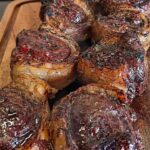
The steaks in the image have a glossy buttery finish. To recreate that appearance naturally, spoon the melted butter and skillet juices over the steaks immediately before serving.
## Storage
Allow leftover steak to cool before storing.
Place leftovers in an airtight container and refrigerate for up to 3–4 days.
For best results, store any extra garlic butter separately.
To reheat steak without drying it out, warm it gently in a skillet over low heat with a small amount of butter. You can also place it in a covered baking dish at 275°F until just warmed through.
Avoid overheating leftover steak because this can make it tough.
Cooked steak can also be frozen for approximately 2 months. Wrap individual portions tightly before placing them in a freezer-safe container.
Thaw overnight in the refrigerator before reheating.
## Serving Ideas
These garlic butter steaks pair wonderfully with creamy mashed potatoes because the potatoes absorb the flavorful garlic butter sauce.
Other excellent sides include roasted asparagus, sautéed green beans, roasted broccoli, garlic mushrooms, buttered corn, or roasted carrots.
For a steakhouse-style meal, serve with a baked potato and a crisp green salad.
You can also slice the steak and serve it over white rice, garlic butter rice, or creamy pasta.
For a lighter meal, pair it with roasted vegetables and a cucumber or tomato salad.
Warm dinner rolls or crusty bread are especially good for soaking up the garlic butter left on the plate.
## Nutritional Information
Approximate nutrition per serving, depending on the cut and size of steak:
– Calories: 620–700
– Protein: 48–55 g
– Fat: 45–52 g
– Saturated Fat: 20–24 g
– Carbohydrates: 2–4 g
– Fiber: less than 1 g
– Sugar: less than 1 g
– Sodium: approximately 650–850 mg
– Iron: approximately 4–5 mg
Nutritional values are estimates and will vary depending on the steak cut, portion size, amount of butter consumed, and exact ingredients used.
## Nutrition Benefits
Steak is naturally high in complete protein, meaning it provides all of the essential amino acids needed by the body. A protein-rich meal can help support muscle maintenance and recovery.
Beef is also an important dietary source of iron. The heme iron found in beef is generally absorbed more efficiently than many plant-based forms of iron.
Steak provides vitamin B12, which is involved in normal red blood cell formation and nervous-system function.
Beef also contains zinc, selenium, phosphorus, and several B vitamins.
The herbs used in the garlic butter add flavor without requiring large amounts of additional sauces or sweeteners.
Because this recipe contains very few carbohydrate-containing ingredients, it can also fit naturally into many lower-carbohydrate eating styles when served with appropriate vegetables.
However, butter and some cuts of steak are high in saturated fat, so serving size and the overall balance of the meal still matter.
## Q&A
### Q: What is the best steak for this recipe?
Ribeye is excellent if you want a rich, juicy steak with plenty of marbling. New York strip gives you a good combination of tenderness and beef flavor. Sirloin is usually leaner and more affordable.
### Q: Can I use salted butter?
Yes. If you use salted butter, reduce the additional salt in the herb butter and adjust the steak seasoning to taste.
### Q: Why didn’t my steak develop a dark crust?
The skillet may not have been hot enough, the steak may have been too wet, or the pan may have been overcrowded. Pat the meat dry and allow the skillet to become very hot before cooking.
### Q: Can I prepare the garlic herb butter ahead of time?
Yes. Prepare it up to several days in advance and refrigerate it in an airtight container. It can also be frozen for longer storage.
### Q: Should I cook steak in butter from the beginning?
It is better to start with oil because butter can burn at very high temperatures. Add butter after the initial searing when the temperature has been reduced slightly.
### Q: How can I make the steak extra juicy?
Choose a well-marbled cut, avoid overcooking it, baste it with butter, and let it rest for at least 5 minutes before cutting.
### Q: Can I cook this without a cast-iron skillet?
Yes. Use any heavy-bottomed skillet capable of handling high heat. Stainless steel works particularly well.
### Q: Can I use dried herbs?
Yes, although fresh herbs provide better flavor and appearance. If using dried herbs, use approximately one-third of the amount specified for fresh herbs.
### Q: What sauces work with this steak?
The garlic herb butter already acts as a sauce, but creamy mushroom sauce, peppercorn sauce, chimichurri, or a simple pan sauce also pair well with it.
### Q: How do I know when my steak is medium-rare?
The most dependable method is an instant-read thermometer. Remove the steak at approximately 128–132°F and allow it to rest. Its temperature should rise slightly as it sits.