
# Slow Cooker Garlic Onion Pot Roast
## Description
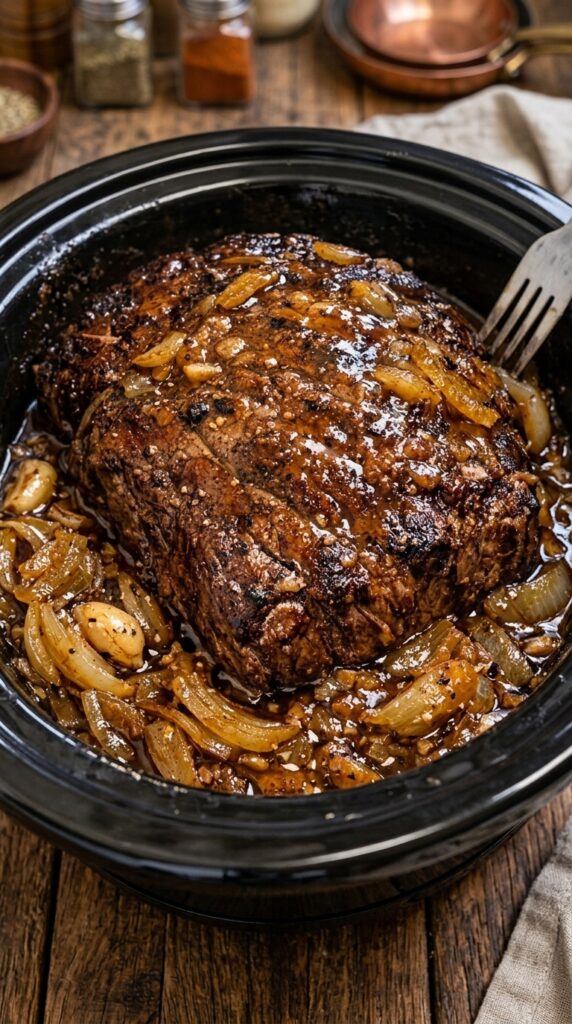
Slow Cooker Garlic Onion Pot Roast is a comforting, hearty beef dinner featuring a tender chuck roast cooked slowly with plenty of onions, whole garlic cloves, savory seasonings, and a rich beef gravy. Long, gentle cooking allows the connective tissue in the beef to soften, giving the roast a juicy, fork-tender texture.
The onions gradually caramelize and almost melt into the cooking liquid, while the garlic becomes mild, buttery, and slightly sweet. Worcestershire sauce, beef broth, and a touch of balsamic vinegar deepen the flavor without making the recipe complicated.
This is an excellent recipe for a family Sunday dinner, meal prep, or any day when you want a satisfying homemade meal without spending hours actively cooking. Serve the roast with mashed potatoes, roasted potatoes, carrots, green beans, or crusty bread to soak up the savory onion gravy.
Prep Time: 20 minutes
Cook Time: 8–9 hours on LOW or 4½–5½ hours on HIGH
Servings: 6–8
## Ingredients
For the Pot Roast
* 3½–4 lb beef chuck roast
* 2 tablespoons olive oil
* 1½ teaspoons salt
* 1 teaspoon freshly ground black pepper
* 1 teaspoon garlic powder
* 1 teaspoon onion powder
* 1 teaspoon smoked paprika
* 1 teaspoon dried thyme
* ½ teaspoon dried rosemary
* 3 large yellow onions, thickly sliced
* 8–10 garlic cloves, peeled
* 2 cups low-sodium beef broth
* 2 tablespoons Worcestershire sauce
* 1 tablespoon balsamic vinegar
* 1 tablespoon tomato paste
* 1 teaspoon brown sugar, optional
* 2 bay leaves
For the Gravy
* 2 tablespoons cornstarch
* 2 tablespoons cold water
* 1–2 tablespoons butter, optional
* Salt and black pepper, to taste
For Serving
* Fresh chopped parsley
* Mashed potatoes, roasted potatoes, or vegetables
## Instructions
### 1. Prepare the Beef
Remove the chuck roast from the refrigerator about 20–30 minutes before cooking.
Pat the surface thoroughly dry with paper towels. Removing excess moisture helps the beef develop a better crust when it is seared.
Combine the salt, black pepper, garlic powder, onion powder, smoked paprika, thyme, and rosemary in a small bowl.
Rub the seasoning mixture generously over every side of the roast, gently pressing it into the meat.
### 2. Sear the Roast
Heat the olive oil in a large skillet over medium-high heat.
Once the oil is hot, carefully place the seasoned roast in the skillet. Sear for approximately 3–4 minutes without moving it.
Turn and brown the other side for another 3–4 minutes. Sear the edges briefly as well.
You are not trying to cook the beef through at this stage. Searing develops a deeply browned exterior and adds another layer of savory flavor to the finished roast.
Transfer the browned roast to a plate.
### 3. Prepare the Onions
Reduce the skillet heat to medium.
Add the sliced onions and cook for approximately 4–5 minutes, stirring occasionally. The onions only need to soften slightly and pick up some of the browned flavor from the skillet.
Add the tomato paste and cook for about 1 minute.
Pour approximately ½ cup of the beef broth into the skillet. Scrape the bottom with a wooden spoon to release the browned bits.
These browned bits contain plenty of concentrated flavor, so don’t leave them behind.
### 4. Assemble the Slow Cooker
Place approximately half of the onions in the bottom of the slow cooker.
Scatter several garlic cloves around the onions.
Place the seared beef roast on top.
Arrange the remaining onions and garlic around and over the beef.
Pour the skillet liquid into the slow cooker.
Add the remaining beef broth, Worcestershire sauce, balsamic vinegar, and optional brown sugar.
Add the bay leaves.
The liquid does not need to completely cover the roast. As the beef and onions cook, they will release additional juices.
### 5. Slow Cook
Cover the slow cooker tightly with the lid.
Cook on LOW for 8–9 hours for the most tender results.
Alternatively, cook on HIGH for approximately 4½–5½ hours.
Avoid repeatedly removing the lid because every time the slow cooker is opened, heat escapes and the cooking process can take longer.
The roast is ready when a fork slides easily into the meat and the beef can be pulled apart with very little resistance.
If it still feels tough, it usually needs additional cooking rather than being overcooked. Continue cooking for another 30–60 minutes and check again.
### 6. Rest the Beef
Carefully transfer the roast to a large serving platter.
Tent it loosely with foil and allow it to rest for approximately 10–15 minutes.
Remove and discard the bay leaves from the slow cooker.
Leave the onions, garlic, and cooking juices inside.
### 7. Make the Onion Gravy
For a thicker gravy, combine the cornstarch and cold water in a small bowl. Stir until completely smooth.
Pour the slurry gradually into the hot cooking liquid while stirring.
Cover and cook on HIGH for approximately 10–15 minutes, or until the gravy reaches your preferred consistency.
For an extra-rich finish, stir in 1–2 tablespoons of butter.
Taste the gravy before adding additional salt because the broth and Worcestershire sauce already contain sodium.
### 8. Serve
The beef can either be sliced into thick pieces or gently pulled apart into large chunks.
Spoon the soft onions and whole roasted garlic cloves around the meat.
Pour some of the hot gravy directly over the roast.
Finish with freshly chopped parsley.
Serve immediately with creamy mashed potatoes, roasted vegetables, buttered green beans, carrots, or warm bread.
## Recipe Notes
Chuck roast is particularly well suited to slow cooking because it contains connective tissue and marbling. During long cooking, collagen gradually converts into gelatin, producing the soft texture and rich cooking liquid associated with pot roast.
The garlic quantity may seem generous, but whole garlic cloves become much milder during several hours of cooking. Instead of tasting sharply garlicky, they become soft and slightly sweet.
For an alcohol-free recipe, no substitutions are necessary because this version uses beef broth rather than wine.
If using regular beef broth instead of low-sodium broth, reduce the initial amount of salt and adjust the seasoning near the end.
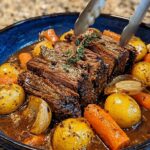
You can also add carrots and baby potatoes directly to the slow cooker. Place them around the roast during assembly. Cut carrots into fairly large pieces so they don’t become overly soft during the long cooking time.
## Tips for the Best Pot Roast
Choose a well-marbled chuck roast rather than an extremely lean cut of beef. The marbling helps keep the meat moist during slow cooking.
Don’t skip the searing step when you have time. The roast will still cook without searing, but browning significantly improves its savory flavor.
Cut the onions fairly thick. Thinly sliced onions can almost disappear after eight hours of cooking, while thick slices retain some texture.
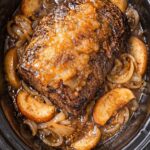
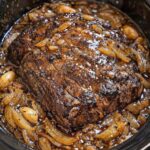
Use whole or halved garlic cloves rather than finely minced garlic for a result similar to the pictured roast.
Cook on LOW whenever possible. The slower cooking method generally produces especially tender beef.
Don’t judge the roast solely by the cooking time. Different slow cookers and different pieces of beef cook at slightly different rates. Tenderness is the most useful indicator.
If the gravy becomes too thick, add a small amount of warm beef broth. If it is too thin, add a little more cornstarch slurry and cook briefly.
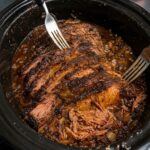
For cleaner slices, allow the beef to rest before cutting. For a rustic pot roast presentation, pull it into large pieces with two forks.
## Storage
Allow leftovers to cool before refrigerating them, but don’t leave cooked beef at room temperature for more than about two hours.
Store the beef together with some of the onions and gravy in an airtight container. Keeping the meat in its cooking liquid helps prevent it from drying out.
Refrigerated pot roast will keep for approximately 3–4 days.
For longer storage, portion the cooled beef and gravy into freezer-safe containers. Freeze for up to about 3 months for best quality.
Thaw frozen pot roast overnight in the refrigerator.
Reheat gently in a covered saucepan over medium-low heat, adding a splash of beef broth if necessary. Individual portions can also be reheated in the microwave until thoroughly hot.
## Nutritional Information
Approximate nutrition per serving, based on 8 servings and excluding optional side dishes:
Calories: 420–480 kcal
Protein: 38–42 g
Carbohydrates: 9–12 g
Fat: 25–30 g
Saturated Fat: 9–11 g
Fiber: 1–2 g
Sugar: 4–6 g
Sodium: 650–800 mg
Nutritional values are estimates and can vary considerably depending on the exact cut of beef, amount of fat trimmed, broth brand, serving size, and optional ingredients.
## Benefits
This pot roast provides a substantial amount of high-quality protein. Protein contributes to maintaining and repairing body tissues and also helps make a meal more filling.
Beef supplies several important micronutrients, including iron, zinc, selenium, and vitamin B12. Iron is involved in normal oxygen transport, while vitamin B12 supports normal red blood cell formation and nervous-system function.
Onions and garlic contribute flavor while also supplying small amounts of vitamins, minerals, and plant compounds.
Another practical benefit is that this recipe can form the centerpiece of a balanced meal. Pairing a moderate serving of beef with vegetables such as broccoli, carrots, green beans, or a salad adds fiber and increases the variety of foods on the plate.
Because pot roast reheats well, it is also convenient for meal preparation. Leftovers can be served with vegetables, shredded into sandwiches, added to rice bowls, or used as a filling for baked potatoes.
## Frequently Asked Questions
### What is the best cut of beef for slow cooker pot roast?
Beef chuck roast is one of the best choices. Its combination of marbling and connective tissue responds very well to long, slow cooking and becomes tender as it cooks.
### Why is my slow cooker pot roast still tough?
It often needs more time. Chuck roast can pass through a stage where it is fully cooked but the connective tissue has not softened enough. Continue cooking until the meat becomes fork-tender.
### Do I have to sear the beef first?
No. The roast can go directly into the slow cooker, but searing creates additional browned flavor and gives the exterior a more appetizing appearance.
### Should the roast be completely covered with broth?
No. You don’t need to submerge the roast. The slow cooker traps moisture, and the beef and onions release additional liquid as they cook.
### Can I add potatoes and carrots?
Yes. Add baby potatoes or large potato chunks and thick carrot pieces around the roast before cooking. Avoid cutting them too small because they can become very soft during an 8-hour cook.
### Can I use a different beef cut?
Brisket and some round roasts can be used, but the finished texture will differ. Chuck roast is generally preferred when you want a rich, pull-apart pot roast.
### Can I prepare everything the night before?
Yes. You can prepare the onions and season the beef ahead of time and refrigerate them separately. For food safety, keep the ingredients refrigerated rather than leaving an assembled slow cooker insert at room temperature.
### How do I make the gravy richer?
After removing the beef, stir butter into the cooking juices and thicken them with cornstarch slurry. You can also mash a few of the softened garlic cloves into the gravy for extra body and flavor.
### What should I serve with this roast?
Creamy mashed potatoes are a classic choice because they absorb the onion gravy beautifully. Roasted potatoes, buttered noodles, rice, green beans, broccoli, carrots, or crusty bread also work well.
### How do I know when the roast is done?
The most important test is tenderness. Insert a fork into the thickest section and gently twist. When the roast separates easily and feels very tender, it’s ready.
### Can I make this recipe without the balsamic vinegar?
Yes. Simply leave it out or replace it with about 1–2 teaspoons of apple cider vinegar. The small amount of acidity mainly balances the richness of the beef and gravy.
### Can leftovers be used for another meal?
Absolutely. Shred leftover beef and use it for sandwiches, wraps, tacos, beef-and-gravy bowls, baked potato toppings, or serve it over mashed potatoes with the leftover onion gravy.