
# Slow Cooker Apple Cider Pot Roast with Apples and Onions
## Description
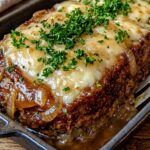
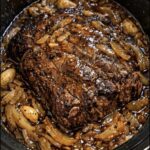
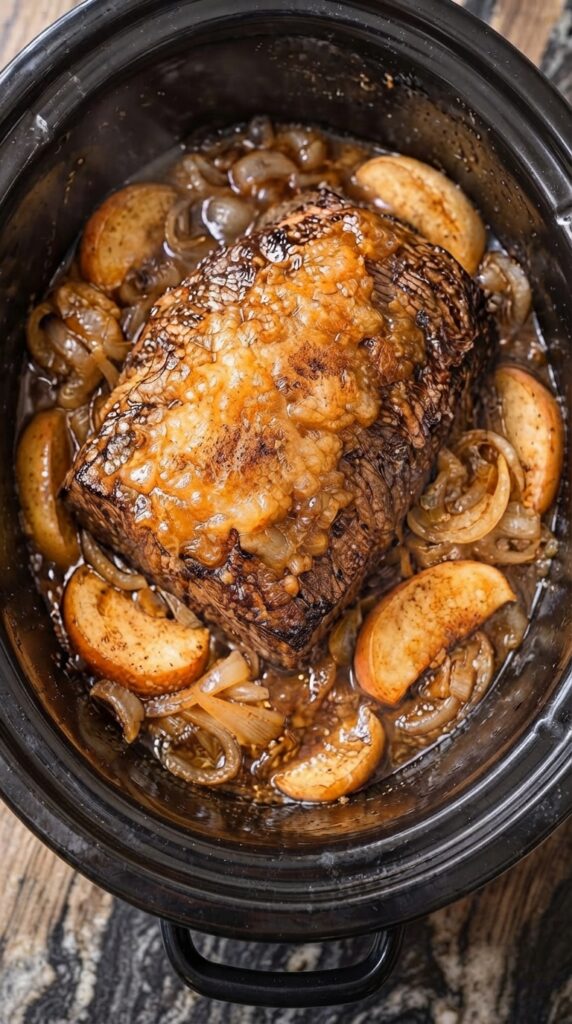
Slow Cooker Apple Cider Pot Roast with Apples and Onions is a warm, comforting, slow-cooked dinner featuring tender beef surrounded by soft apple wedges, caramelized onions, and a rich savory-sweet cider gravy. The long cooking time allows the beef to become exceptionally tender while absorbing the flavors of apple cider, garlic, herbs, onions, and beef broth.
The apples add a gentle natural sweetness without making the dish taste like dessert. As they slowly cook, some become very soft and melt partially into the sauce, helping create a deeper, richer gravy. The onions turn silky and slightly caramelized, while the beef releases its juices into the cooking liquid.
For the best flavor and appearance, the roast is first seasoned and seared before being transferred to the slow cooker. This creates a beautifully browned exterior and gives the finished gravy more depth. A little Dijon mustard, Worcestershire sauce, and apple cider vinegar balance the sweetness of the cider and apples, resulting in a savory roast with just the right hint of fall-inspired flavor.
This recipe is perfect for Sunday dinner, family gatherings, cooler evenings, holidays, or any day when you want a hearty meal with very little hands-on cooking.
## Prep Time
20 minutes
## Cook Time
8–9 hours on Low or 4½–5½ hours on High
## Total Time
About 8 hours 30 minutes
## Servings
6–8 servings
## Ingredients
### For the Pot Roast
* 3½ to 4 lb beef chuck roast
* 1½ teaspoons salt
* 1 teaspoon black pepper
* 1 teaspoon garlic powder
* 1 teaspoon smoked paprika
* 2 tablespoons olive oil
### For the Apple Cider Sauce
* 1½ cups apple cider
* 1 cup beef broth
* 2 tablespoons Worcestershire sauce
* 1 tablespoon Dijon mustard
* 1 tablespoon apple cider vinegar
* 2 tablespoons brown sugar or honey
* 4 garlic cloves, minced
* 1 teaspoon dried thyme
* ½ teaspoon dried rosemary
### Vegetables and Apples
* 2 large yellow onions, sliced
* 3 medium firm apples, cut into thick wedges
* 2 tablespoons butter, optional
### For Thickening the Gravy
* 2 tablespoons cornstarch
* 3 tablespoons cold water
## Instructions
### 1. Prepare the Beef
Remove the chuck roast from the refrigerator about 20 minutes before cooking.
Pat the beef thoroughly dry with paper towels. This is important because excess moisture prevents the meat from browning properly.
Trim away only very thick pieces of exterior fat, but leave some fat on the roast because it adds flavor and moisture during slow cooking.
Season the beef generously on all sides with salt, black pepper, garlic powder, and smoked paprika. Gently press the seasonings into the surface of the meat.
### 2. Sear the Roast
Heat the olive oil in a large heavy skillet over medium-high heat.
Once the oil is hot, carefully place the seasoned roast into the skillet.
Sear it for approximately 3–4 minutes on the first side without moving it. Once a deep brown crust develops, turn the roast and sear the other side.
Continue browning the edges for another minute or two if possible.
Searing is technically optional, but it makes a major difference in the finished flavor. The browned surface adds rich roasted notes to both the meat and gravy.
Transfer the seared roast to a plate.
### 3. Prepare the Slow Cooker
Place about two-thirds of the sliced onions in the bottom of the slow cooker.
Arrange about half of the apple wedges over and around the onions.
Set the browned roast directly on top.
The onions create a flavorful base and prevent the meat from sitting directly against the bottom of the slow cooker.
### 4. Make the Apple Cider Sauce
In a medium bowl or large measuring cup, combine:
Apple cider, beef broth, Worcestershire sauce, Dijon mustard, apple cider vinegar, brown sugar or honey, minced garlic, thyme, and rosemary.
Whisk until well combined.
Taste the mixture if desired. It should taste savory with a noticeable apple flavor and a gentle sweet-tangy finish.
Pour the cider mixture around the roast.
Try not to pour everything directly over the browned surface because you want to preserve some of that crust.
### 5. Add the Remaining Onions
Scatter the remaining sliced onions around the sides of the roast.
Save the remaining apple wedges for later if you prefer firmer apples.
If you enjoy very soft apples that almost melt into the sauce, you can add all the apples at the beginning.
### 6. Slow Cook the Roast
Cover the slow cooker with its lid.
Cook on Low for approximately 8–9 hours.
Low heat is recommended because it gives the connective tissue in chuck roast enough time to break down slowly, producing exceptionally tender meat.
Alternatively, cook on High for approximately 4½–5½ hours.
Avoid repeatedly lifting the lid because each time you open the slow cooker, heat escapes and increases the cooking time.
### 7. Add the Remaining Apples
If you reserved half of the apples for better texture, add them during the final 60–90 minutes of cooking.
Arrange them around the roast and gently press them into the cooking liquid.
This allows them to soften while still maintaining their wedge shape.
### 8. Check the Beef
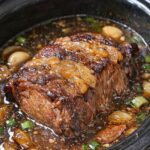
The roast is ready when it is extremely tender and can easily be pulled apart with a fork.
If the meat still feels firm when pierced, it probably needs more time rather than less.
Chuck roast becomes tender when its collagen has had enough time to break down.
Cooking time can vary depending on the thickness of the roast and the individual slow cooker.
### 9. Remove the Roast
Carefully transfer the cooked roast to a large platter or cutting board.
Use two large spatulas if necessary because the meat may be extremely tender.
Cover loosely with foil and allow it to rest while preparing the gravy.
### 10. Prepare the Gravy
Pour approximately 2 cups of the cooking liquid from the slow cooker into a saucepan.
Include some soft onions if you want additional texture and flavor.
Bring the liquid to a gentle simmer over medium heat.
In a small bowl, whisk together the cornstarch and cold water until completely smooth.
Slowly pour the slurry into the simmering liquid while whisking.
Cook for 2–4 minutes until the sauce thickens into a glossy gravy.
For an even richer finish, stir in 1–2 tablespoons of butter.
Taste and adjust with additional salt, black pepper, cider vinegar, or a small splash of apple cider if necessary.
### 11. Serve
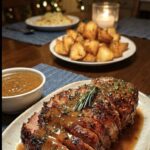
You can serve the roast whole for an impressive presentation or gently break it into large pieces.
Arrange the cooked apples and caramelized onions around the beef.
Spoon the warm apple cider gravy generously over the roast.
Serve immediately.
## Recipe Notes
Beef chuck roast is the ideal cut for this recipe because its connective tissue slowly breaks down during cooking. Leaner cuts can become dry when cooked for many hours.
Use apple cider rather than plain apple juice when possible. Cider generally provides a deeper and slightly more complex apple flavor.
Choose firm apples such as Honeycrisp, Granny Smith, Pink Lady, Braeburn, or Fuji.
For a less sweet pot roast, use Granny Smith apples and omit the brown sugar.
For a richer sauce, add 1–2 tablespoons of butter after thickening the gravy.
Do not completely submerge the beef in liquid. Slow cookers create moisture as they cook, so you only need enough liquid to partially surround the roast.
## Tips for the Best Pot Roast
### Always Brown the Beef
Searing creates a deep brown crust through the Maillard reaction, which adds a more complex savory flavor.
### Cook It Low and Slow
Chuck roast benefits from several hours of gentle heat. Low cooking produces the most reliable fall-apart texture.
### Don’t Cut the Apples Too Thin
Thin apple slices can disappear completely during long cooking. Thick wedges hold their shape better.
### Add Some Apples Later
For the attractive apple wedges seen in the finished dish, reserve some apples and add them during the final hour or so.
### Keep the Onion Slices Fairly Thick
Thin onions may completely dissolve into the sauce. Slightly thicker slices provide better texture.
### Don’t Panic If the Beef Seems Tough
If chuck roast is still tough after several hours, it usually needs additional cooking. Properly cooked chuck roast should become fork-tender.
### Adjust the Sweetness
Apple varieties differ significantly in sweetness. Taste the gravy before serving and balance it with apple cider vinegar if necessary.
### Thicken the Sauce Separately
Trying to add cornstarch directly into the slow cooker can cause lumps. Mixing it with cold water first creates a smooth gravy.
## Serving Suggestions
Creamy mashed potatoes are one of the best side dishes because they absorb the rich apple cider gravy beautifully.
You can also serve the pot roast with roasted baby potatoes, garlic mashed cauliflower, buttered egg noodles, or steamed rice.
For vegetables, consider roasted carrots, green beans, Brussels sprouts, broccoli, asparagus, or sautéed cabbage.
A simple green salad with a tangy vinaigrette can help balance the richness of the beef.
Warm dinner rolls or crusty bread are another excellent addition because they can be used to soak up the remaining gravy.
## Nutritional Information
Approximate nutrition per serving based on 8 servings:
* Calories: 430–500
* Protein: 38–44 g
* Carbohydrates: 20–26 g
* Fat: 20–26 g
* Saturated Fat: 8–10 g
* Fiber: 2–3 g
* Sugar: 13–17 g
* Sodium: 650–800 mg
These values are estimates. Exact nutrition will depend on the size and fat content of the beef, the type of apple cider used, and the amount of gravy consumed.
## Benefits
### High in Protein
Beef chuck roast provides a substantial amount of complete protein, which supports muscle maintenance, tissue repair, and normal body functions.
### Provides Iron
Beef contains heme iron, a form of iron that is easily absorbed by the body. Iron contributes to normal red blood cell production.
### Good Source of Vitamin B12
Beef is naturally rich in vitamin B12, which supports normal nerve function and red blood cell formation.
### Contains Zinc
Zinc contributes to normal immune function and is found naturally in beef.
### Apples Add Fiber
Apples provide dietary fiber as well as naturally occurring plant compounds.
### Onions Add Flavor Without Heavy Ingredients
Slow-cooked onions provide natural sweetness and depth, allowing you to create a rich sauce without relying on heavy cream.
## Storage
Allow leftover pot roast to cool slightly before transferring it to an airtight container.
Store the beef, apples, onions, and gravy together whenever possible. Keeping the meat submerged or coated in sauce helps prevent it from drying out.
Refrigerate for up to 3–4 days.
For freezing, place portions in freezer-safe containers along with plenty of gravy.
Freeze for up to 2–3 months.
For best results, thaw frozen pot roast overnight in the refrigerator before reheating.
## Reheating
Reheat leftover pot roast in a covered saucepan over low heat with some of the gravy.
You can add a splash of beef broth or apple cider if the sauce has become too thick.
Individual portions can also be microwaved, covered, in 30–60 second intervals until thoroughly heated.
For larger portions, place the beef and gravy in a covered baking dish and warm at 325°F or 165°C until heated through.
## Frequently Asked Questions
### What cut of beef is best for slow cooker pot roast?
Chuck roast is usually the best choice because it contains enough fat and connective tissue to become extremely tender during slow cooking.
### Can I use apple juice instead of apple cider?
Yes. Apple juice can work, but the flavor is usually lighter and sweeter. If using apple juice, consider reducing the added brown sugar.
### Which apples work best?
Firm apples such as Honeycrisp, Granny Smith, Pink Lady, Braeburn, and Fuji hold up well during cooking.
### Why did my apples turn mushy?
They probably cooked for too long. Add some apple wedges during the final 60–90 minutes if you want them to maintain their shape.
### Can I skip searing the roast?
Yes, but searing is recommended. It gives the beef a better crust and adds significantly more flavor to the finished gravy.
### Do I need to cover the beef completely with liquid?
No. The roast should not be completely submerged. The slow cooker traps steam and produces additional liquid during cooking.
### Why is my pot roast still tough?
It likely needs more time. Chuck roast becomes tender only after the collagen and connective tissues have sufficiently broken down.
### Can I add potatoes and carrots?
Absolutely. Add baby potatoes and large carrot chunks at the beginning of cooking. Keep the pieces fairly large so they do not become too soft.
### Can I prepare everything the night before?
Yes. Slice the onions, prepare the sauce, and season the beef ahead of time. Keep everything refrigerated separately and assemble the slow cooker in the morning.
### Can I make this without brown sugar?
Yes. The apple cider and apples already provide sweetness. Honey, maple syrup, or no additional sweetener can also work.
### How do I make the gravy richer?
Reduce the cooking liquid in a saucepan for several minutes, thicken it with cornstarch, and finish with a small amount of butter.
### What makes this pot roast different from a traditional pot roast?
The apple cider, fresh apples, and cider vinegar add a fruity sweet-tangy layer to the classic savory beef, onion, and herb flavors.
### Can I use fresh herbs?
Yes. Replace dried thyme and rosemary with approximately 1 tablespoon chopped fresh thyme and 1 teaspoon finely chopped fresh rosemary.
### Is Low or High better in the slow cooker?
Low is generally best for chuck roast because the longer gentle cooking time produces more tender, juicy meat.
### What should I serve with Apple Cider Pot Roast?
Mashed potatoes, green beans, roasted carrots, Brussels sprouts, egg noodles, crusty bread, and simple salads all pair beautifully with the rich apple cider gravy.