
Creamy Garlic Butter Seared Scallops
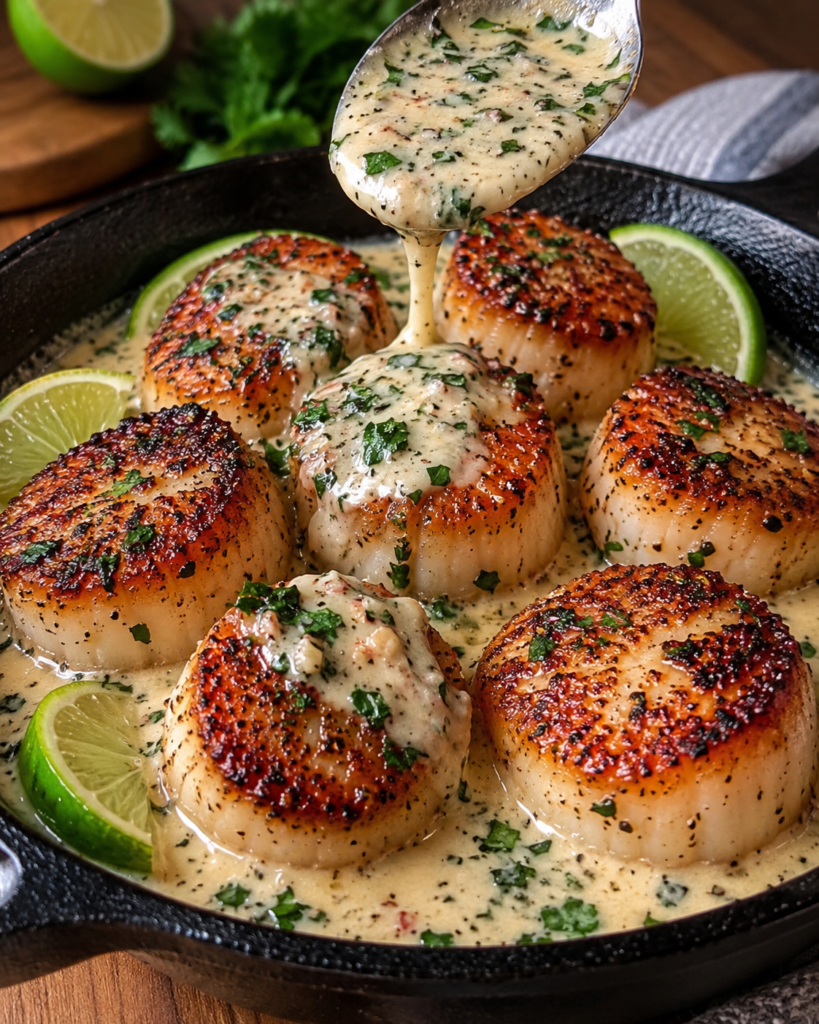
Creamy Garlic Butter Seared Scallops are an elegant seafood dish made with juicy sea scallops that are pan-seared until beautifully golden and then finished in a rich, velvety garlic herb cream sauce. The contrast between the caramelized exterior of the scallops and their soft, tender centers makes this recipe especially satisfying.
The creamy sauce is flavored with fresh garlic, butter, herbs, Parmesan, and a touch of lemon or lime for brightness. It tastes luxurious, but the recipe itself is surprisingly quick and simple. You can serve these scallops for a special dinner, date night, holiday meal, or even an easy restaurant-style weeknight dinner.
The key to excellent scallops is getting a deep golden crust without overcooking them. Patting the scallops completely dry before searing and using a very hot skillet are the most important steps. Once they are browned, they are removed from the pan while the sauce is prepared, then returned briefly at the end so they stay tender and juicy.
Prep Time
15 minutes
Cook Time
20 minutes
Total Time
35 minutes
Servings
4 servings
Ingredients
For the Scallops
1½ pounds large sea scallops
1 tablespoon olive oil
2 tablespoons unsalted butter
½ teaspoon salt
½ teaspoon freshly ground black pepper
½ teaspoon smoked paprika
½ teaspoon garlic powder
For the Creamy Garlic Butter Sauce
2 tablespoons unsalted butter
4 cloves garlic, finely minced
1 cup heavy cream
½ cup freshly grated Parmesan cheese
½ teaspoon Italian seasoning
¼ teaspoon red pepper flakes, optional
2 tablespoons fresh parsley, finely chopped
1 tablespoon fresh lemon or lime juice
Salt and black pepper, to taste
For Garnish
Fresh parsley
Lemon or lime wedges
Freshly cracked black pepper
Instructions
1. Prepare the Scallops
Remove the scallops from their packaging and place them on a plate lined with paper towels.
Pat the scallops very thoroughly with additional paper towels until their surfaces are as dry as possible.
This step is extremely important. Excess moisture causes scallops to steam instead of developing the deep golden-brown crust that makes seared scallops so delicious.
If your scallops have a small tough side muscle attached, gently pull it off and discard it.
Season both sides of the scallops with salt, black pepper, smoked paprika, and garlic powder.
Allow them to sit at room temperature for approximately 5 to 10 minutes while you heat the skillet.
2. Heat the Pan
Place a large cast-iron skillet or heavy-bottomed frying pan over medium-high heat.
Allow the pan to become properly hot before adding the scallops.
Add the olive oil and 1 tablespoon of butter.
When the butter has melted and begins to foam slightly, the skillet is ready.
Do not allow the butter to burn.
3. Sear the Scallops
Arrange the scallops in the hot skillet in a single layer.
Make sure there is some space between each scallop. Crowding the skillet lowers the temperature and can prevent the scallops from browning properly.
Depending on the size of your skillet, you may need to cook them in two batches.
Let the scallops cook completely undisturbed for approximately 2 to 3 minutes on the first side.
Avoid moving or flipping them too early.
Once the bottom has developed a dark golden, caramelized crust, flip each scallop carefully.
Add the remaining tablespoon of butter to the skillet.
Cook the second side for approximately 1½ to 2 minutes.
The scallops should be golden on the outside but still tender and juicy in the center.
Transfer the cooked scallops to a clean plate and loosely cover them while preparing the sauce.
4. Start the Garlic Butter Sauce
Reduce the heat to medium-low.
Add 2 tablespoons of butter to the same skillet.
Do not clean the skillet because the browned bits left from the scallops contain lots of flavor.
Add the minced garlic.
Cook for approximately 30 to 45 seconds, stirring constantly.
The garlic should become fragrant but should not turn dark brown.
5. Add the Cream
Slowly pour the heavy cream into the skillet.
Use a wooden spoon or silicone spatula to scrape any flavorful browned pieces from the bottom of the pan.
Bring the cream to a very gentle simmer.
Do not boil aggressively because high heat can cause the cream to separate.
Cook for approximately 2 to 3 minutes, stirring occasionally.
6. Add Parmesan and Seasonings
Add the grated Parmesan cheese gradually while continuously stirring.
Continue stirring until the Parmesan melts completely and the sauce becomes smooth and creamy.
Add Italian seasoning and red pepper flakes if you enjoy a little heat.
Taste the sauce before adding extra salt because Parmesan can already be quite salty.
Season with black pepper and additional salt if necessary.
7. Add Fresh Herbs and Citrus
Stir in the chopped fresh parsley.
Add the lemon or lime juice.
The citrus helps balance the richness of the butter, cream, and cheese and gives the sauce a fresher flavor.
Continue cooking over low heat for approximately one minute.
The sauce should be creamy enough to coat the back of a spoon.
If the sauce becomes too thick, add 1 to 2 tablespoons of warm water or broth.
8. Return the Scallops
Reduce the heat to low.
Return the seared scallops to the skillet.
Spoon some of the creamy garlic butter sauce over each scallop.
Allow them to warm in the sauce for approximately 30 to 60 seconds.
Do not simmer the scallops for several minutes because they can become rubbery when overcooked.
Remove the skillet from the heat.
9. Garnish and Serve
Sprinkle additional fresh parsley and freshly cracked black pepper over the scallops.
Arrange lemon or lime wedges around the skillet for serving.
Spoon plenty of creamy garlic butter sauce over each portion.
Serve immediately while the scallops are still hot and tender.
Recipe Notes
Large sea scallops are best for this recipe because they are easier to sear without overcooking.
Try to buy dry-packed scallops when possible. Wet-packed scallops often contain additional liquid and can be harder to brown.
Freshly grated Parmesan melts much more smoothly than pre-shredded packaged cheese.
Heavy cream produces the richest, smoothest sauce. Half-and-half can be used for a lighter version, but the finished sauce may be thinner.
The scallops should be added back to the sauce only briefly. They have already been cooked during searing and only need to warm through.
You can use lemon or lime depending on the flavor you prefer. Lemon provides a classic seafood flavor, while lime gives the dish a slightly brighter and more distinctive finish.
Tips for Perfect Scallops
Dry the Scallops Thoroughly
This is one of the most important secrets to getting restaurant-style scallops. Water prevents proper browning.
Use a Hot Skillet
Your pan should be properly heated before the scallops go in. A cool skillet will make them release liquid instead of creating a crust.
Don’t Crowd the Pan
Leave space between the scallops. If necessary, cook them in batches.
Don’t Move Them Too Soon
Allow the first side to cook undisturbed. When a proper crust forms, the scallops usually release naturally from the pan.
Avoid Overcooking
Scallops cook very quickly. Overcooked scallops become firm and rubbery instead of soft and buttery.
Use Fresh Garlic
Fresh minced garlic gives the cream sauce significantly better flavor than garlic powder alone.
Add Parmesan Slowly
Stir the cheese into warm cream gradually to create a smooth sauce rather than a grainy one.
Serving Suggestions
Creamy Garlic Butter Seared Scallops can be served with many different sides.
For a restaurant-style dinner, serve them over linguine, fettuccine, spaghetti, or angel hair pasta so the noodles can absorb the creamy garlic sauce.
Mashed potatoes are another excellent option because they pair beautifully with the rich sauce.
For a lighter meal, serve the scallops alongside steamed asparagus, green beans, broccoli, spinach, zucchini, or a fresh green salad.
Garlic bread or crusty French bread is perfect for soaking up every bit of the creamy sauce.
You can also serve the scallops over white rice, cauliflower rice, or risotto.
Storage
Scallops are best eaten immediately after cooking.
If you have leftovers, allow them to cool and transfer them to an airtight container.
Store in the refrigerator for up to 2 days.
Because seafood is delicate, avoid leaving cooked scallops at room temperature for extended periods.
Reheating
Reheat scallops gently.
Place them in a skillet with the sauce over low heat and warm just until heated through.
Avoid boiling or microwaving them for too long because additional cooking can make the scallops rubbery.
If the cream sauce becomes too thick after refrigeration, stir in a small splash of cream, milk, broth, or water while reheating.
Nutritional Information
Approximate nutritional values per serving:
Calories: 520
Protein: 32 g
Carbohydrates: 8 g
Fat: 39 g
Saturated Fat: 23 g
Fiber: 1 g
Sugar: 3 g
Sodium: 780 mg
Calcium: 260 mg
Nutritional values are estimates and will vary depending on the exact ingredients and portion sizes used.
Benefits
Scallops are an excellent source of high-quality protein. Protein helps support muscle maintenance, tissue repair, and overall body function.
Seafood such as scallops also provides important minerals, including selenium, phosphorus, zinc, and magnesium.
Scallops contain vitamin B12, which supports healthy red blood cell formation and normal nervous system function.
Fresh parsley contributes small amounts of antioxidants and vitamins, while garlic provides flavorful plant compounds.
The dish is naturally relatively low in carbohydrates, making it easy to pair with vegetables or salad if you prefer a lower-carbohydrate meal.
Because the sauce contains butter, cream, and Parmesan, it is rich and calorie-dense, so portion size is worth keeping in mind if you are tracking calories or saturated fat.
Frequently Asked Questions
What are the best scallops for this recipe?
Large sea scallops are ideal. They are thick enough to develop a golden crust while remaining tender inside.
Can I use frozen scallops?
Yes. Thaw frozen scallops completely in the refrigerator, drain them well, and pat them extremely dry before cooking.
Why won’t my scallops brown?
The most common causes are excess moisture, a skillet that is not hot enough, or overcrowding the pan.
How do I know when scallops are cooked?
Cooked scallops should be opaque around the edges with a tender center. They should feel slightly firm but not hard.
Can I replace heavy cream?
You can use half-and-half, although the sauce will be thinner and less rich.
Can I make this without Parmesan?
Yes. The Parmesan adds flavor and helps thicken the sauce, but you can omit it. Simmer the cream slightly longer if needed.
Can I add spinach?
Absolutely. Add 1 to 2 cups of fresh baby spinach to the cream sauce and allow it to wilt before returning the scallops.
Can I add mushrooms?
Yes. Sauté sliced mushrooms after removing the scallops and before adding the garlic. Cook until browned, then continue with the sauce.
Can I use shrimp instead?
Yes. Large shrimp work beautifully with the same creamy garlic butter sauce. Adjust the cooking time because shrimp typically cook faster.
What should I serve with these scallops?
Pasta, mashed potatoes, risotto, white rice, asparagus, roasted vegetables, salad, or garlic bread are all excellent choices.
Can I make the sauce ahead of time?
It is better prepared fresh. Cream sauces can thicken considerably as they cool, and freshly made sauce has the smoothest texture.
Why did my scallops turn rubbery?
They were most likely overcooked. Scallops require only a few minutes of cooking and should be returned to the sauce for less than a minute.
Can I make the dish spicy?
Yes. Increase the red pepper flakes or add a small amount of cayenne pepper to the sauce.
Can I use lime instead of lemon?
Yes. Lime pairs especially well with the creamy garlic sauce and gives it a fresh, slightly tangy finish.
Final Notes
Creamy Garlic Butter Seared Scallops are an impressive dish that does not require complicated cooking techniques. The combination of deeply caramelized scallops, rich garlic cream sauce, Parmesan, fresh herbs, and bright citrus creates a meal that tastes like something from a seafood restaurant.
The most important things to remember are to dry the scallops thoroughly, use a hot skillet, avoid overcrowding, and cook them only briefly. Follow those simple rules and you can achieve beautifully browned scallops with juicy, tender centers every time.
Serve them immediately with plenty of creamy sauce, fresh herbs, and lemon or lime wedges for a beautiful and satisfying seafood dinner.