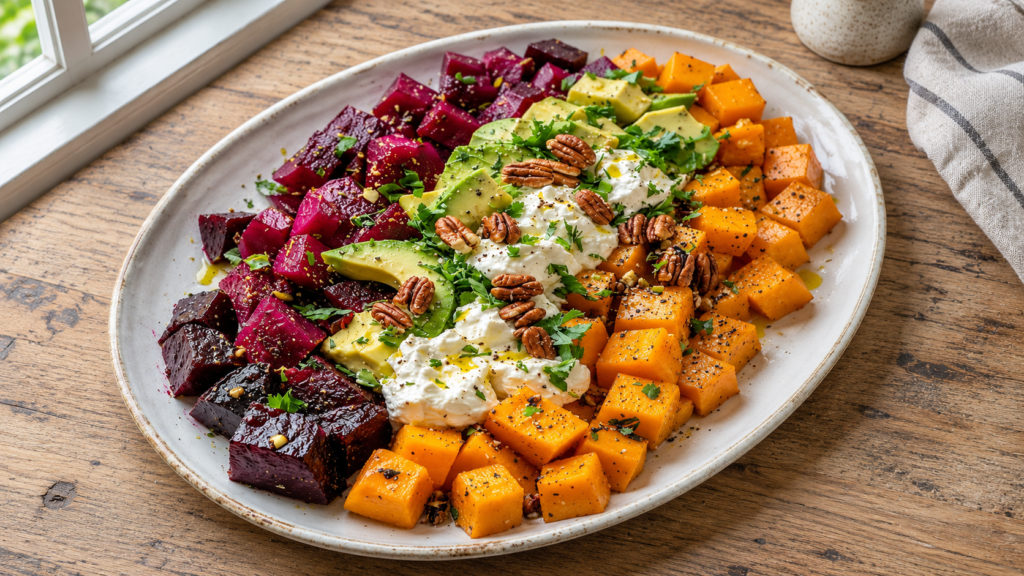

Roasted Beet and Butternut Squash Salad with Burrata
Prep time — 25 minutes
Cook time — 35–45 minutes
Cooling time — 10 minutes
Servings — 6 side servings
Cooking method — Oven-roasted vegetables with a fresh lemon dressing
Recipe Description
Sweet roasted beets and golden butternut squash are the base of this colorful salad. Ripe avocado and torn burrata bring a creamy texture, while toasted pecans give each bite a little crunch. A lemon and Dijon dressing cuts through the richness of the cheese and brings out the sweetness of the roasted vegetables.
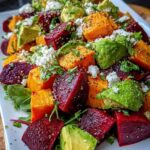
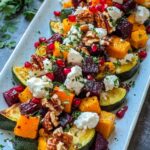
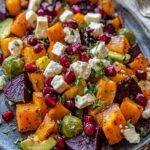
The salad is served on a platter so you can see and scoop up all the different ingredients. Arrange the ruby-red beets along one side, the squash along the other, and the avocado and burrata down the center. Finish with chopped parsley, pecans, and a drizzle of dressing. You’ll get the same layered look as the landscape photo, with a little of everything in each serving.
Serve this roasted beet and butternut squash salad at room temperature alongside roast chicken, baked salmon, or a holiday main dish. For lunch, add a scoop of cooked farro and a slice of crusty bread to catch the lemon dressing and soft burrata.
Ingredients
For the salad
- 1 pound red beets, peeled and cut into ¾-inch cubes
- 1 pound peeled and seeded butternut squash, cut into 1-inch cubes
- 2 tablespoons olive oil, divided
- ½ teaspoon fine sea salt, divided
- ¼ teaspoon black pepper, divided
- ⅓ cup pecan halves
- 1 large ripe avocado
- 8 ounces burrata, drained
- ¼ cup chopped fresh flat-leaf parsley
For the lemon Dijon dressing
- 2 tablespoons extra-virgin olive oil
- 2 tablespoons fresh lemon juice
- 1 teaspoon Dijon mustard
- 1 teaspoon honey
- ⅛ teaspoon fine sea salt
- ⅛ teaspoon freshly ground black pepper
Step-by-Step Instructions
1. Prepare the oven and vegetables
Preheat the oven to 425°F (220°C). Line two rimmed baking sheets with parchment paper. Dice the squash first if you’re using the same cutting board for both vegetables, since the beets will leave red juice behind. Cut the beets slightly smaller than the squash because they usually take longer to soften.
Toss the beets with 1 tablespoon of olive oil and half the roasting salt and pepper. Spread the cubes in a single layer on one baking sheet. Toss the squash with the remaining tablespoon of oil and the rest of the roasting salt and pepper. Spread it on the second baking sheet, leaving a little space between pieces for browning.
2. Give the beets a head start
Roast the beets for 10 minutes, then slide the squash into the oven. Continue roasting both trays for 25–35 minutes, turning the vegetables about halfway through. If you’re using two oven racks and one tray is browning faster, swap their positions when you turn the vegetables.
The squash is ready when the corners are golden and a fork slides into the center easily. The beets should be tender all the way through and still hold their shape. Check the trays separately and take each one out when it’s ready. Leave the vegetables on their trays for about 10 minutes so they cool slightly before assembly.
3. Toast the pecans
While the vegetables roast, put the pecans in a dry skillet over medium-low heat. Stir or shake the skillet for 3–5 minutes, until they smell nutty and darken slightly. Transfer them to a plate as soon as they’re ready, since the hot skillet will keep toasting them even after you turn off the heat.
Leave some halves whole for the top of the platter. Break the rest into smaller pieces so the nuts are easy to pick up with a fork.
4. Whisk the lemon Dijon dressing
In a small bowl, whisk together the lemon juice, Dijon mustard, honey, salt, and pepper. Slowly whisk in the extra-virgin olive oil until the dressing comes together. Taste it with a small piece of roasted squash. If you’d like a brighter flavor, add an extra squeeze of lemon. If the lemon is particularly sharp, soften it with another teaspoon of olive oil.
5. Arrange the roasted vegetables and avocado
Spoon the beets along one side of a large oval platter and the squash along the other. Leave a little space in the center for the avocado and burrata. Drizzle about half the dressing over the vegetables so each side has a chance to absorb some before you add the toppings.
Halve the avocado, remove the pit, and cut the flesh into thick wedges or chunks. Turn the pieces gently in a spoonful of the dressing, then tuck them down the center of the platter. Slice the avocado at this stage so it stays green and fresh-looking.
6. Add the burrata and finish the platter
Pat the drained burrata lightly with a paper towel. Tear it open over the center of the platter and spread the soft pieces among the avocado wedges. Let a little of the creamy center fall over the vegetables. Scatter the toasted pecans and chopped parsley over the top, then spoon on the remaining dressing.
Serve with a wide spoon so guests can lift the roasted vegetables, avocado, and burrata together without crushing the softer ingredients.
Helpful Cooking Tips
- Use separate pans for the vegetables. The beet juice stays away from the squash, and you can remove either tray as soon as it’s done.
- Check the squash early. Small cubes can soften quickly, especially if you’re using a bag of pre-cut squash. Test a couple of pieces at the 25-minute mark.
- Pick an avocado that yields slightly when pressed. A very soft avocado is harder to slice and can lose its shape when you coat it in dressing.
- Drain the burrata well. Extra liquid can collect on the platter and dilute the lemon dressing. Add the cheese once the vegetables have stopped steaming.
- Add the pecans last. They’ll hold their crunch longer if you scatter them over the dressed salad just before serving.
Recipe Notes
For a quicker version, use pre-cut butternut squash and plain cooked beets. Cut the cooked beets into cubes and bring them to room temperature while the squash roasts. The beets will have a softer texture, and the freshly roasted squash will still give you golden edges. If you use pickled beets, start with less dressing and add more after tasting.
For a dinner party, roast the vegetables and toast the pecans in advance. Refrigerate the beets and squash in separate covered containers, and keep the cooled pecans dry. Whisk the dressing again before serving. Assemble the platter with freshly sliced avocado, torn burrata, parsley, and pecans just before it goes to the table.
For a grain bowl, divide warm farro or quinoa among bowls, then add the beets and squash. Finish each portion with avocado, burrata, and pecans so everyone gets some of the creamy and crunchy toppings.
Nutritional Information
Estimated per side serving, based on 6 servings and all of the dressing
- Calories — About 300
- Protein — 7 g
- Carbohydrates — 19 g
- Fiber — 5 g
- Total fat — 23 g
- Saturated fat — About 6 g
- Sodium — About 400 mg
The exact values depend on the burrata brand, avocado size, and how much dressing stays on the platter.
Nutrition Benefits
Butternut squash provides beta-carotene, which the body can convert into vitamin A. Beets and avocado add fiber, while pecans, avocado, and olive oil contribute unsaturated fats. Burrata provides some protein and calcium. Its creamy center spreads easily through the roasted vegetables, so a few torn pieces across the platter give each serving some cheese.
Questions and Answers
Can I use sweet potatoes instead of butternut squash?
Yes. Peel and cube about 1 pound of sweet potatoes and roast them on a separate tray. Start checking after 25 minutes. They’ll give the salad a slightly sweeter taste and keep the orange color.
What can I use instead of burrata?
Torn fresh mozzarella gives you a milder, firmer topping. Soft goat cheese works if you want a tangier flavor. Use either to taste and adjust the salt after adding the cheese.
Can I make it without pecans?
Yes. Use toasted pumpkin seeds for a similar crunch, or leave the topping off. Add another handful of chopped parsley at the end if you’d like a fresher finish.