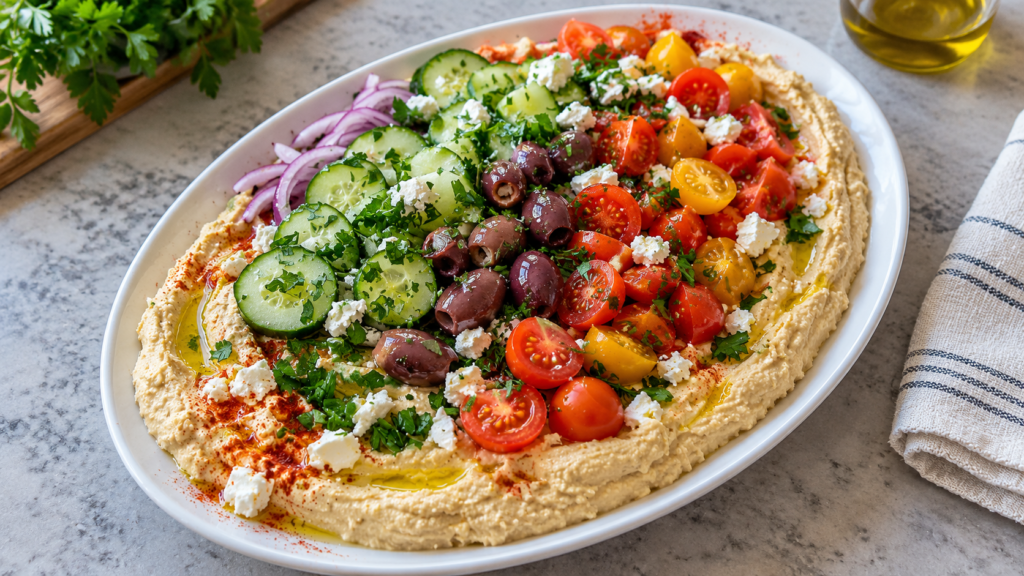

Mediterranean Loaded Hummus Platter
Creamy hummus topped with crisp cucumber, juicy cherry tomatoes, Kalamata olives, red onion, crumbled feta, and fresh parsley makes a colorful platter for sharing. A finishing drizzle of olive oil and a sprinkle of paprika bring everything together.
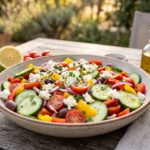
This recipe is inspired by the dish in your photograph. It combines the smooth texture of hummus with the freshness of a chopped Mediterranean salad. Each scoop offers something different: tangy feta, briny olives, crunchy vegetables, and lemony chickpeas.
Serve it as a party appetizer, an easy lunch, or a side dish alongside grilled food. Homemade hummus gives you control over the texture and seasoning, but a good store-bought version works when you need a shortcut. The vegetables require no cooking, and arranging them takes only a few minutes.
Prep time: 25 minutes
Cook time: None, using canned chickpeas
Total time: 25 minutes
Servings: 8 appetizer portions or 4 generous light-lunch portions
Yield: Approximately 3 cups hummus, plus toppings
Ingredients For Mediterranean Loaded Hummus Platter with Feta
2 cans (15 ounces each) chickpeas, drained and rinsed
⅓ cup tahini, stirred well before measuring
¼ cup freshly squeezed lemon juice
2 tablespoons extra-virgin olive oil
1 small garlic clove, roughly chopped
½ teaspoon ground cumin
½ teaspoon salt, plus more to taste
4–6 tablespoons ice-cold water, plus more if needed
For the Mediterranean toppings:
1 medium English cucumber, thinly sliced or cut into half-moons
1½ cups cherry tomatoes, halved; use red and yellow if available
⅓ cup red onion, very thinly sliced
½ cup pitted Kalamata olives, drained
½ cup crumbled feta cheese
¼ cup finely chopped fresh parsley
1 tablespoon extra-virgin olive oil
¼ teaspoon sweet or smoked paprika
Freshly ground black pepper, to taste
For serving, optional:
Warm pita bread, cut into wedges
Pita chips or crackers
Carrot sticks
Bell pepper strips
Extra cucumber slices
Lemon wedges
Instructions for Mediterranean Loaded Hummus Platter with Feta
Prepare the chickpeas.
Drain the canned chickpeas and rinse them thoroughly under cool running water. Let them drain well. For an extra-smooth hummus, rub the chickpeas gently between clean kitchen towels and remove any skins that loosen. This is optional; the hummus will still taste delicious with the skins included.
Blend the tahini and lemon.
Add the tahini and lemon juice to a food processor. Process for about 45 seconds, scrape down the sides, and process again until the mixture looks creamy. It may thicken at first, which is normal. Starting with these ingredients helps distribute the tahini evenly throughout the finished hummus.
Add the seasonings.
Add the garlic, cumin, salt, and 2 tablespoons olive oil. Process briefly until combined. One small garlic clove gives a gentle background flavor. If you prefer stronger garlic, you can add more after tasting, but start modestly because raw garlic becomes more noticeable as the hummus rests.
Blend in the chickpeas.
Add half the chickpeas and blend until roughly smooth. Add the remaining chickpeas and continue processing, stopping occasionally to scrape down the bowl. With the processor running, add the cold water one tablespoon at a time. Blend for another 2–3 minutes until the hummus becomes smooth and spreadable.
Adjust the texture and flavor.
Taste the hummus. Add a little more lemon juice for brightness or salt if needed. If it feels too thick, blend in another tablespoon of cold water. Aim for a soft texture that holds spoon swirls while remaining easy to scoop. It should not be runny.
Prepare the vegetables.
Wash and dry the cucumber, tomatoes, and parsley. Slice the cucumber, halve the tomatoes, and thinly slice the onion. Pat the cucumber and tomatoes lightly with a clean towel if they are very wet. Drain the olives and crumble the feta into small, uneven pieces.
Spread the hummus.
Spoon the hummus onto a large, shallow serving platter. Use the back of a spoon to spread it into an even layer, approximately ½–¾ inch thick. Create shallow curves across the surface, leaving a slightly raised border around the edges to hold the toppings.
Arrange the toppings.
Place the cucumber, tomatoes, olives, and red onion in loose rows across the hummus, following the style of the photograph. Alternatively, scatter them evenly for easier sharing. Leave some hummus visible around the edges so guests can see the creamy base beneath the vegetables.
Finish and serve.
Sprinkle the feta and parsley over the platter. Drizzle with the remaining tablespoon of olive oil, then dust the exposed hummus with paprika and black pepper. Serve promptly with warm pita or fresh vegetable sticks. Offer lemon wedges separately for anyone who enjoys extra citrus.
Notes for Mediterranean Loaded Hummus Platter with Feta
Using store-bought hummus: Substitute approximately 3 cups of prepared plain hummus for the homemade base. Taste it before adding extra lemon, garlic, or salt. Different brands vary considerably in seasoning and thickness.
Choosing tahini: Use a smooth, pourable tahini with a mild sesame flavor. Stir the jar thoroughly before measuring because the oil often separates. Strongly bitter tahini can dominate the hummus.
Making it ahead: Prepare the hummus up to 3 days ahead and refrigerate it in a covered container. Store the chopped vegetables separately, then assemble shortly before serving. Freshly assembled toppings give the best crunch and appearance.
Storing leftovers: Refrigerate promptly in an airtight container and use the assembled platter within 2 days for the best quality. Tomatoes and cucumber release moisture during storage, so the surface may become softer. Avoid leaving the platter at room temperature for more than 2 hours.
Tips for Mediterranean Loaded Hummus Platter with Feta
Dry the toppings well. Excess water dilutes the hummus and creates puddles around the vegetables.
Keep the hummus layer generous. A very thin layer becomes difficult to scoop once the toppings are added.
Soften the onion’s sharpness. Soak the slices in cold water for 10 minutes, then drain and dry thoroughly.
Season after adding feta and olives. Both are salty, so the completed platter may need less additional salt than expected.
Use a shallow platter. It gives guests access to the toppings and hummus together.
Keep the garnish simple. Fresh parsley, paprika, and a measured drizzle of olive oil provide plenty of flavor.
Make Everyday Cooking Easier
Discover 60+ high-protein, low-carb recipes with simple instructions and everyday ingredients. Explore breakfasts, lunches, dinners, salads, and snacks—plus a 30-day meal plan to help you plan ahead.
Get the Elite Protein Kitchen Cookbook
Serving Suggestions for Mediterranean Loaded Hummus Platter with Feta
For a casual appetizer, place the platter in the center of the table with pita wedges and vegetable sticks arranged nearby. Keep the bread separate so it stays dry and guests can choose their preferred accompaniment.
For lunch, divide the platter into four portions and serve with whole-wheat pita. Add grilled chicken, cooked lentils, or extra chickpeas if you want a more substantial meal. These additions change the nutrition values listed below.
The platter also pairs well with grilled fish, roasted vegetables, or lemon-herb chicken. Because it already includes creamy, crunchy, and salty components, a simple main dish is usually enough.
Nutritional Information for Mediterranean Loaded Hummus Platter with Feta
Estimated nutrition per appetizer serving, based on eight servings and excluding bread, crackers, and optional accompaniments:
Nutrient Approximate amount
Calories 270
Protein 9 g
Carbohydrates 25 g
Fiber 7 g
Total fat 16 g
Saturated fat 3 g
Sodium 500 mg
These are estimates, not laboratory-tested values. Chickpea brands, drained weights, feta, olives, and the amount of salt used can change the totals. A light-lunch portion of one-quarter of the platter contains approximately twice these amounts, before accompaniments.
Nutritional Benefits for Mediterranean Loaded Hummus Platter with Feta
Chickpeas contribute plant protein and dietary fiber, making the hummus more substantial than a vegetable-only dip. Tahini and olive oil provide mostly unsaturated fats, while feta contributes some protein and calcium.
The toppings add variety as well as flavor. Tomatoes provide carotenoids, cucumber adds freshness, and parsley contributes small amounts of vitamins and minerals. Whole-wheat pita or additional vegetables can add more fiber to the meal.
This platter contains several nutritious ingredients, but it is not automatically a high-protein main meal. For a larger protein contribution, serve it with chicken, fish, tofu, or additional legumes. Portions and accompaniments determine the overall balance.
Questions and Answers for Mediterranean Loaded Hummus Platter with Feta
Can I make this platter without a food processor?
Yes. Use prepared hummus, or mash the chickpeas thoroughly with a potato masher before mixing in the remaining ingredients. The homemade version will have a more rustic texture. A high-powered blender also works, though you may need to stop frequently and scrape down the sides.
Can I make it vegan?
Yes. Omit the feta or replace it with a suitable plant-based alternative. The remaining ingredients are plant-based. Check packaged accompaniments if you are serving guests with specific dietary requirements.
Is this recipe gluten-free?
The platter ingredients are naturally gluten-free, but check packaged ingredient labels when necessary. Serve with vegetable sticks or certified gluten-free crackers instead of regular pita bread.
Can I use dried chickpeas?
Yes. Use approximately 3 cups of fully cooked, drained chickpeas. Cook them until very tender before blending. The soaking and cooking time is additional to the preparation time listed here.
What if my hummus tastes bitter?
Taste your tahini first, since it is often the source of bitterness. A little extra lemon juice and salt may improve the balance, but they cannot completely correct a strongly bitter or rancid ingredient. Use fresh tahini and olive oil.
Can I replace the Kalamata olives?
Certainly. Use drained green olives or another variety you enjoy. If you prefer to leave olives out, add diced roasted red peppers for another colorful topping, then adjust the seasoning to taste.
Why did my platter become watery?
The vegetables may have been wet, salted too early, or left on the hummus for several hours. Dry them before assembling, avoid salting the tomatoes separately, and add the toppings shortly before serving.
Can I serve individual portions?
Yes. Spread hummus into small shallow bowls and divide the toppings among them. Individual portions are useful for lunches and gatherings, and they make it easier to keep serving sizes consistent.Mediterranean Loaded Hummus Platter with Fetahttps://ketosl.com/pizza-grilled-cheese-sandwich/


Pingback: Slow Cooker French Onion Beef and Shell Pasta 2026