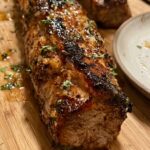
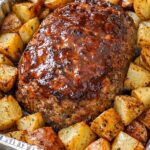
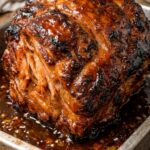
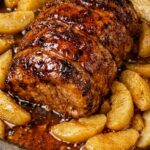
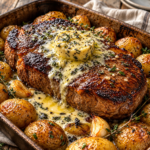
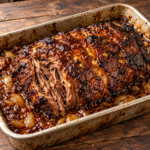
Garlic Butter Glazed Beef Roast is a comforting, savory centerpiece made with a beautifully seared beef roast coated in a rich garlic-herb butter glaze and slow-roasted until perfectly tender. The outside develops a deeply browned crust while the garlic, butter, rosemary, thyme, and paprika create an irresistible aroma and rich flavor.
Potatoes and carrots can be roasted alongside the beef, allowing them to absorb the flavorful pan juices. After resting, the roast is sliced thinly against the grain and finished with warm pan juices for an especially delicious serving.
## Recipe Overview
**Prep Time:** 30 minutes
**Cook Time:** 1 hour 15 minutes–2 hours, depending on size and doneness
**Resting Time:** 15–20 minutes
**Total Time:** About 2–2½ hours
**Servings:** 6–8
**Cuisine:** American Comfort Food
**Course:** Main Course
## Ingredients
### For the Beef Roast
* 2–3 lb (900 g–1.3 kg) bottom round, top round, or sirloin tip roast
* 1½–2 tsp kosher salt, or to taste
* 1 tsp freshly cracked black pepper
* 2 tbsp olive oil or another high-smoke-point oil
* 1 lb small potatoes, halved
* 4–5 whole carrots, peeled and cut into thick chunks
* Salt and black pepper, to taste
* 1 tbsp olive oil, if needed
## Instructions
### 1. Bring the Roast Toward Room Temperature
Remove the beef roast from the refrigerator about 30 minutes before cooking. Place it on a clean plate or cutting board.
Pat the entire roast very dry with paper towels. Removing excess moisture helps the meat develop a much better seared crust.
Season all sides generously with kosher salt and freshly cracked black pepper. Rub the seasoning over the surface so every side is covered.
### 2. Prepare the Garlic Butter
Add the softened butter to a medium bowl.
Add the minced garlic, thyme, rosemary, onion powder, paprika, and Dijon mustard if using.
Mix thoroughly until everything is evenly incorporated and a thick, fragrant garlic butter paste forms.
Set aside while you sear the beef.
### 3. Sear the Roast
Place a large heavy skillet over high heat. Add the olive oil and allow it to become very hot.
Carefully place the seasoned roast into the skillet.
Sear for approximately 3–4 minutes on each major side, turning as necessary, until the exterior develops a deep golden-brown to dark-brown crust.
Don’t rush this step. A good sear gives the finished roast considerably more flavor.
Once browned, transfer the roast to a 9×13-inch roasting pan or another large oven-safe baking dish.
### 4. Coat With Garlic Butter
Immediately spread the garlic butter mixture generously over the entire roast.
Cover the top, sides, and ends as evenly as possible. The butter will melt as the beef roasts, combining with the garlic and herbs to create flavorful pan juices.
If you have any garlic butter remaining, reserve it for the vegetables.
### 5. Add the Vegetables
If using potatoes and carrots, place them around the roast.
Toss them with any remaining garlic butter. If you don’t have enough butter left, add a small drizzle of olive oil and season with salt and pepper.
Pour ½ cup beef broth into the bottom of the roasting pan, taking care not to pour it directly over the crusted roast.
The broth helps create flavorful pan juices while keeping the bottom of the pan from becoming too dry.
### 6. Start With High Heat
Preheat the oven to **450°F (230°C)**.
Place the uncovered roasting pan in the oven and roast at 450°F for approximately **15–20 minutes**.
This initial blast of heat helps reinforce the browned exterior.
### 7. Reduce the Temperature
After the initial 15–20 minutes, reduce the oven temperature to **325°F (165°C)**.
Continue roasting until the beef reaches your desired internal temperature.
Because roast shape, thickness, starting temperature, and individual ovens vary, use an instant-read meat thermometer rather than relying only on the clock.
For the juiciest result, medium-rare is generally a good target for this style of roast, provided it suits your preference.
### 8. Baste the Roast
Every 20 minutes or so, carefully spoon some of the melted garlic butter and pan juices over the roast.
This helps keep the surface richly coated and allows the garlic and herbs to continue flavoring the beef.
If the bottom of the pan becomes dry during roasting, add a small amount of additional beef broth.
### 9. Check the Internal Temperature
Begin checking the temperature earlier than you think you need to.
For a 2–3 lb roast, cooking time can vary substantially depending on its thickness and shape. A thermometer inserted into the thickest center portion is the most reliable way to determine doneness.
Remember that the internal temperature can continue rising slightly while the meat rests, so avoid significantly overshooting your desired temperature.
### 10. Rest the Beef
When the roast reaches your preferred temperature, carefully transfer it to a cutting board.
Loosely tent the roast with aluminum foil.
Let it rest for **15–20 minutes** before slicing.
Do not skip this step. Resting gives the juices time to redistribute throughout the meat, helping prevent them from immediately running onto the cutting board when you slice.
### 11. Slice Against the Grain
After resting, use a sharp carving knife to slice the roast thinly.
Look carefully at the direction of the muscle fibers and cut **against the grain**, rather than parallel to it.
Thin slices cut against the grain are especially helpful with lean cuts such as top round or bottom round because they make the meat easier to chew.
### 12. Finish With Pan Juices
Arrange the sliced beef on a serving platter.
Spoon some of the warm garlic butter pan juices over the slices.
Serve the roast with the roasted potatoes and carrots, if using.
For an extra-rich presentation, place additional pan juices in a small serving bowl so everyone can spoon more over their portion.
## Helpful Notes
### Choose the Right Cut
Bottom round, top round, and sirloin tip can all work well for this preparation. These are relatively lean cuts, so careful temperature control and proper slicing are important.
Sirloin tip can offer a particularly nice balance between tenderness and beefy flavor.
### Don’t Skip the Sear
The searing step creates a flavorful browned exterior through the Maillard reaction. It doesn’t literally “lock in” the juices, but it does add significant depth and a better crust.
### Use a Thermometer
Cooking time is only an estimate. Two roasts with the same weight can require different cooking times because of differences in thickness and shape.
An instant-read thermometer gives you much better control.
### Keep the Garlic From Burning
Garlic can become bitter if exposed to very high direct heat for too long. Since the butter glaze is added after searing, it is protected somewhat by the roast and pan juices.
If the garlic on the surface becomes excessively dark during roasting, loosely tent the roast with foil while allowing it to continue cooking.
### Don’t Cut Immediately
Cutting into the roast immediately after removing it from the oven allows more of the juices to escape.
A 15–20 minute resting period makes a noticeable difference in the final texture.
## Serving Suggestions
Serve this roast with classic comfort-food sides such as:
The rich garlic butter pan juices also make an excellent sauce for mashed potatoes and roasted vegetables.
## Storage
Allow leftover beef to cool and refrigerate it in an airtight container within about 2 hours of cooking.
Store the sliced beef in the refrigerator for **3–4 days**.
For best texture, reheat gently rather than using very high heat. Add a little beef broth or reserved pan juice before reheating to help keep the slices moist.
Cooked beef can also be frozen in a tightly sealed freezer-safe container for longer storage. Thaw it safely in the refrigerator before reheating.
## Reheating Tips
For the best result, place sliced beef in a baking dish with a little beef broth or pan juice. Cover loosely with foil and warm in a moderate oven until heated through.
Avoid overheating lean roast beef because it can quickly become dry and chewy.
## Recipe Variations
### Creamy Garlic Version
After removing the beef, use the flavorful pan juices as the base for a quick creamy sauce. Whisk in a small amount of heavy cream and simmer gently until slightly thickened.
### Herb-Forward Roast
Increase the rosemary and thyme and add a little finely chopped fresh parsley after cooking for a brighter herb flavor.
### Mustard Garlic Roast
Use Dijon mustard in the garlic butter for a slightly tangy flavor that pairs especially well with beef.
### Vegetable Roast
Add onions, mushrooms, celery, or parsnips around the roast along with the potatoes and carrots.
## Frequently Asked Questions
### Can I prepare the garlic butter ahead of time?
Yes. The garlic butter can be prepared several hours ahead and refrigerated. Bring it toward room temperature before spreading it over the roast so it is easier to apply.
### Can I skip searing?
You can, but the finished roast will not have the same deeply browned exterior and roasted flavor. Searing is strongly recommended.
### Why should I slice the roast thinly?
Lean beef roasts can be somewhat firm because they contain less fat. Thin slices cut against the grain shorten the muscle fibers and make each bite easier to chew.
### Can I use fresh herbs?
Absolutely. Fresh rosemary and thyme can provide an even more pronounced herbal aroma. Finely chop them before mixing them into the softened butter.
### Can I make gravy from the pan juices?
Yes. Strain the pan juices into a saucepan, remove excess fat if desired, and thicken with a small amount of flour or cornstarch slurry. Simmer until the gravy reaches your preferred consistency.
### What if my roast is larger than 3 pounds?
A larger roast will generally require more cooking time. Don’t rely on the stated times alone. Roast until the center reaches your desired temperature according to your thermometer.
### What is the best temperature for this roast?
For this recipe, **135°F (57°C)** is a flavorful medium-rare target, while **145°F (63°C)** is the USDA-style minimum internal temperature for whole cuts of beef after resting. Choose the final doneness according to your preference and food-safety needs.
## Nutrition Information
Approximate nutrition per serving will vary according to the specific beef cut, amount of butter consumed, serving size, and whether the vegetables are included.
For a serving of beef with some garlic butter and vegetables, a reasonable estimate is:
* **Calories:** 450–550 kcal
* **Protein:** 40–50 g
* **Fat:** 25–35 g
* **Carbohydrates:** 15–25 g
* **Fiber:** 3–5 g
* **Sodium:** 500–800 mg
These values are estimates rather than laboratory measurements.
## Why You’ll Love This Roast
This Garlic Butter Glazed Beef Roast brings together everything you want from a classic roast dinner: a deeply browned exterior, tender slices of beef, fragrant garlic, buttery herbs, savory pan juices, and hearty roasted vegetables.
The recipe is also flexible. You can adjust the herbs, add Dijon for extra flavor, roast your favorite vegetables alongside the beef, or turn the flavorful pan juices into gravy.
Most importantly, **sear the beef well, monitor its internal temperature, let it rest, and slice it against the grain**. Those four steps make the biggest difference in the final result.
## Final Serving Idea
For a beautiful family-style presentation, arrange thin slices of garlic butter beef down the center of a large platter. Surround them with golden potatoes and roasted carrots, then drizzle a little of the warm pan juice over the meat. Serve the remaining juices alongside for dipping or spooning over each slice.
This makes a satisfying Sunday dinner, holiday-style roast, or cozy weeknight meal when you want something hearty and comforting.