
Blueberry Almond Breakfast Casserole
Description
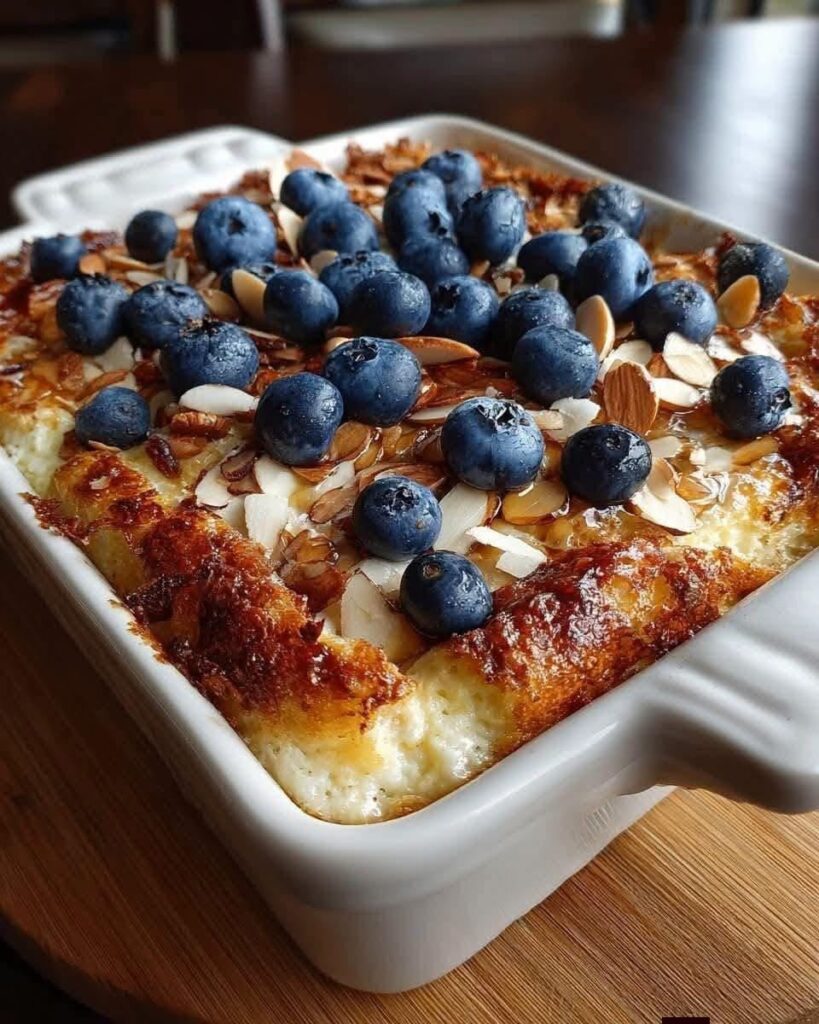
Blueberry Almond Breakfast Casserole is a warm, comforting breakfast bake made with cubes of bread soaked in a lightly sweet custard and topped with fresh blueberries and sliced almonds. As it bakes, the bread absorbs the egg-and-milk mixture and becomes soft and tender inside while the top develops a golden, lightly crisp finish.
This casserole is especially useful when you want a breakfast that feels special without requiring complicated preparation. It works well for weekend brunch, family breakfasts, holidays, potlucks, or make-ahead mornings when you want something ready to bake.
The fresh blueberries add natural sweetness and a slightly juicy texture, while the almonds provide a gentle crunch. Maple syrup or honey sweetens the custard without making the casserole overly sugary, and cinnamon adds a warm flavor that pairs beautifully with both blueberries and almonds.
You can serve this casserole on its own or with extra fresh fruit, a drizzle of maple syrup, a spoonful of yogurt, or lightly whipped cream. It is simple, filling, and easy to prepare with ingredients that are commonly available.
Prep Time
15 minutes
Cook Time
35–40 minutes
Resting Time
10 minutes
Total Time
About 1 hour
Servings
6 servings
Ingredients
- 4 cups cubed bread, preferably day-old French bread or sourdough
- 2 cups whole milk or preferred dairy-free milk
- 4 large eggs
- ¼ cup maple syrup or honey
- 1 teaspoon vanilla extract
- 1 teaspoon ground cinnamon
- ¼ teaspoon salt
- 1 cup fresh blueberries
- ¼ cup sliced almonds
- 1 tablespoon butter, for greasing
- Powdered sugar, optional for serving
Instructions
1. Preheat the Oven
Preheat your oven to 350°F or 175°C.
Allow the oven to fully preheat before placing the casserole inside. Starting with a properly heated oven helps the custard set evenly and encourages the top of the casserole to brown properly.
2. Prepare the Baking Dish
Use a 9×9-inch baking dish.
Grease the bottom and sides with approximately 1 tablespoon of butter.
Make sure the corners are lightly coated as well. This helps prevent the bread from sticking and adds a little richness around the edges.
3. Prepare the Bread
Cut the bread into medium cubes.
Day-old bread works particularly well because it is slightly dry and absorbs the custard efficiently.
If you only have fresh bread, cut it into cubes and leave it uncovered for 20–30 minutes before assembling the casserole.
You can also place fresh bread cubes in a low oven for a few minutes to dry them slightly.
Do not make the cubes too small. Medium pieces hold their structure better during baking and create a pleasant soft texture rather than turning completely mushy.
4. Arrange the Bread
Spread the cubed bread evenly in the prepared baking dish.
Try to create an even layer so every section receives a similar amount of custard.
Avoid pressing the bread down too firmly at this stage.
5. Prepare the Custard
In a medium mixing bowl, crack in the eggs.
Whisk until the yolks and whites are fully combined.
Add the milk, maple syrup or honey, vanilla extract, cinnamon, and salt.
Whisk again until smooth.
The mixture should be evenly blended without visible streaks of egg.
6. Pour the Custard Over the Bread
Slowly pour the custard mixture over the bread cubes.
Try to distribute it over the entire dish rather than pouring everything into one spot.
Once all the liquid has been added, gently press the bread down with the back of a spoon or clean hands.
This helps the top pieces absorb some of the custard.
Do not crush the bread. You only want to make sure the cubes are moistened.
7. Add the Blueberries
Wash the blueberries and dry them thoroughly.
Scatter them evenly over the casserole.
Some berries will remain on top while others may settle between the bread cubes.
This creates small bursts of blueberry flavor throughout the dish.
8. Add the Almonds
Sprinkle the sliced almonds evenly over the top.
The almonds will lightly toast during baking and add a pleasant crunch.
Try to spread them evenly so each serving gets a little almond.
9. Let the Casserole Rest Briefly
Allow the assembled casserole to sit for about 5–10 minutes before baking.
This gives the bread additional time to absorb the custard.
If you are using very dry bread, you may let it sit slightly longer.
10. Bake
Transfer the casserole to the preheated oven.
Bake for approximately 35–40 minutes.
The casserole is ready when the top is golden brown and the center looks set.
Insert a knife into the middle.
It should come out without wet, uncooked custard.
A little moisture from the blueberries is normal.
11. Rest After Baking
Remove the casserole from the oven.
Allow it to rest for about 10 minutes before slicing.
This is an important step because the custard continues to settle as it cools slightly.
If you cut into it immediately, the center may appear softer than it actually is.
12. Serve
Slice into six portions.
Serve warm.
Dust with powdered sugar if desired.
You can also drizzle each serving with a little maple syrup or honey.
Notes
Day-old bread generally gives the best result because it absorbs the custard without becoming overly soft.
French bread and sourdough both work well because they have enough structure to hold their shape.
Very soft sandwich bread can still be used, but the casserole may have a softer texture.
Fresh blueberries are ideal because they hold their shape during baking.
If using frozen blueberries, do not thaw them first. Add them directly from the freezer to reduce excess moisture.
Whole milk creates a richer custard, but lower-fat milk or dairy-free milk can also be used.
Maple syrup gives the casserole a deeper flavor, while honey adds a softer floral sweetness.
Tips for the Best Blueberry Almond Breakfast Casserole
Use bread that is slightly dry.
Spread the bread evenly in the dish.
Whisk the custard thoroughly before pouring.
Do not skip pressing the bread gently into the custard.
Dry the blueberries before adding them.
Do not overload the casserole with too many berries because excess moisture can make the center watery.
Use sliced almonds rather than whole almonds for a more delicate crunch.
Let the casserole rest after baking before cutting.
If the top begins browning too quickly, loosely cover it with foil for the final 10 minutes.
For a softer casserole, bake closer to 35 minutes.
For a firmer texture and darker top, bake closer to 40 minutes.
Make-Ahead Instructions
This casserole is excellent for preparing ahead of time.
Assemble the casserole according to the instructions, but do not bake it.
Cover the baking dish tightly and refrigerate overnight.
The next morning, remove it from the refrigerator while the oven preheats.
Bake as directed.
Because the casserole will be cold, it may need an additional 5 minutes of baking time.
Check the center carefully before removing it from the oven.
Variations
Blueberry Lemon Version
Add 1 teaspoon finely grated lemon zest to the custard.
The citrus flavor pairs especially well with blueberries.
Mixed Berry Version
Replace half of the blueberries with raspberries, blackberries, or chopped strawberries.
Banana Blueberry Version
Add thin slices of banana between the bread cubes before pouring in the custard.
Extra Almond Version
Add a few drops of almond extract to the custard and increase the sliced almonds slightly.
Creamier Version
Replace ½ cup of the milk with half-and-half.
Less Sweet Version
Reduce the maple syrup or honey to 2 tablespoons and skip the powdered sugar.
Serving Suggestions
Blueberry Almond Breakfast Casserole can be served with:
- Fresh blueberries
- Strawberries
- Banana slices
- Maple syrup
- Honey
- Greek yogurt
- Whipped cream
- Powdered sugar
- Chopped almonds
- Coffee
- Tea
For a larger brunch, serve it with scrambled eggs, fresh fruit, and yogurt.
For a lighter breakfast, enjoy one serving with fresh berries and plain Greek yogurt.
Storage
Allow leftovers to cool completely.
Cover the baking dish tightly or transfer individual portions to an airtight container.
Store in the refrigerator for up to 3 days.
For best texture, keep any extra syrup or toppings separate until serving.
Reheating
Oven
Place the casserole in an oven-safe dish.
Cover loosely with foil.
Reheat at 350°F or 175°C for approximately 10–15 minutes.
Microwave
Place one serving on a microwave-safe plate.
Heat for approximately 30–60 seconds, depending on your microwave.
Air Fryer
Reheat individual pieces at approximately 325°F or 165°C for 3–5 minutes.
The air fryer can help restore a lightly crisp top.
Freezing
This casserole can be frozen after baking.
Allow it to cool completely.
Cut into individual portions.
Wrap each piece tightly and place in a freezer-safe container.
Freeze for up to 2 months.
Thaw overnight in the refrigerator before reheating.
Approximate Nutritional Information
Per serving:
Calories: approximately 300–350 kcal
Protein: 10–12 g
Carbohydrates: 42–48 g
Fat: 10–13 g
Saturated Fat: 4–6 g
Fiber: 3–4 g
Sugar: 15–20 g
Sodium: 280–350 mg
Calcium: approximately 180–220 mg
Nutritional values will vary depending on the bread, milk, sweetener, and serving size used.
Benefits
Blueberries provide fiber, vitamin C, vitamin K, and naturally occurring plant compounds.
Eggs provide protein along with several vitamins and minerals.
Milk contributes calcium and protein.
Almonds provide unsaturated fats, vitamin E, and some additional protein and fiber.
Bread supplies carbohydrates, which provide energy.
Using whole-grain bread can increase the fiber content.
This casserole can also be more balanced when served with extra fruit or plain Greek yogurt.
It is still a sweet breakfast dish, so portion size and toppings can be adjusted depending on individual preferences.
Frequently Asked Questions
Can I make this casserole the night before?
Yes. Assemble it, cover it, and refrigerate overnight. Bake it the next morning.
What kind of bread works best?
French bread and sourdough are excellent because they hold their shape well.
Can I use fresh bread?
Yes. Allow it to sit uncovered briefly so it dries slightly before using.
Can I use frozen blueberries?
Yes. Add them directly from frozen without thawing.
Can I use almond milk?
Yes. Unsweetened almond milk can replace regular milk.
Can I use honey instead of maple syrup?
Yes. Either works well.
Why is my casserole soggy?
This can happen if the bread is too fresh, too much liquid is used, or the casserole has not baked long enough.
How do I know when the center is cooked?
Insert a knife near the center. It should come out without liquid custard.
Can I use other fruit?
Yes. Strawberries, raspberries, blackberries, peaches, or bananas can be used.
Can I leave out the almonds?
Yes. Simply omit them if you have an allergy or do not enjoy nuts.
Can I add more blueberries?
You can add slightly more, but avoid using too many because the extra juice may make the casserole wet.
Can I reduce the sweetness?
Yes. Reduce the maple syrup or honey and skip the powdered sugar topping.
Can I use gluten-free bread?
Yes. Use a sturdy gluten-free bread that can absorb the custard without falling apart.
Can I serve it cold?
It can be eaten cold, but it tastes best warm.
Can I double the recipe?
Yes. Use a larger baking dish and increase the baking time as needed.
Why should the casserole rest before serving?
Resting allows the custard to settle and makes the casserole easier to slice.
Final Note
Blueberry Almond Breakfast Casserole is a simple, cozy breakfast that combines tender custard-soaked bread, juicy blueberries, and lightly toasted almonds in one easy dish. It is especially convenient for brunch or make-ahead mornings because the casserole can be assembled in advance and baked when needed.
For the best results, use slightly dry bread, spread the custard evenly, avoid adding too many berries, and allow the casserole to rest after baking. Serve it warm with fresh fruit, maple syrup, or a light dusting of powdered sugar for a satisfying breakfast that looks just as inviting as it tastes.