
Honey Mustard Glazed Ham
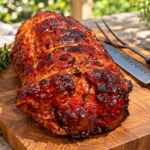
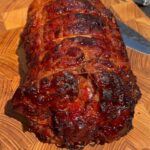
This oven-baked honey mustard glazed ham has a glossy, caramelized crust, tender pink slices, and a sweet-tangy glaze you can make in five minutes. Honey and brown sugar give the roast its deep amber finish, Dijon mustard adds a little bite, and whole-grain mustard leaves golden seeds across the scored surface. The glaze collects in the shallow cuts, so each slice gets a flavorful edge.
Start with a fully cooked boneless ham for easy carving and even slices. Warm it gently under foil, then brush on two thin layers of glaze toward the end of baking. This gives the center time to heat while keeping the honey and brown sugar from spending too long in the oven. Serve it as the centerpiece for Easter, Christmas, or a family Sunday dinner with mashed potatoes, green beans, and warm dinner rolls.
Prep time — 15 minutes
Cook time — About 1 hour 30 minutes to 2 hours for a 4-pound ham
Rest time — 10 to 15 minutes
Servings — 12 generous servings
Cooking method — Oven-baked
Oven temperature — 325°F (165°C)
Ingredients
- 1 fully cooked boneless ham, about 4 pounds
- ½ cup water, for the roasting pan
- ⅓ cup honey
- ¼ cup packed light brown sugar
- 2 tablespoons Dijon mustard
- 2 tablespoons whole-grain mustard
- 1 tablespoon apple cider vinegar
- ½ teaspoon freshly ground black pepper
Step-by-Step Instructions
1. Prepare the oven and roasting pan
Preheat the oven to 325°F (165°C) and place a rack in the lower-middle position. Choose a shallow roasting pan or a baking dish with a little room around the ham. Pour ½ cup of water into the bottom of the pan. The water helps keep the drippings from scorching while the ham warms.
Unwrap the ham and discard any packaging or netting. Pat the surface dry with paper towels so the glaze can cling to it later. If the ham has a flat cut side, set it cut-side down in the pan.
2. Score the surface
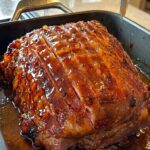
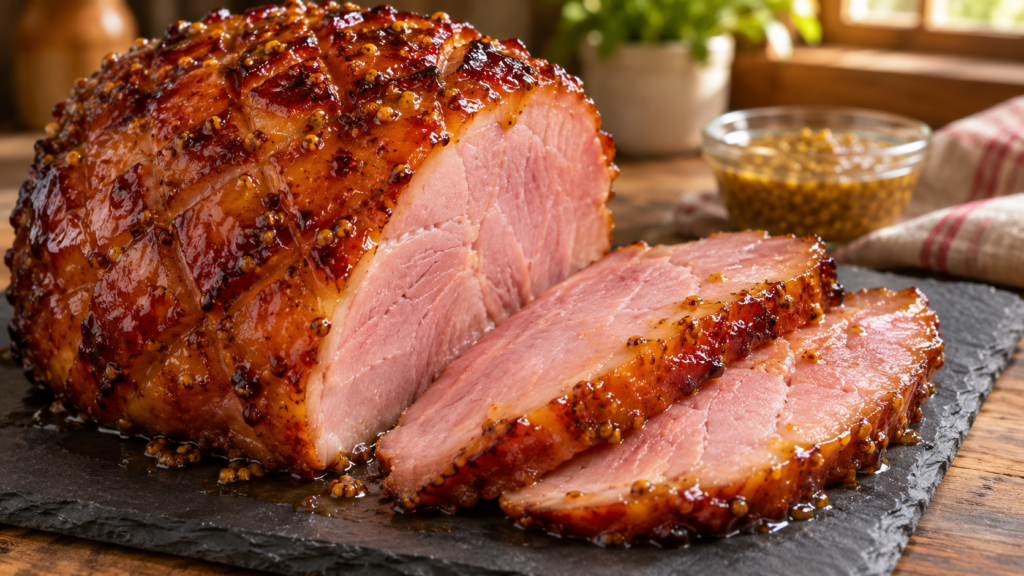
If the ham has a layer of fat, use a sharp knife to make shallow diagonal cuts about 1 inch apart. Cut diagonally in the opposite direction to make a diamond pattern. Keep the cuts about ⅛ inch deep and within the fat where possible. The shallow grooves catch the glaze and give the roast the finish shown in the landscape image.
If your ham has a very thin fat layer, you can leave the surface whole. The mustard glaze will still coat it well.
3. Warm the ham under foil
Cover the roasting pan snugly with aluminum foil and bake. For a 4-pound boneless ham, start checking the center after about 1 hour, so you have time to add the glaze before the ham reaches its final temperature. The exact baking time depends on the shape of the roast, its starting temperature, and your oven. A compact, thick ham can take longer than a flatter one of the same weight.
4. Make the honey mustard glaze
While the ham heats, combine the honey, brown sugar, Dijon mustard, whole-grain mustard, apple cider vinegar, and black pepper in a small saucepan. Warm over medium-low heat, stirring for 3 to 5 minutes, until the sugar dissolves and the mixture looks smooth and glossy.
Take the saucepan off the heat. The warm glaze should be thin enough to brush on easily, and it will thicken slightly as it cools. If you want extra glaze on the table, spoon some into a clean serving bowl before you start brushing the ham.
5. Brush on two coats of glaze
When the center of the ham reaches about 120°F (49°C), remove the foil and brush a thin coat of glaze over the top and sides. Work the brush lightly over the scored surface so the glaze reaches into the grooves. Put the ham back in the oven, uncovered, for about 10 minutes.
Brush on a second thin coat, paying attention to the sides as well as the top. Continue baking uncovered until the glaze is glossy and the ham reaches the proper internal temperature. Heat a fully cooked, ready-to-eat ham packaged in a USDA-inspected plant to 140°F (60°C). If the cooked ham was repackaged outside the plant, heat it to 165°F (74°C). Insert the thermometer into the thickest part to check.ask.fsis.usda.gov
6. Rest, carve, and serve
Transfer the ham to a carving board and let it rest for 10 to 15 minutes. Leave it uncovered if you want the glaze to stay tacky. Use a long, sharp knife to cut slices about ¼ inch thick. For a dinner platter, overlap the slices slightly so their glazed edges stay visible. Serve the reserved glaze on the side so guests can add as much as they like.
Helpful Cooking Tips
- Apply thin coats. A thick coat can slide down the sides and pool in the pan. Two light coats give you more even coverage and let the mustard seeds settle into the scoring.
- Check the thickest part early. A thermometer gives you a better reading than relying on minutes per pound. Insert the probe far enough to reach the center, especially if the ham is tall or rounded.
- Watch the color near the end. Honey and brown sugar can darken quickly. If the glaze turns deep amber before the center is hot enough, loosely tent the ham with foil and finish baking.
- Adjust the glaze before brushing. Add an extra teaspoon of Dijon for more bite or a small splash of warm water if the glaze gets too thick to spread.
- Slice as you serve. If you expect leftovers, carve what you need and keep the rest in a larger piece. You can slice it thinly for sandwiches or dice it for eggs and soup the next day.
Recipe Notes
Choosing the ham. Look for a boneless ham labeled fully cooked or ready to eat. This recipe is written for that kind of ham. A ham labeled cook before eating needs a different cooking method. The flavor and saltiness vary by brand, so use the package information when planning portions or calculating nutrition.
Choosing the mustard. Dijon gives the glaze a smooth base, and whole-grain mustard supplies the visible seeds. If you have only Dijon, use 3 tablespoons total and taste before adding more. A tablespoon of maple syrup can stand in for a tablespoon of honey if you want a little maple flavor.
Planning the meal. For a holiday menu, serve glazed ham with garlic mashed potatoes, roasted green beans, and rolls. For a lighter plate, try roasted carrots and a crisp apple-cabbage slaw. The slaw’s acidity goes well with the sweet glaze, and you can prepare it while the ham is in the oven.
Nutrition Information
Estimated per serving, based on 12 servings
- Calories — About 280
- Protein — About 30 g
- Carbohydrates — About 12 g
- Total fat — About 12 g
- Sugars — About 11 g
- Sodium — About 1,500 mg
These estimates assume the ham and glaze are divided into 12 portions. The brand of ham, the amount of visible fat, and how much glaze stays in the roasting pan will affect the numbers. Sodium in particular can vary considerably between brands.
Nutrition Benefits
Ham provides protein, which supports the maintenance and repair of muscles and other tissues. Pork also supplies nutrients such as thiamin and vitamin B12, which contribute to normal energy metabolism. The honey and brown sugar add sweetness and help form the glossy glaze. Because cured ham can be high in sodium, check the label if you’re tracking your intake. Pairing a smaller slice with vegetables and a potato or whole grain adds fiber and rounds out the meal.
Questions and Answers
Can I make the glaze ahead of time?
Yes. Refrigerate it in a covered container for up to two days. Warm it gently and stir before brushing it over the ham. If it’s still thick, add warm water a teaspoon at a time until it spreads easily.
Can I use a spiral-cut ham?
Yes. Keep it covered during the first stage of baking, then brush the glaze over the outside near the end. The slices are already exposed, so use the package timing and start checking the temperature early.
How should I store and reheat leftovers?
Refrigerate leftovers within two hours in a shallow, covered container and use them within three to four days. To reheat slices, place them in a covered baking dish with a splash of water and warm at 325°F (165°C) until they reach 165°F (74°C).