
Brown Sugar & Whole-Grain Mustard Glazed Roast Ham
Prep Time: 20 minutes
Cook Time: Approximately 2–2½ hours
Resting Time: 15 minutes
Servings: 12–14
Oven Temperature: 325°F (165°C)
Description
Brown Sugar & Whole-Grain Mustard Glazed Roast Ham is a beautiful centerpiece for Christmas dinner, Easter lunch, Sunday gatherings, or any meal that calls for something special. The outside develops a glossy, caramelized coating, while the ham stays tender and juicy beneath its golden fat layer.
The glaze combines brown sugar, whole-grain mustard, honey, and apple cider vinegar. Brown sugar brings a deep caramel flavor, mustard adds gentle sharpness and texture, and vinegar balances the sweetness. A little orange juice keeps the glaze bright and easy to brush over the meat.
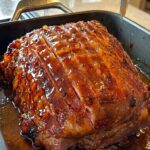
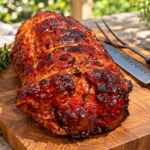
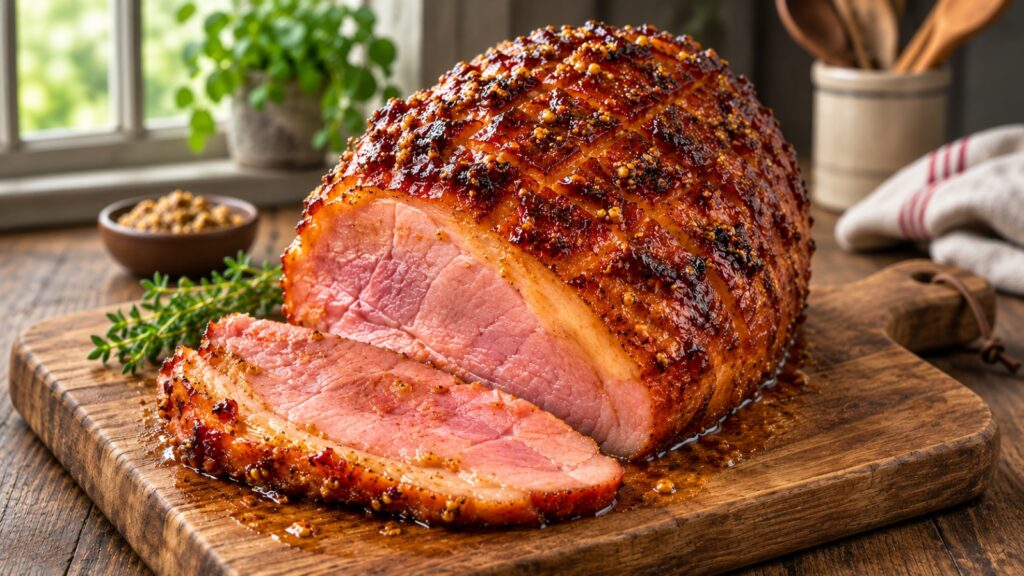
Scoring the surface creates the attractive diamond pattern shown in the photograph. Those shallow cuts also help the glaze settle into the fat, giving every slice a delicious sweet and savory edge.
This recipe uses a fully cooked ham, so the main task is to heat it gently and build the glaze during the final part of cooking. It is simple enough for a first holiday roast and impressive enough to serve to guests.
Ingredients for Brown Sugar & Whole-Grain Mustard Glazed Roast Ham
For the Ham
– 1 fully cooked, bone-in half ham, approximately 7–8 pounds, preferably unsliced
– 1 cup water or apple juice
– Fresh thyme or rosemary, for optional garnish
– Orange wedges, for optional serving
For the Brown Sugar Mustard Glaze
– 1 cup packed light or dark brown sugar
– ⅓ cup whole-grain mustard
– 2 tablespoons Dijon mustard
– ¼ cup honey
– 2 tablespoons apple cider vinegar
– ¼ cup orange juice
– ½ teaspoon ground black pepper
– ¼ teaspoon ground cloves, optional
Instructions for Brown Sugar & Whole-Grain Mustard Glazed Roast Ham
1. Prepare the Oven and Roasting Pan
Preheat your oven to 325°F (165°C). Position an oven rack in the lower third so the ham can sit comfortably without being too close to the upper heating element.
Use a roasting pan large enough to hold the ham with a little space around it. A roasting rack is helpful, but you can also place the ham directly in the pan, cut side down.
2. Unwrap and Prepare the Ham
Remove all packaging, including any plastic cover over the bone. Check the label to confirm that the ham is fully cooked, and follow any specific heating directions supplied by the producer.
If the ham has a tough outer rind, carefully remove it while leaving approximately ¼ inch of fat underneath. That thin layer adds flavor and gives the glaze a surface to cling to.
Pat the outside dry with paper towels.
3. Score the Surface
Using a sharp knife, make shallow diagonal cuts across the fat, approximately 1 inch apart. Turn the ham slightly and cut in the opposite direction to create diamonds.
Cut through the fat without slicing deeply into the meat. Deep cuts can expose more meat to the oven heat and make the outside dry faster.
If using a spiral-sliced ham, skip this step.
4. Cover and Heat Gently
Place the ham cut side down in the roasting pan. Pour the water or apple juice into the bottom of the pan, then cover the pan tightly with foil.
Heat for approximately 12–15 minutes per pound, using the package instructions and internal temperature as your main guides. A 7–8-pound ham will generally take around 2–2½ hours overall, although its shape and starting temperature can affect the timing.
Keep it covered until the final 30–40 minutes.
5. Make the Glaze
While the ham heats, combine the brown sugar, whole-grain mustard, Dijon mustard, honey, vinegar, orange juice, pepper, and optional cloves in a small saucepan.
Warm over medium-low heat, stirring until the sugar dissolves. Let the mixture simmer gently for 3–5 minutes, until glossy and slightly thickened.
The glaze should coat a spoon but still pour easily. If it becomes too thick, stir in a tablespoon of water or orange juice.
6. Brush on the First Layer
About 30–40 minutes before the ham is expected to finish, remove the foil carefully, keeping your hands away from escaping steam.
Increase the oven temperature to 400°F (200°C). Brush about one-third of the glaze over the exposed surface, working it into the scored diamonds.
Return the ham to the oven uncovered.
7. Build the Caramelized Coating
Brush with another layer of glaze after about 10 minutes, then repeat once more after another 10 minutes.
Watch closely as the sugar darkens. The surface should become shiny and deep golden brown, with lightly caramelized edges. If any area begins to blacken, cover that section loosely with foil.
Add a little hot water to the pan if the liquid evaporates and the drippings begin to scorch.
8. Check the Temperature
Insert a meat thermometer into the thickest part of the ham, avoiding the bone.
For a fully cooked ham packaged in a USDA-inspected plant, reheat to 140°F (60°C). Fully cooked ham that has been repackaged elsewhere, or leftover cooked ham, should reach 165°F (74°C).
This recipe is not intended for raw or “cook-before-eating” ham, which requires different cooking guidance.
9. Rest, Slice, and Serve
Transfer the ham to a carving board and loosely tent with foil. Rest for 15 minutes before carving.
Slice across the grain where practical, working around the bone. Arrange the slices on a warm platter and garnish with thyme, rosemary, or orange wedges.
If you want glaze for serving, reserve a portion before brushing the ham.
Serving Suggestions for Brown Sugar & Whole-Grain Mustard Glazed Roast Ham
This ham pairs especially well with creamy mashed potatoes, roasted carrots, green beans, scalloped potatoes, or buttery dinner rolls. The sweet mustard coating also works beautifully with roasted Brussels sprouts and baked sweet potatoes.
For a lighter plate, add a crisp green salad with a tangy dressing. Something fresh or acidic helps balance the richness of the meat.
For a holiday buffet, serve thin slices with rolls, pickles, mustard, and cranberry sauce. Guests can build small sandwiches, and the ham stretches comfortably across a larger gathering.
Tips for the Best Glazed Ham
Choose an unsliced ham for the juiciest result. Spiral-sliced ham is convenient, but its exposed slices can lose moisture more quickly. Keep it tightly covered during the initial heating stage.
Apply the glaze near the end. Brown sugar and honey can burn during a long roast. Several thin layers added toward the finish create a better coating.
Keep some fat on the surface. A thin, even layer supports the diamond pattern and develops a flavorful crust.
Use a thermometer. Cooking time is an estimate. Checking the center temperature helps you avoid unnecessary heating.
Taste the glaze before brushing. For more tang, add a little extra Dijon mustard or vinegar. For a sweeter finish, add another spoonful of honey.
Skip extra salt. Most cured hams already contain plenty, and mustard adds additional seasoning.
Recipe Notes and Variations
Light brown sugar gives a milder caramel flavor, while dark brown sugar creates a deeper molasses taste. Both work well.
Maple syrup can replace the honey in an equal amount. Apple juice can replace orange juice if you prefer a gentler fruit flavor.
For a little heat, add a small pinch of cayenne or ½ teaspoon of crushed red pepper flakes. Keep the amount modest so the mustard and caramel flavors remain clear.
Ground cloves are optional and quite strong. A small quantity adds a traditional holiday aroma, but the glaze is delicious without them.
You can make the glaze up to three days ahead. Refrigerate it in a covered container, then warm gently before using.Brown Sugar & Whole-Grain Mustard Glazed Roast Ham
Storage and Leftovers for Brown Sugar & Whole-Grain Mustard Glazed Roast Ham
Refrigerate leftover ham within two hours of serving. Store sliced portions in shallow, airtight containers and use within 3–4 days.
For longer storage, freeze portions for approximately 1–2 months for best quality. Wrap tightly and label with the date.
To reheat, place slices in a covered baking dish with a splash of water or broth. Warm gently until the leftovers reach 165°F (74°C).
Leftover ham works well in omelets, sandwiches, fried rice, pasta, and potato soup. Save the bone for a bean or split pea soup if desired.
Approximate Nutritional Information for Brown Sugar & Whole-Grain Mustard Glazed Roast Ham
Per serving, based on 14 servings:
– Calories: 440
– Protein: 44 g
– Carbohydrates: 26 g
– Total fat: 17 g
– Saturated fat: 6 g
– Fiber: Less than 1 g
– Sugar: 24 g
– Sodium: Approximately 2,000–2,700 mg
These are rough estimates. Actual values depend heavily on the ham brand, edible yield, portion size, and how much glaze is eaten.
Benefits
Ham supplies protein, which supports muscle maintenance and helps make a meal satisfying. It also provides nutrients such as vitamin B12, thiamin, zinc, and selenium.
From a practical perspective, a large ham feeds a crowd, needs relatively little hands-on work, and provides useful leftovers. The homemade glaze also lets you adjust sweetness and mustard flavor to suit your taste.
However, cured ham is processed meat and can be high in sodium. Enjoy moderate portions alongside vegetables and other varied foods. The glaze adds sugar, so this dish works best as an occasional centerpiece
Make Everyday Cooking Easier
Discover 60+ high-protein, low-carb recipes with simple instructions and everyday ingredients. Explore breakfasts, lunches, dinners, salads, and snacks—plus a 30-day meal plan to help you plan ahead.
Get the Elite Protein Kitchen Cookbook
.
Questions and Answers for Brown Sugar & Whole-Grain Mustard Glazed Roast Ham
Can I use a boneless ham?
Yes. Choose a fully cooked boneless ham and follow its package heating directions. Use a thermometer because its cooking time may differ.
Can I use spiral-sliced ham?
Yes. Skip scoring, place it cut side down, and cover tightly during heating. Brush glaze lightly between some slices without pulling the ham apart.
Why is my glaze sliding off?
The surface may be wet, or the glaze may be too thin. Pat the ham dry before cooking and simmer the glaze until it lightly coats a spoon.
Can I prepare everything the day before?
You can make the glaze and prepare the ham a day ahead. Keep both refrigerated separately, then roast and glaze before serving.
What if the glaze darkens too quickly?
Loosely cover the dark areas with foil. Reduce the oven temperature if needed and continue checking the internal temperature.
How much ham should I buy?
For bone-in ham, allow roughly ½–¾ pound per person, depending on appetites, side dishes, and whether you want leftovers.https://ketosl.com/pizza-grilled-cheese-sandwich/