
Cheesy Potato and Egg Skillet
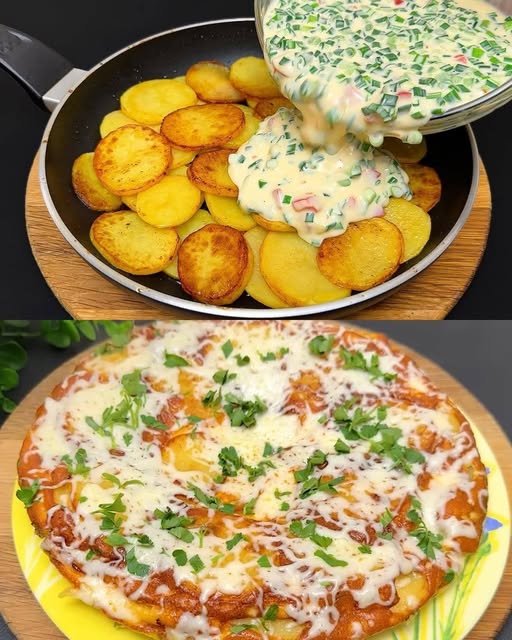
Golden potato slices, tender eggs, fresh herbs, and melted mozzarella come together in this comforting Cheesy Potato and Egg Skillet. Inspired by your photo, this recipe starts with potatoes fried in oil until tender and golden. A colorful egg mixture fills the spaces between the slices, creating a thick, savory skillet cake finished with a generous layer of cheese.
The potatoes have lightly crisp edges and soft centers, while the eggs hold everything together without making the dish heavy. Green onions, parsley, and sweet red pepper add freshness and color. Serve it in wedges for breakfast, weekend brunch, or a simple dinner with salad.
You do not need flour, dough, or a separate crust. The overlapping potatoes create the base, and everything cooks in one covered skillet.
Recipe Details
- Prep time: 15 minutes
- Cook time: 30–35 minutes
- Total time: 45–50 minutes
- Servings: 4 generous portions
- Equipment: 10-inch nonstick skillet with a lid, mixing bowl, whisk, and spatula
Ingredients for Cheesy Potato and Egg Skillet
- 1½ pounds Yukon Gold potatoes, approximately 4 medium
- 3 tablespoons olive oil, divided
- ½ teaspoon salt
- ¼ teaspoon ground black pepper
- ½ teaspoon smoked paprika
For the egg mixture
- 6 large eggs
- ¼ cup milk
- ½ cup finely diced red bell pepper
- ¼ cup thinly sliced green onions
- 2 tablespoons chopped fresh parsley
- ½ teaspoon garlic powder
- ¼ teaspoon salt
- ¼ teaspoon ground black pepper
For the topping
- 1 cup shredded low-moisture mozzarella cheese
- 1 tablespoon chopped fresh parsley
Instructions for Cheesy Potato and Egg Skillet
1. Prepare the potatoes
Wash the potatoes thoroughly. Peel them if you prefer, or leave the thin skins on for a more rustic finish. Slice into rounds approximately ⅛ inch thick.
Keep the slices as even as possible so they cook at the same speed. A mandoline makes this easier, but a sharp knife works well.
Pat the slices thoroughly dry with a clean kitchen towel. Dry potatoes brown more evenly and cause less splattering when added to hot oil.
2. Fry in batches
Heat 2 tablespoons of olive oil in the skillet over medium heat. Add about half the potatoes, spreading them into a shallow layer with minimal overlap.
Cook for 8–10 minutes, turning occasionally, until golden in places and tender when pierced with a fork. Transfer to a plate.
Add the remaining tablespoon of oil and repeat with the second batch. Reduce the heat slightly if the outside browns before the centers soften. The potatoes should be fully tender before you add the eggs.
3. Arrange the potato base
Return all the potatoes to the skillet and reduce the heat to low. Sprinkle with salt, pepper, and smoked paprika.
Gently turn to distribute the seasonings, then arrange the slices in an even, overlapping layer. Cover the bottom of the pan without pressing the potatoes into a tight mass.
There should be small spaces where the egg mixture can flow through and bind the slices together.
4. Whisk the eggs
Crack the eggs into a mixing bowl. Add the milk, garlic powder, salt, and pepper. Whisk until the yolks and whites are completely combined.
Stir in the diced red pepper, green onions, and parsley. Chop the vegetables finely so they soften during cooking and spread evenly throughout the skillet.
Avoid adding extra milk; too much liquid can make the finished dish soft and difficult to slice.
5. Pour over the potatoes
Pour the egg mixture slowly and evenly over the warm potatoes. Use a spatula to distribute the chopped vegetables across the surface.
Gently nudge a few potato slices to help the eggs flow into the gaps. Do not stir everything together, as the layered potatoes give the dish its attractive shape.
6. Cook gently under a lid
Cover the skillet and cook over low heat for 10–14 minutes. Begin checking at 10 minutes.
The edges should become firm, and the center should gradually lose its wet appearance. Keep the heat low so the underside does not burn while the middle cooks.
If condensation collects under the lid, lift it carefully so the water does not drip onto the eggs.
7. Add the cheese
When the eggs are almost set, scatter the mozzarella evenly over the top. Cover again and cook for another 2–3 minutes, until the cheese melts and the center is fully set.
The middle should have no runny egg. If checking with a food thermometer, aim for 160°F in the center.
For a lightly browned topping, use a brief broiler finish only if your skillet is explicitly broiler-safe. Watch closely because cheese can brown quickly.
8. Rest and serve
Remove the skillet from the heat and let it rest for 5 minutes. This helps the layers settle and makes cleaner slices.
Run a silicone spatula around the edge to loosen it. Slide onto a serving plate if it releases easily, or cut and serve directly from the skillet.
Sprinkle with parsley and divide into four wedges. Serve warm while the cheese is soft and the potato edges are still lightly crisp.
Notes for Cheesy Potato and Egg Skillet
Choose the right potatoes. Yukon Gold potatoes hold their shape well and have a naturally creamy texture. Russets also work, but their slices are more delicate once cooked.
Use a reliable nonstick pan. This is particularly helpful if you want to slide the whole skillet cake onto a plate. Avoid metal utensils that could scratch the coating.
Keep the vegetables dry. Washed herbs and peppers should be dried before adding them to the eggs. Excess moisture can collect around the finished slices.
Use low-moisture mozzarella. Fresh mozzarella releases more water and may leave the surface wet. If using it, drain thoroughly and pat dry first.
Allow extra time when necessary. Burner strength, pan thickness, and potato thickness affect cooking time. Tender potatoes and fully set eggs matter more than the exact minutes.
Tips for the Best Results for Cheesy Potato and Egg Skillet
- Do not overcrowd the potatoes while frying. Cooking in batches gives them better contact with the pan and helps develop golden edges.
- Season in stages. Season both the potatoes and the eggs so the finished wedges taste balanced throughout.
- Use gentle heat after adding eggs. High heat can produce a dark bottom and rubbery edges before the center sets.
- Avoid unnecessary flipping. Covered cooking lets the eggs set without risking a broken skillet cake.
- Rest before cutting. Five minutes makes a noticeable difference to how neatly the wedges hold together.
- Customize carefully. A little cooked spinach, sautéed mushroom, or diced cooked onion works well. Drain cooked vegetables before adding them.
Serving Suggestions for Cheesy Potato and Egg Skillet
For breakfast, serve a warm wedge with sliced tomatoes and fresh fruit. For brunch, place the whole skillet cake on a platter and let everyone help themselves.
For dinner, pair it with a cucumber salad, roasted broccoli, or lightly dressed greens. A spoonful of plain yogurt mixed with lemon juice and chopped herbs makes a refreshing accompaniment.
The dish already contains potatoes, eggs, and cheese, so it does not need a heavy side. Something crisp and fresh balances its richness particularly well.
Storage and Reheating for Cheesy Potato and Egg Skillet
Let leftovers cool briefly, then transfer to a covered container and refrigerate promptly. Store for up to 3–4 days.
Reheat individual wedges in a covered skillet over low heat until hot throughout. This helps preserve the potato texture. Alternatively, microwave in short intervals, checking frequently to avoid overcooking the eggs.
Freezing is possible, although the potatoes may become softer after thawing. Wrap cooled portions individually and freeze for up to one month for best quality. Thaw in the refrigerator before reheating.
Estimated Nutritional Information for Cheesy Potato and Egg Skillet
Per serving, based on four servings:
- Calories: Approximately 430
- Protein: 20 grams
- Carbohydrates: 33 grams
- Fat: 25 grams
- Saturated fat: 7 grams
- Fiber: 4 grams
- Sodium: Approximately 800 milligrams
These are estimates and assume all the cooking oil is consumed. Values vary with potato size, cheese brand, milk, and the amount of salt used. Side dishes are not included.
Nutritional Benefits for Cheesy Potato and Egg Skillet
Eggs and mozzarella contribute protein, making this a substantial meal. Eggs also provide choline, while cheese and milk contribute calcium.
Potatoes supply carbohydrates for energy and contribute potassium. Leaving their skins on retains additional fiber. Red pepper and fresh herbs add variety, color, and small amounts of vitamins.
Olive oil provides mostly unsaturated fat. The recipe also contains saturated fat and a moderate amount of sodium, primarily from cheese and added salt. Adjusting the cheese or salt lets you tailor the dish to your preferences.
Make Everyday Cooking Easier
Discover 60+ high-protein, low-carb recipes with simple instructions and everyday ingredients. Explore breakfasts, lunches, dinners, salads, and snacks—plus a 30-day meal plan to help you plan ahead.
Get the Elite Protein Kitchen Cookbook
Questions and Answers for Cheesy Potato and Egg Skillet
Can I use boiled potatoes?
Yes. Use firm, cooked potatoes that have cooled completely. Slice them and pan-fry until lightly golden, then continue with the egg mixture. Their frying time will be shorter.
Can I prepare it ahead?
You can chop the vegetables and cook the potatoes ahead. Refrigerate them separately. Warm the potatoes thoroughly in the skillet before adding freshly mixed eggs.
Why is the bottom burning?
The heat is likely too high, or the pan is thin. Lower the heat after frying the potatoes and keep the skillet covered while the eggs set.
Why is the center watery?
The eggs may need longer, or the vegetables may have introduced excess moisture. Use dry vegetables, measure the milk, and cook until the center is fully set.
Can I change the cheese?
Yes. Monterey Jack, mild cheddar, or a mozzarella-cheddar blend works well. Stronger cheeses change the flavor, so choose one you enjoy.
Can I leave out the milk?
Yes. Omit it for a slightly firmer egg layer. The recipe will still hold together without adding a replacement liquid.https://ketosl.com/pizza-grilled-cheese-sandwich/