Slow-Braised Roast Beef with Caramelized Peppers and Crispy Golden Potatoes
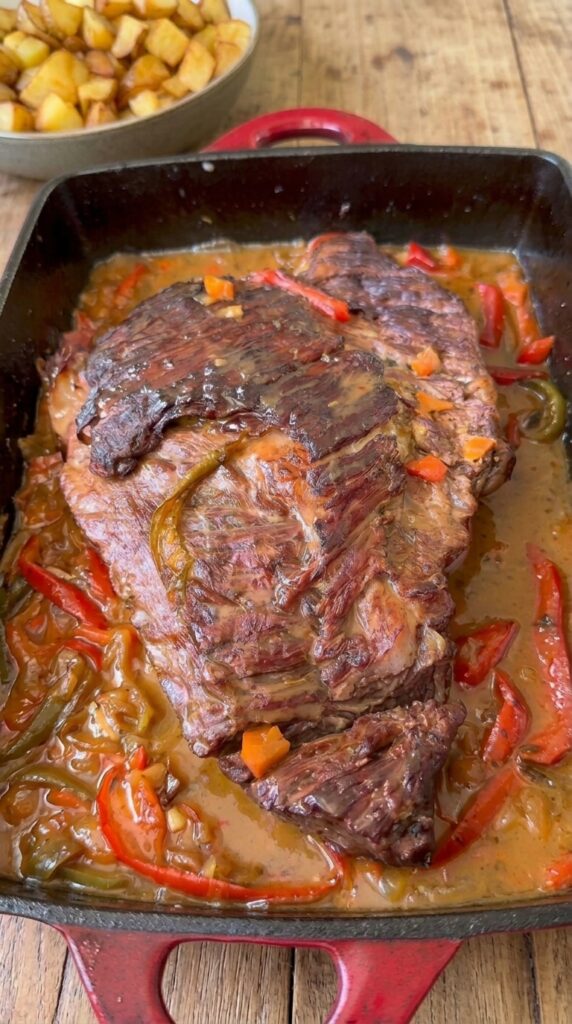
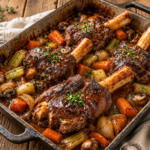
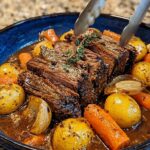
This dish represents the pinnacle of home-style comfort: a generous, marbled cut of beef braised low and slow atop a bed of sweet bell peppers, onions, carrots, garlic, and aromatics, resulting in meltingly tender meat enveloped in a rich, savory pan sauce. Accompanying the centerpiece is a bowl of shatteringly crisp, herb-scented roasted potato cubes designed to catch and absorb the luscious cooking juices.
Whether prepared for a festive weekend family meal or a refined rustic dinner party, this detailed, comprehensive master recipe guides you through every layer of technique—from seasoning and the Maillard reaction to gelatin breakdown and the secret behind ultra-crispy roasted potatoes.
The Cut of Meat
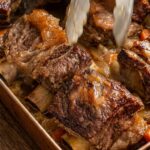
To achieve the deep, shreddable texture and concentrated flavor visible in the roasting pan:
Recommended Cuts:
Beef Chuck Roast / Pot Roast (Paleta / Aguja): Well-marbled with rich collagen that melts into gelatin during braising.
Flank or Flat Meat / Vacío / Tapa de Asado: Common in Argentine and Latin culinary traditions; features robust, long-grain fibers that drink up braising liquid and slice tenderly across the grain.
Brisket (Flat or Point): Offers a deep beefy punch that withstands extended oven time.
Ideal Weight: 1.8 to 2.2 kg (4 to 5 lbs).
Equipment Needed
Heavy-duty cast iron roasting pan (or an enameled cast iron baker / Dutch oven)
Large heavy baking sheet (for the potatoes)
Tongs and a chef’s knife
Large cutting board
Heavy aluminum foil (if your roasting vessel does not have a tight-fitting lid)
Large mixing bowl and colander
Meat thermometer / probe
Complete Ingredients
1. The Beef & Dry Rub
Beef roast (Chuck, Vacío, or Brisket): 2 kg (approx. 4.4 lbs), trimmed of excess surface fat but leaving a modest cap
Dried oregano (preferably Mexican or Mediterranean): 1 tsp (2 g)
Ground cumin: ½ tsp (1.5 g)
Garlic powder: 1 tsp (3 g)
Olive oil: 2 tbsp (30 ml), for searing
2. The Braising Aromatics & Sauce Base
Large yellow or sweet onions: 2 large, sliced into ½-inch julienne strips
Red bell peppers: 2 large, deseeded and cut into ½-inch lengthwise ribbons
Green bell peppers: 1 large, deseeded and cut into lengthwise ribbons
Carrots: 2 medium, peeled and cut into ¼-inch half-moons
Fresh garlic: 6 to 8 cloves, smashed and roughly chopped
Fresh thyme sprigs: 4 to 5 sprigs
Fresh rosemary sprig: 1 sprig
Bay leaves: 2 dried leaves
Tomato paste: 1½ tbsp (25 g)
Dry white wine or dry red wine: 1 cup (240 ml) (e.g., Sauvignon Blanc, Torrontés, or Malbec)
Rich low-sodium beef stock or bone broth: 2 to 2½ cups (480–600 ml)
Worcestershire sauce: 1 tbsp (15 ml)
Unsalted butter: 1 tbsp (15 g), cold (optional, to glaze the sauce at the end)
3. The Crispy Cubed Potatoes (Papas Doradas)
High-starch or all-purpose potatoes: 1.5 kg (3.3 lbs) (Russets, Yukon Golds, or Maris Piper)
Baking soda: ½ tsp (essential for crisping exterior starch)
Kosher salt: 1 tbsp (for boiling water) plus 1 tsp (to taste after roasting)
Extra-virgin olive oil, duck fat, or beef tallow: ¼ cup (60 ml)
Garlic powder: 1 tsp
Freshly cracked black pepper: ½ tsp
Fresh rosemary or thyme: 1 tbsp, very finely minced
Detailed Step-by-Step Instructions
Step 1: Tempering and Seasoning the Beef
Remove the meat from the refrigerator at least 45 to 60 minutes before cooking to bring it closer to room temperature. This promotes even cooking throughout the interior.
Pat the entire surface completely dry using paper towels; any residual moisture prevents proper crust formation during searing.
In a small bowl, combine the coarse kosher salt, black pepper, smoked paprika, dried oregano, cumin, and garlic powder.
Rub the spice blend evenly across all sides of the beef, massaging it thoroughly into the grain and crevices.
Step 2: The Searing Stage (Building Fond)
Place your heavy roasting pan or Dutch oven across two stovetop burners over medium-high heat. Add 2 tablespoons of olive oil.
Once the oil begins to shimmer, lay the seasoned beef gently into the pan.
Sear without disturbing for 4 to 5 minutes until a deep, dark brown crust forms. Flip carefully and sear the opposite side for another 4 minutes.
Sear the edges and ends for 1 to 2 minutes each to lock in rendered fat and create rich fond at the bottom of the pan.
Transfer the beef onto a clean platter and set aside. Turn the heat down to medium.
Step 3: Sautéing the Aromatics & Building the Bed
In the remaining beef fat and pan drippings, add the sliced yellow onions, red bell peppers, green bell peppers, and carrots.
Season with a light pinch of salt and stir to pick up some of the browned bits on the pan’s bottom. Cook for about 5 to 7 minutes until the onions soften slightly and turn translucent around the edges.
Add the chopped garlic and tomato paste. Stir continuously for 90 seconds until the garlic is fragrant and the tomato paste deepens from bright red to a rusty brick color.
Step 4: Deglazing and Setting the Braise
Pour the dry wine across the hot vegetables. Use a wooden spoon to scrape every last speck of browned fond off the bottom of the pan.
Let the wine simmer vigorously for 3 to 4 minutes until reduced by half and the harsh alcohol notes evaporate.
Pour in the beef stock and Worcestershire sauce, stirring gently to combine.
Scatter the thyme sprigs, rosemary, and bay leaves among the peppers and onions.
Nestle the seared beef back into the center of the pan, pushing it into the vegetables so the peppers and sauce surround it halfway up its sides, leaving the top crust exposed above the liquid line.
Step 5: The Low-and-Slow Oven Braise
Preheat your oven to 160°C (325°F), with a rack positioned in the lower-middle third.
Cover the pan tightly with a heavy lid or a double layer of heavy aluminum foil, crimping the edges securely to prevent steam from escaping.
Transfer the pan to the preheated oven. Bake undisturbed for 2 hours and 30 minutes.
Check the meat: at this point, a meat thermometer inserted into the thickest part should read between 90°C and 95°C (195°F–203°F), and a knife should slide into the center with gentle resistance.
Step 6: Crafting the Crispy Cubed Potatoes
While the beef completes its braising cycle, prepare the potatoes:
Preheat & Boil: Peel the potatoes and cut them into uniform 2 cm (¾-inch) cubes. Bring a large pot of water to a rolling boil, then stir in 1 tablespoon of salt and ½ teaspoon of baking soda (which breaks down pectin on the potato surface to form a starchy mash layer that crisps up later).
Parboil: Add the cubed potatoes and cook for 7 to 9 minutes until the exterior is tender enough to be pierced with a fork, but the cubes still hold their structure.
Drain and Scuff: Drain the potatoes in a colander and let them steam dry for 3 minutes. Shake the colander vigorously to roughen up the edges, creating a thin paste around each cube.
Oil and Season: Toss the potatoes in a bowl with olive oil (or duck fat/tallow), garlic powder, cracked pepper, minced rosemary, and a pinch of salt until thoroughly coated.
Roast: Spread the cubes onto a large, rimmed baking sheet in a single layer, ensuring space between them. Roast at 220°C (425°F) for 40 to 45 minutes, turning them once halfway through, until deeply golden brown and crisp.
Step 7: Uncovering and Glazing the Beef
After the beef has braised for 2½ to 3 hours, remove the foil or lid from the pan.
Spoon several ladles of the braising jus and soft peppers over the top of the roast.
Increase the oven temperature to 200°C (400°F). Return the uncovered roasting pan to the oven for 15 to 20 minutes.
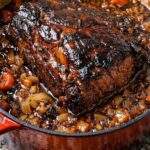
The exposed surface of the meat will glaze and develop caramelized edges, while the pepper sauce bubbles and thickens.
Carefully remove the roasting pan from the oven.
Step 8: Resting and Finishing the Sauce
Transfer the roast to a cutting board and tent it loosely with foil for 15 minutes before carving. Resting allows internal juices to redistribute throughout the muscle fibers instead of spilling onto the board.
Finish the Pan Jus: Skim any excess rendered oil from the surface of the braising pan with a spoon. If a richer finish is desired, swirl in 1 tablespoon of cold unsalted butter into the warm sauce until fully emulsified.
Carving and Plating Presentation
Carving: Look at the direction of the meat grain. Using a long, sharp slicing knife, cut across the grain into ½-inch thick slices. Cutting across the grain shortens the long muscle fibers, making every slice tender.
Plating: Spoon a bed of the tender braised red and green peppers, sweet onions, and concentrated cooking jus directly onto each warm serving plate. Lay the slices of beef over the sauce, drizzling an extra spoonful of gravy over the meat.
Serving the Potatoes: Serve the sizzling hot crispy potatoes alongside the braised beef in a rustic bowl so they retain their signature crunch, allowing guests to drag each golden cube through the savory pepper gravy.
Chef’s Pro Tips for Success
Don’t Rush the Searing: The fond created during the initial browning process provides the foundation for the deep umami notes in the braising sauce.
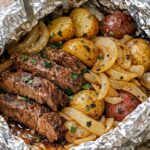
Keep the Potatoes Separate: Roasting the potatoes in a separate pan guarantees their crispy texture. Adding raw potatoes directly into the braising pan will result in soft, stewed potatoes rather than the contrasting golden cubes shown.
Make-Ahead Advantage: Like most braises, this dish tastes even better the next day as the collagen, beef juices, and sweet peppers meld together. Reheat gently, covered, at 150°C (300°F) until warmed through.