
# What to Do With a Green Potato: Complete Food Safety Guide
## Description
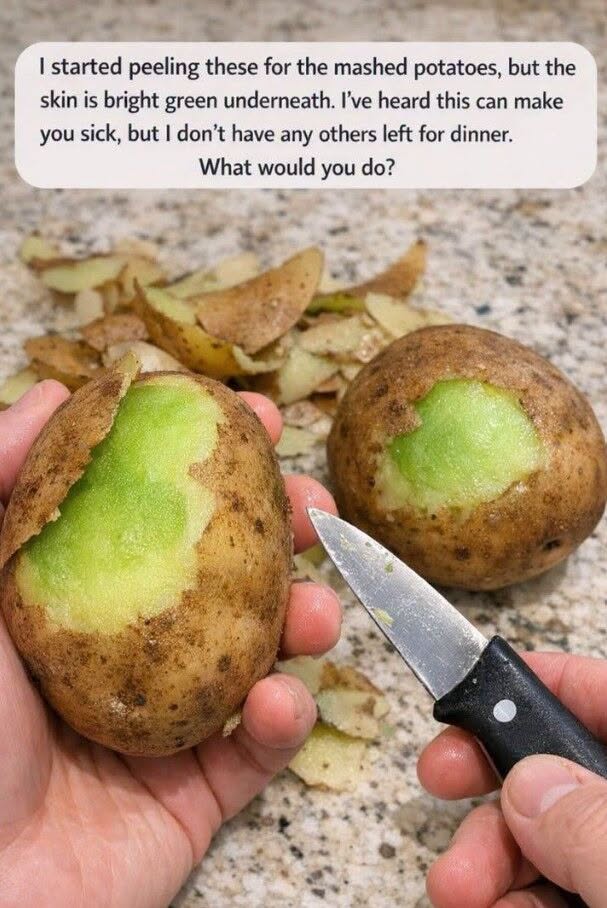
Finding a bright green layer underneath a potato’s skin can be surprising, especially when you are already preparing dinner. At first, it may look like an ordinary discolouration, but green potatoes deserve a closer inspection before you decide to cook them.
The green colour itself comes from chlorophyll, a natural pigment produced when potatoes are exposed to light. The food-safety concern is that light exposure and greening can occur alongside increased levels of naturally occurring potato glycoalkaloids, including solanine and chaconine.
This does not mean that every potato with a small green spot must automatically be thrown away. The safest approach depends on how extensive the greening is, whether it remains after peeling, and whether the potato has other signs of deterioration.
This guide explains exactly what to do when you cut into a potato and discover green flesh underneath the skin.
## Recipe Overview
**Topic:** Green Potato Food Safety
**Preparation:** Inspection and trimming
**Servings:** Depends on the number of potatoes
**Best For:** Potatoes with limited superficial greening
**Important:** Extensively green potatoes should be discarded.
## Ingredients and Equipment
You don’t need a special recipe or ingredients to handle a green potato safely.
You will need:
* Green or partially green potatoes
* A vegetable peeler
* A clean, sharp knife
* Cutting board
* Clean water
* A bowl or container for discarded pieces
## Full Process: What to Do With a Green Potato
### Step 1: Stop and Inspect
If you peel a potato and discover a bright green layer underneath the skin, don’t immediately continue cooking it.
Take a moment to examine the entire potato.
Look at:
* How much of the potato is green?
* Whether the green colour is limited to the area directly under the skin
* Whether the green extends deeply into the flesh
* Whether the potato has sprouts
* Whether it is soft, shrivelled, damaged, or rotten
The amount and depth of the discolouration are important.
### Step 2: Peel the Potato Completely
If the green area appears limited and superficial, remove the potato skin completely.
Don’t simply scrape away a tiny section of the peel while leaving the rest of the skin attached.
Peeling can remove a significant amount of the compounds concentrated near the surface, particularly in green or sprouted areas.
### Step 3: Cut Away the Green Flesh
After peeling, inspect the potato again.
Use a clean knife to cut away all visibly green portions. Be generous when trimming rather than removing only the thinnest possible layer.
Cut around and underneath the green area until you reach flesh that looks completely normal.
### Step 4: Inspect the Remaining Potato
This is the most important decision point.
If the remaining potato is completely normal in colour and the green area was small and superficial, the unaffected portion may generally be used after thorough peeling and trimming.
However, if the potato remains noticeably green after peeling and cutting, don’t try to make it work.
Discard it.
The same applies if the green discolouration extends deeply into a large portion of the potato.
### Step 5: Check for Sprouts
Look carefully for sprouts or eyes that have begun growing.
Small amounts of sprouting can sometimes be removed thoroughly from an otherwise firm, normal-looking potato.
However, heavily sprouted potatoes should be treated more cautiously, particularly when they are also green.
If the potato is heavily sprouted, shrivelled, soft, or green over a substantial area, throwing it away is the safer choice.
### Step 6: Check the Texture
A normal potato should be relatively firm.
If the potato is:
* Very soft
* Shrivelled
* Rotten
* Wet or decomposing
* Heavily damaged
It is better to discard it rather than attempting to salvage it.
### Step 7: Don’t Taste It to Test Safety
Never take a bite of a questionable potato simply to see whether it tastes normal.
Some potatoes with elevated glycoalkaloid levels can have a bitter or unpleasant taste, but taste should not be used as a safety test.
If you have already cooked a potato and notice an unusually bitter taste together with significant greening, stop eating it.
### Step 8: Don’t Assume Cooking Will Fix It
Boiling, baking, frying, or mashing a heavily affected potato isn’t a reliable method for making it safe.
Cooking should not be treated as a substitute for removing visibly affected portions.
The safer approach is to remove the green areas before cooking when the discolouration is limited, or discard the potato when the greening is extensive.
## When Can You Use a Green Potato?
A potato with a small, localised green area may sometimes be salvaged.
For example, imagine you peel a potato and discover a small green patch directly beneath one section of the skin.
You can:
1. Peel the entire potato.
2. Cut away the green area generously.
3. Remove some surrounding flesh.
4. Inspect the remaining potato.
5. Make sure the remaining flesh looks completely normal.
6. Cook it normally if it otherwise appears sound.
The important point is that you should not leave visibly green flesh behind.
## When Should You Throw the Potato Away?
Discard the potato if:
* A large portion is green.
* The green extends deeply into the flesh.
* It remains noticeably green after peeling.
* It is heavily sprouted.
* It is soft or severely shrivelled.
* It shows signs of rot.
* Removing the green sections would leave very little usable potato.
* It looks or smells seriously abnormal.
When in doubt, throwing it away is the simplest option.
Replacing one potato is much easier than dealing with a potential food-safety problem.
## Why Do Potatoes Turn Green?
Potatoes naturally contain chlorophyll.
When potatoes are exposed to light, chlorophyll production can increase, creating the familiar green colour.
The chlorophyll itself isn’t the main food-safety concern.
The concern is that the same conditions associated with greening can also be associated with higher concentrations of naturally occurring glycoalkaloids such as solanine and chaconine.
These compounds are part of the potato plant’s natural defence system.
This is why visible greening should be treated as a warning sign rather than simply an attractive or harmless colour change.
## What Are the Possible Effects of Excessive Glycoalkaloid Exposure?
Consuming potatoes containing unusually high levels of glycoalkaloids can cause symptoms affecting the digestive and nervous systems.
Possible symptoms may include:
* Nausea
* Vomiting
* Abdominal discomfort
* Diarrhoea
* Headache
* Dizziness
* Weakness
* Confusion
The severity can depend on factors such as the concentration of the compounds and the amount consumed.
A small amount of minor greening does not automatically mean someone will become ill, so there is no need to panic.
At the same time, heavily green potatoes should not be deliberately eaten simply because there is no replacement available.
## What If You Don’t Have Any Other Potatoes?
You don’t need to sacrifice food safety just because potatoes were supposed to be part of dinner.
If your potatoes are significantly green, consider replacing them with another side dish.
Good alternatives include:
* Mashed sweet potatoes
* Mashed cauliflower
* Mashed parsnips
* Mashed turnips
* Rice
* Pasta
* Couscous
* Steamed vegetables
* Roasted vegetables
* Bread or dinner rolls
Your dinner may look slightly different than planned, but changing the side dish is an easy solution.
## Storage Tips
Proper storage can help reduce the chance of potatoes developing significant greening.
### Keep Potatoes Away From Light
Light is one of the major factors involved in potato greening.
Store potatoes in a dark location rather than leaving them on a sunny countertop.
### Choose a Cool Storage Area
A cool, suitable storage environment can help maintain potato quality.
Avoid places that are excessively warm or exposed to direct sunlight.
### Provide Ventilation
Potatoes should have appropriate airflow rather than being tightly sealed in a container where moisture can accumulate.
### Inspect Before Cooking
Always look over potatoes before peeling and again after peeling.
This takes only a few seconds and can help you identify green areas, sprouts, soft spots, or rot.
### Check Potatoes When Shopping
Look at potatoes before purchasing them.
If a potato already has extensive green discolouration, choose another one when possible.
## Important Safety Notes
The most important thing to remember is that the green colour is a warning sign, not a precise measurement of how much glycoalkaloid is present.
You cannot determine safety simply by looking at one tiny spot.
Likewise, you should not rely on taste to determine whether a potato is safe.
A small superficial green area can sometimes be removed thoroughly, while extensive or deep greening is a reason to discard the potato.
Cooking should not be relied upon to eliminate the concern.
If someone develops significant symptoms after eating questionable potatoes, especially persistent vomiting, severe abdominal pain, significant diarrhoea, confusion, marked weakness, or difficulty breathing, seek medical advice promptly.
For suspected poisoning, contact an appropriate poison-control service or emergency medical service for guidance in your location.
## Nutritional Information
Nutritional values depend on the type and quantity of potatoes used and how they are prepared.
A plain medium potato generally provides carbohydrates, fibre, potassium, vitamin C, vitamin B6, and other nutrients.
However, nutritional information is not the main concern when dealing with a significantly green potato. Food safety should come first.
If a potato is extensively green or otherwise questionable, discarding it is preferable to trying to preserve its nutritional value.
## Benefits of Proper Potato Handling
Proper inspection and storage offer several practical benefits.
### Better Food Safety
Checking potatoes before cooking helps you identify significant greening, sprouting, rot, and other quality problems.
### Less Food Waste
When a potato has only a small superficial green area, careful trimming may allow the unaffected portion to be used rather than automatically discarding the entire potato.
### Better Food Quality
Proper storage in a cool, dark, well-ventilated environment can help maintain potato quality.
### Peace of Mind
A quick inspection before cooking can help you make a more informed decision instead of wondering whether a questionable potato should be served.
## Frequently Asked Questions
### Is the green colour itself poisonous?
No. The green colour primarily comes from chlorophyll. The concern is that potato greening can occur alongside increased levels of naturally occurring glycoalkaloids.
### Can I eat a potato with a small green spot?
A potato with limited superficial greening may sometimes be used after completely peeling it and generously cutting away all green portions. The remaining potato should look normal.
### What if the potato is green underneath the skin?
Peel it completely and inspect the flesh. If the green area is small and superficial, cut it away generously. If the potato remains green or the discolouration extends deeply, discard it.
### Does boiling remove the problem?
Cooking is not a reliable way to eliminate potato glycoalkaloids. Remove affected areas before cooking or discard potatoes with extensive greening.
### Can I just cut off the green skin?
Don’t stop at the surface if the flesh underneath is also green. Remove the skin and cut away all visibly green flesh plus some surrounding potato.
### Should I eat a green potato if it tastes bitter?
No. Don’t use taste as a safety test. If a cooked potato is unusually bitter, particularly when it also had significant greening, stop eating it.
### Are sprouted potatoes safe?
It depends on the condition of the potato. A firm potato with limited sprouting may sometimes be salvaged by removing the sprouts and affected areas thoroughly. A heavily sprouted, shrivelled, soft, rotten, or significantly green potato is better discarded.
### Can green potatoes make you sick?
Potatoes containing unusually high levels of glycoalkaloids can cause gastrointestinal and neurological symptoms. The risk depends on the concentration and amount consumed.
### What should I do if someone already ate a green potato?
Don’t panic. A small amount of minor greening does not automatically mean illness. Monitor for concerning symptoms, and seek medical advice promptly if significant or persistent symptoms develop.
### How can I prevent potatoes from turning green?
Store potatoes in a cool, dark, well-ventilated place. Avoid prolonged exposure to sunlight or strong artificial light, and inspect them before cooking.
## Final Takeaway
Discovering a bright green layer underneath a potato’s skin doesn’t automatically mean that the entire potato must go into the trash.
Start by inspecting the potato carefully.
If the green area is small and superficial, peel the potato thoroughly and generously cut away the green flesh and some surrounding area. The remaining potato should be completely normal in appearance before you use it.
If the potato is extensively green, remains green after peeling, has deep green discolouration, or is heavily sprouted, soft, shrivelled, or rotten, discard it.
Don’t rely on boiling, baking, frying, or mashing to solve the problem, and don’t taste a questionable potato simply to test it.
The easiest rule to remember is:
**Small, superficial green area: remove it generously and inspect the potato.**
**Extensive or deep green discolouration: discard the potato.**
**Still green after peeling: discard it.**
When it comes to questionable food, changing your dinner plans is always easier than taking an unnecessary risk.