
Slow Cooker Cabbage and Ground Beef Stew Recipe
Prep Time: 20 minutes
Cook Time: 6–7 hours on LOW or 3–4 hours on HIGH
Resting Time: 10 minutes
Total Time: 6 hours 30 minutes–7 hours 30 minutes on LOW
Servings: 6
Cuisine: American
Cooking Method: Slow Cooker / Crockpot
Ingredients
For the Cabbage and Ground Beef Stew
1½ pounds lean ground beef
1 medium green cabbage, chopped into bite-sized pieces (about 7–8 cups)
1 medium yellow onion, diced
3 garlic cloves, minced
2 medium carrots, peeled and diced
1 small green bell pepper, chopped (optional)
2 cans (14.5 ounces each) diced tomatoes, with their juices
1 can (8 ounces) tomato sauce
2 cups low-sodium beef broth
1 tablespoon olive oil
1 tablespoon Worcestershire sauce
1 teaspoon Italian seasoning
1 teaspoon smoked paprika
1 teaspoon garlic powder
1 teaspoon onion powder
1 teaspoon dried oregano
1 teaspoon salt, or to taste
½ teaspoon ground black pepper
¼ teaspoon crushed red pepper flakes (optional)
1 bay leaf
1 teaspoon brown sugar (optional, to balance acidity)
2 tablespoons chopped fresh parsley, for garnish
Instructions
Step 1: Prepare the Vegetables
Begin by removing the outer leaves from the cabbage. Rinse the cabbage thoroughly under cold running water.
Cut it into quarters, remove the tough center core, and chop the leaves into medium-sized pieces.
Avoid cutting the cabbage too finely because smaller pieces may become overly soft during slow cooking.
Dice the onion, carrots, and bell pepper. Mince the garlic cloves and set the prepared vegetables aside.
Step 2: Brown the Ground Beef
Heat the olive oil in a large skillet over medium-high heat.
Add the ground beef and cook for approximately 6–8 minutes, breaking it into small crumbles with a wooden spoon.
Continue cooking until the beef is fully browned and no pink remains.
Drain any excess grease to prevent the stew from becoming overly oily.
Browning the ground beef before adding it to the slow cooker enhances the flavor and improves the finished texture.
Step 3: Cook the Onion and Garlic
Add the diced onion to the skillet with the cooked ground beef.
Cook for approximately 3 minutes until the onion begins to soften.
Stir in the minced garlic and cook for another 30 seconds, stirring frequently to prevent burning.
This step creates an aromatic base that gives the crockpot cabbage stew its delicious homemade flavor.
Step 4: Add the Cabbage to the Slow Cooker
Lightly grease the inside of a 6-quart slow cooker.
Place the chopped cabbage into the slow cooker, spreading it evenly across the bottom.
Add the diced carrots and chopped bell pepper.
The cabbage may appear bulky initially, but it will gradually soften and shrink as it cooks.
Step 5: Add the Ground Beef
Spoon the cooked ground beef, onions, and garlic over the vegetables.
Spread the mixture evenly so the beef is distributed throughout the cabbage.
This helps ensure that every serving contains a satisfying combination of tender vegetables and flavorful meat.
Step 6: Add the Tomatoes and Broth
Pour the diced tomatoes, including their juices, into the slow cooker.
Add the tomato sauce and beef broth.
Stir in the Worcestershire sauce, which adds a deeper savory flavor to the tomato-based broth.
The liquid does not need to completely cover the cabbage because the vegetables will release moisture during cooking.
Step 7: Season the Stew
Sprinkle the Italian seasoning, smoked paprika, garlic powder, onion powder, dried oregano, salt, and black pepper over the ingredients.
Add crushed red pepper flakes if you prefer a slightly spicy stew.
Place the bay leaf into the mixture.
If your canned tomatoes taste particularly acidic, you can add a small amount of brown sugar to balance the flavor.
Step 8: Slow Cook Until Tender
Cover the slow cooker securely with its lid.
Cook on LOW for 6–7 hours or HIGH for 3–4 hours, until the cabbage and carrots are tender and the flavors have blended.
Avoid lifting the lid frequently because doing so releases heat and can increase the cooking time.
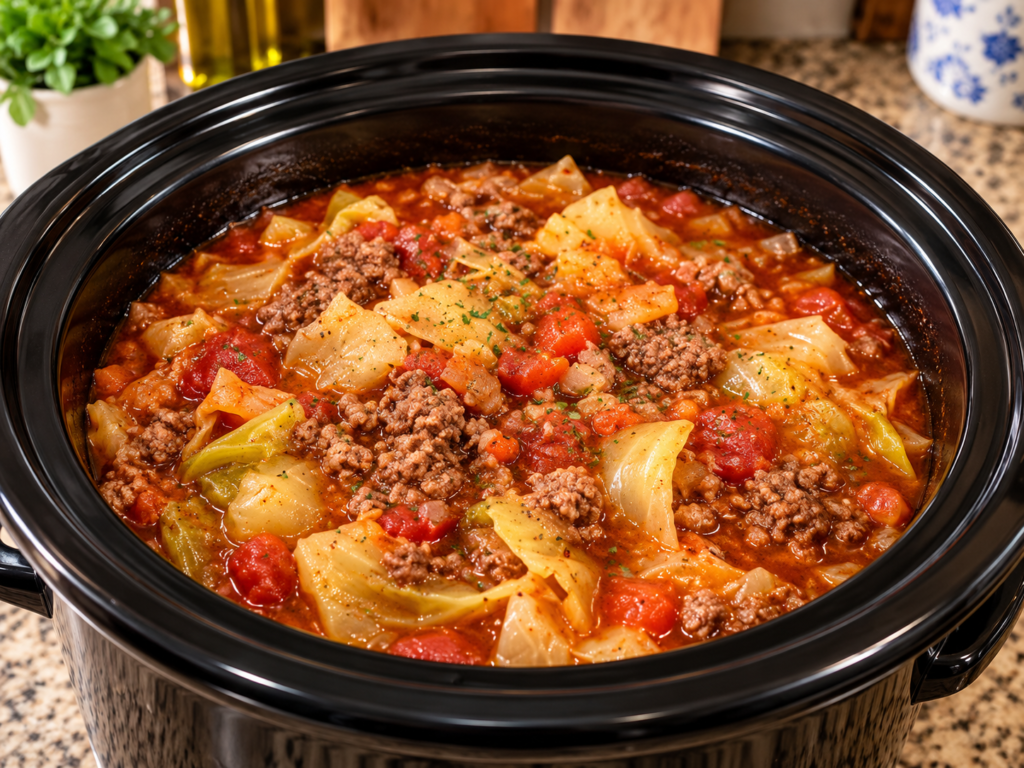
The finished stew should contain soft cabbage, tender vegetables, savory ground beef, and a rich tomato broth.
Step 9: Adjust the Flavor and Consistency
Once cooking is complete, remove the lid carefully.
Discard the bay leaf and gently stir the stew.
Taste the broth and adjust the salt, black pepper, and seasonings as needed.
For a thicker cabbage and beef stew, leave the lid off and cook on HIGH for another 15–20 minutes, or stir in a slurry of 1 tablespoon cornstarch mixed with 1 tablespoon cold water and cook until thickened.
If you prefer a thinner, soup-like consistency, add another ½–1 cup of warm beef broth.
Step 10: Rest and Serve
Turn off the slow cooker and allow the stew to rest for approximately 10 minutes.
This resting period allows the flavors to settle and makes the stew easier to serve.
Ladle generous portions into serving bowls.
Sprinkle freshly chopped parsley over the top for extra color and freshness.
Serve warm with crusty bread, garlic toast, mashed potatoes, or a simple green salad.
Tips for the Best Slow Cooker Cabbage and Ground Beef Stew
1. Choose Lean Ground Beef
Use ground beef that is approximately 90% lean for a flavorful stew without excessive grease. Lean beef also provides plenty of protein while keeping the dish relatively light.
Ground turkey or ground chicken can be used as alternatives. Always cook and crumble the ground meat before transferring it to the slow cooker.
2. Cut the Cabbage into Larger Pieces
Cabbage shrinks considerably during cooking. Cutting it into medium or large bite-sized pieces helps preserve some texture.
If you enjoy firmer cabbage, add part of it during the final 1–2 hours of cooking rather than adding everything at the beginning.
3. Use Good-Quality Tomatoes
Canned diced tomatoes provide the stew with acidity, sweetness, and a rich tomato flavor.
Fire-roasted diced tomatoes are an excellent substitute if you prefer a deeper, slightly smoky taste.
Crushed tomatoes can also be used to create a smoother and thicker broth.
4. Add Extra Vegetables
This easy slow cooker cabbage recipe is flexible and works well with additional vegetables.
Try including sliced mushrooms, zucchini, chopped celery, green beans, or diced potatoes.
Firm vegetables such as potatoes should be chopped into small pieces so they cook evenly.
Remember that adding potatoes will increase the carbohydrate content of the finished dish.
5. Make It Low Carb
For a lower-carb version, avoid adding potatoes, rice, or sugar.
Cabbage, lean ground beef, tomatoes, and broth make a satisfying meal without needing starchy ingredients.
Always check packaged sauces and broth for added sugar.
6. Make It Spicier
For a spicy crockpot cabbage and beef stew, add extra crushed red pepper flakes, cayenne pepper, or a splash of your favorite hot sauce.
Start with a small amount because the spices become more noticeable as the stew cooks.
7. Control the Broth Thickness
This recipe produces a hearty stew with plenty of tender cabbage and beef.
For cabbage soup, increase the beef broth to 3–4 cups.
For a thicker casserole-style mixture, reduce the broth to approximately 1 cup, provided your slow cooker has enough liquid for proper cooking.
8. Prepare It Ahead of Time
To make dinner preparation easier, chop the cabbage and vegetables the night before.
Brown the beef, cool it promptly, and refrigerate it separately in an airtight container.
When ready to cook, add everything to the slow cooker and follow the instructions.
Do not leave uncooked ingredients sitting in an unplugged slow cooker at room temperature.
9. Best Side Dishes
This slow cooker ground beef and cabbage stew is filling enough to enjoy on its own.
However, it also pairs wonderfully with warm dinner rolls, toasted sourdough bread, roasted vegetables, cauliflower rice, or a fresh cucumber salad.
For a comforting family dinner, serve it alongside creamy mashed potatoes.
10. Estimated Nutritional Information
Per serving, based on six servings and lean ground beef:
Calories: Approximately 290–340 kcal
Protein: 27–31 g
Carbohydrates: 17–22 g
Fat: 12–16 g
Fiber: 5–7 g
These values are estimates and vary depending on the ingredients, beef fat percentage, and portion sizes.
11. Can You Make This Recipe Without Browning the Beef?
Browning the beef first is strongly recommended because it improves the flavor, allows excess fat to be drained, and prevents the meat from forming large clumps.
It also helps create the appealing texture shown in a traditional homemade cabbage and ground beef stew.
12. How Do You Know When the Stew Is Ready?
The stew is ready when the cabbage has softened, the carrots are fork-tender, and the broth is hot and flavorful.
The browned ground beef should be thoroughly heated throughout the mixture, and the stew should reach at least 165°F (74°C) before serving.
Storage
Refrigerator Storage
Allow the stew to cool slightly, then divide it into shallow airtight containers and refrigerate within two hours of cooking.
Store in the refrigerator at 40°F (4°C) or below for up to 3–4 days.
The flavors often become even richer after refrigeration as the tomatoes, beef, and seasonings continue to blend.
Freezer Storage
This slow cooker cabbage and ground beef stew freezes well, making it ideal for preparing meals in advance.
Place cooled portions into freezer-safe containers or heavy-duty freezer bags.
Leave a little space for expansion and freeze for up to 3 months for best quality.
Reheating Instructions
Reheat refrigerated stew in a saucepan over medium heat, stirring occasionally, until it reaches 165°F (74°C).
You can also reheat individual servings in the microwave using a microwave-safe bowl.
Add a splash of beef broth or water if the stew has thickened during storage.
Frozen stew can be thawed overnight in the refrigerator before reheating.
Final Recipe Note
Slow Cooker Cabbage and Ground Beef Stew is an affordable, hearty, protein-rich dinner that turns everyday ingredients into a comforting family meal. With tender cabbage, seasoned beef, juicy tomatoes, and a rich savory broth, this easy crockpot recipe is perfect for cold evenings, weeknight dinners, and meal preparation.
Its simple ingredients, flexible seasonings, and convenient slow cooking method make it a practical recipe to enjoy throughout the year.