Recipe Information for Slow-Braised Beef Shanks with Rich Brown Gravy
Prep Time: 25 minutes
Cook Time: 3 hours 30 minutes
Resting Time: 10 minutes
Total Time: 4 hours 5 minutes
Servings: 4
Cuisine: American, European-Inspired
Cooking Method: Oven-Braised
Course: Main Course
Difficulty: Easy to Moderate
Ingredients for Slow-Braised Beef Shanks with Rich Brown Gravy
For the Braised Beef Shanks
4 large bone-in beef shanks (approximately 3–4 lbs total)
3 tablespoons olive oil
2 tablespoons unsalted butter
2 teaspoons kosher salt
1 teaspoon freshly ground black pepper
1 teaspoon smoked paprika
1 teaspoon garlic powder
1 teaspoon onion powder
2 tablespoons all-purpose flour, optional
For the Vegetables
3 medium carrots, cut into thick chunks
3 celery stalks, cut into large pieces
1 large yellow onion, sliced
8 oz cremini mushrooms, halved
5 garlic cloves, minced
6 whole garlic cloves
2 tablespoons tomato paste
For the Rich Brown Gravy
2½ cups low-sodium beef broth
½ cup dry red wine, optional
1 tablespoon Worcestershire sauce
1 teaspoon Dijon mustard
2 fresh rosemary sprigs
4 fresh thyme sprigs
2 bay leaves
1 tablespoon unsalted butter
1 tablespoon cornstarch mixed with 2 tablespoons cold water, optional
Salt and black pepper, to taste
For Garnishing
2 tablespoons freshly chopped parsley
Fresh thyme leaves
Freshly ground black pepper
Instructions for Slow-Braised Beef Shanks with Rich Brown Gravy
Step 1: Prepare the Beef Shanks
Preheat your oven to 325°F (165°C).
Remove the beef shanks from their packaging and pat them completely dry with paper towels.
Using a sharp knife, trim away any excessive outer fat while leaving the connective tissue intact. This tissue helps the meat become tender and succulent during slow cooking.
In a small bowl, combine the salt, black pepper, smoked paprika, garlic powder, and onion powder.
Rub the seasoning mixture evenly over each beef shank.
Lightly dust the shanks with flour if you prefer a thicker gravy. The flour also helps create a beautiful brown crust during searing.
Allow the seasoned beef to rest briefly while you prepare the vegetables.
Step 2: Sear the Beef Until Deeply Browned
Heat the olive oil and 2 tablespoons of butter in a large Dutch oven or heavy oven-safe skillet over medium-high heat.
Once the oil is hot, carefully add the seasoned beef shanks.
Sear each shank for approximately 4–5 minutes per side until a deep golden-brown crust develops.
Avoid overcrowding the pan. Sear the beef in batches if necessary.
A well-developed crust is important because it adds rich, savory flavor to the finished gravy.
Once browned, transfer the shanks to a clean plate and set aside.
Step 3: Sauté the Vegetables
Reduce the heat to medium.
Add the sliced onions, carrots, celery, and mushrooms to the same pan.
Cook for approximately 6–8 minutes, stirring occasionally, until the vegetables begin to soften and develop golden edges.
Add the minced garlic and whole garlic cloves.
Continue cooking for another minute until fragrant.
Stir in the tomato paste and cook for approximately 1–2 minutes.
Cooking the tomato paste briefly deepens its flavor and helps create a richer brown gravy.
Step 4: Prepare the Braising Liquid
Pour the red wine into the pan, if using.
Use a wooden spoon to scrape the browned bits from the bottom of the pan.
These caramelized bits contain concentrated beef flavor and contribute significantly to the gravy.
Allow the wine to simmer for approximately 2 minutes.
If you prefer not to use wine, substitute an equal amount of additional beef broth.
Pour in the beef broth, Worcestershire sauce, and Dijon mustard.
Stir everything together until well combined.
Add the fresh rosemary sprigs, thyme sprigs, and bay leaves.
Bring the mixture to a gentle simmer.
Step 5: Return the Beef Shanks to the Pan
Carefully arrange the seared beef shanks over the sautéed vegetables.
Spoon some of the braising liquid over the meat.
The liquid should reach approximately halfway to two-thirds of the way up the shanks rather than completely covering them.
Arrange the carrots, onions, celery, and mushrooms around the beef to create an even layer.
Cover the Dutch oven with a tight-fitting lid.
If using a roasting pan, cover tightly with two layers of aluminum foil.
Step 6: Slowly Braise the Beef Shanks
Transfer the covered pan to the preheated oven.
Braise for approximately 3–3½ hours, depending on the thickness of the beef shanks.
Check the pan after approximately 2 hours to make sure sufficient liquid remains.
If necessary, add a small amount of hot beef broth to prevent the vegetables and sauce from drying out.
Carefully turn the shanks once during cooking if practical, taking care not to break apart the tender meat.
Continue cooking until the beef is exceptionally tender and easily pulls apart with a fork.
For the best braised texture, beef shanks often become fork-tender when their internal temperature reaches approximately 195–205°F (90–96°C), although tenderness is more important than an exact finishing temperature.
Step 7: Develop the Rich Brown Gravy
Once the beef is tender, carefully remove the pan from the oven.
Transfer the beef shanks to a serving platter and cover loosely with foil.
Remove the rosemary stems, thyme stems, and bay leaves from the sauce.
If the gravy appears too thin, transfer the vegetables temporarily to a bowl and place the pan over medium heat.
Allow the sauce to simmer until slightly reduced.
For additional thickness, stir in the cornstarch slurry and simmer for approximately 1–2 minutes.
Add the final tablespoon of butter and stir until melted.
Taste the sauce and adjust the seasoning with salt and black pepper.
Return the vegetables to the gravy.
Step 8: Rest the Beef
Allow the cooked beef shanks to rest for approximately 10 minutes.
This brief resting period helps the meat settle and makes it easier to serve without falling apart.
Keep the gravy warm while the meat rests.
Step 9: Assemble and Serve
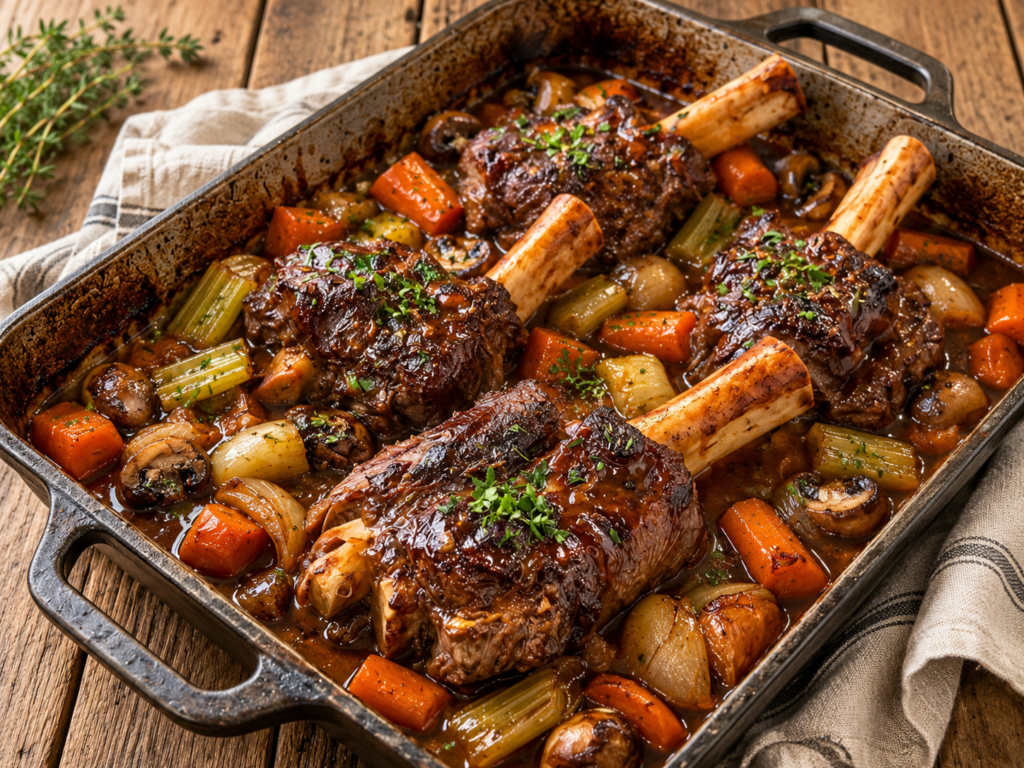
Arrange the tender beef shanks in a large serving dish or rustic roasting pan.
Spoon the soft carrots, onions, mushrooms, celery, and roasted garlic around the meat.
Generously pour the rich brown gravy over the beef shanks.
Sprinkle freshly chopped parsley and thyme leaves over the top.
Serve warm with creamy mashed potatoes, buttered noodles, crusty bread, or your favorite vegetables.
Tips for Slow-Braised Beef Shanks with Rich Brown Gravy
Choose Bone-In Beef Shanks
Bone-in beef shanks are ideal for braising because they contain connective tissue and marrow that contribute flavor and richness during slow cooking.
Select thick, meaty shanks with a good balance of meat and connective tissue.
Don’t Skip the Searing Step
Searing creates a flavorful brown crust and adds depth to the gravy.
Make sure the beef is dry before placing it in the hot pan.
Cook Low and Slow
Beef shanks require longer cooking times to become tender.
Slow braising allows the tough connective tissue to soften gradually, resulting in meat that pulls apart easily.
Avoid increasing the oven temperature excessively to speed up cooking.
Use a Heavy Roasting Pan
A Dutch oven or heavy roasting pan distributes heat evenly and helps maintain a gentle braise.
A tightly sealed lid or foil covering prevents excessive moisture loss.
Cut Vegetables into Large Pieces
Carrots, celery, and onions become very soft during slow cooking.
Cutting them into larger pieces helps them maintain more of their shape.
Use Quality Beef Broth
A flavorful, low-sodium beef broth provides a good foundation for the gravy.
Homemade beef stock is also an excellent option.
Adjust the Gravy Consistency
For a thinner sauce, add additional beef broth.
For a thicker gravy, simmer uncovered or add a small amount of cornstarch slurry.
Let the Beef Become Fork-Tender
Cooking time can vary depending on the size of the shanks.
If the meat still feels tough after 3 hours, continue braising and check every 20–30 minutes.
Serving Ideas for Slow-Braised Beef Shanks with Rich Brown Gravy
Slow-braised beef shanks with brown gravy pair beautifully with comforting side dishes.
Creamy garlic mashed potatoes are especially delicious because they absorb the rich beef gravy.
Buttered egg noodles provide another satisfying option and complement the tender meat.
For a lighter meal, serve the beef with steamed green beans, sautéed spinach, or roasted broccoli.
Crusty homemade bread is ideal for soaking up the leftover sauce.
You can also serve these beef shanks over creamy Parmesan polenta for a more elegant, restaurant-inspired presentation.
For special occasions, arrange the beef shanks on a large platter surrounded by the roasted vegetables and finish with fresh parsley.
Recipe Variations for Slow-Braised Beef Shanks with Rich Brown Gravy
Red Wine Braised Beef Shanks
Increase the red wine to 1 cup and reduce the beef broth slightly.
The wine adds depth and complexity to the sauce.
Garlic Rosemary Beef Shanks
Add two additional rosemary sprigs and several extra garlic cloves for a more aromatic flavor.
Mushroom Braised Beef Shanks
Increase the mushrooms to 12–16 ounces.
Mushrooms absorb the savory braising liquid and add a delicious earthy flavor.
Slow Cooker Beef Shanks
After searing the beef and preparing the vegetables, transfer everything to a slow cooker.
Cover and cook on LOW for approximately 8–10 hours, or until the beef is fork-tender.
Thicken the gravy separately before serving if necessary.
Nutritional Information for Slow-Braised Beef Shanks with Rich Brown Gravy
Approximate nutrition per serving:
Calories: 620 kcal
Protein: 48 g
Carbohydrates: 17 g
Total Fat: 38 g
Saturated Fat: 13 g
Fiber: 3 g
Sugar: 6 g
Sodium: 890 mg
Nutritional values are estimates. The actual amounts depend on the beef shank size, bone weight, fat content, broth, and amount of gravy served.
Storage for Slow-Braised Beef Shanks with Rich Brown Gravy
Refrigerator
Allow the beef shanks and gravy to cool slightly before transferring them to airtight containers.
Refrigerate within 2 hours of cooking.
Store the cooked beef and vegetables in the refrigerator for up to 3–4 days.
Keeping the meat covered with gravy helps prevent it from drying out.
Freezer
Braised beef shanks freeze very well.
Place the beef and gravy in freezer-safe containers, leaving a little room for expansion.
Freeze for up to 3 months for best quality.
Thaw overnight in the refrigerator before reheating.
Reheating
Place the beef shanks and gravy in a covered saucepan or oven-safe dish.
Add a splash of beef broth if the gravy has thickened during refrigeration.
Heat gently until the beef is thoroughly warmed and reaches an internal temperature of 165°F (74°C).
Avoid rapid boiling because the tender meat may break apart.
Frequently Asked Questions
What are beef shanks?
Beef shanks are cuts of meat taken from the leg of the cow. They contain connective tissue, muscle, and often a marrow-filled bone, making them particularly suitable for slow cooking.
Why are my beef shanks still tough?
Beef shanks need sufficient cooking time for their connective tissue to soften. If the meat remains tough, continue braising at a low temperature until it becomes fork-tender.
Can I make this recipe without red wine?
Yes. Replace the red wine with an equal amount of beef broth. A small splash of balsamic vinegar can add additional depth if desired.
Can I prepare braised beef shanks ahead of time?
Yes. Braised beef shanks often taste even better the following day because the flavors have more time to develop. Refrigerate promptly and reheat thoroughly before serving.
What is the best oven temperature for braised beef shanks?
An oven temperature of 325°F (165°C) provides gentle, consistent heat that works well for slow-braising beef shanks.
Can I use boneless beef instead?
Yes. Boneless beef chuck roast can be substituted, although the cooking time and final flavor may differ. Bone-in shanks give the dish its distinctive presentation.



Pingback: Honey Brown Sugar Glazed Baked Ham Recipe