Make slow cooker beef with onion gravy using tender chuck roast, sliced onions, and simple ingredients. A comforting dinner for mashed potatoes or rice.
Prep Time: 20 minutes Cook Time: 8–9 hours on low or 4–5 hours on high Gravy Thickening Time: 15–20 minutes Total Time: Approximately 8 hours 40 minutes to 9 hours 40 minutes on low Servings: 6 Equipment: 5–6-quart slow cooker and a large skillet
This slow cooker beef with onion gravy combines tender chunks of beef chuck, soft sliced onions, and a rich brown sauce made from the cooking juices. It is a comforting homemade dinner with simple ingredients and very little hands-on work once the slow cooker is running.
As the beef cooks, its connective tissue softens, creating tender pieces that separate easily with a fork. The onions become mellow and sweet, while garlic, thyme, and Worcestershire sauce add savory flavor. A little cornstarch thickens the juices at the end, giving you plenty of gravy for mashed potatoes, rice, or noodles.
Ingredients
2½ pounds (1.1 kg) boneless beef chuck roast, cut into 2–3-inch chunks
2 large yellow onions, sliced approximately ¼ inch thick
3 garlic cloves, minced
1½ cups low-sodium beef broth
1 tablespoon Worcestershire sauce
1 tablespoon tomato paste
1 tablespoon olive oil
1 teaspoon dried thyme
¾ teaspoon salt, plus more to taste
½ teaspoon ground black pepper
2 tablespoons cornstarch
2 tablespoons cold water
Instructions
Step 1: Prepare and season the beef
Trim away any large, hard pieces of exterior fat, leaving the fine marbling within the meat. Cut the chuck roast into substantial, evenly sized pieces. Small cubes can break apart too much during a long cooking time.
Pat the beef dry with paper towels, then season with salt and black pepper. Drying the surface helps the meat brown instead of steaming in the skillet.
Step 2: Brown the beef
Heat the olive oil in a large skillet over medium-high heat. Add the beef in batches, leaving space between the pieces. Sear for approximately two minutes on each of two broad sides, until browned.
Transfer the browned pieces to the slow cooker. The centers should still be uncooked. This step develops flavor rather than cooking the beef through. Avoid crowding the skillet, which makes browning more difficult.
Step 3: Cook the onions and garlic
Reduce the heat to medium. Add the sliced onions to the same skillet and cook for 3–4 minutes, stirring occasionally. They only need to begin softening; they will finish cooking in the slow cooker.
Stir in the garlic and tomato paste and cook for another 30–60 seconds. Pour in about ½ cup of the measured broth, scraping the bottom of the skillet to loosen the flavorful browned bits.
Step 4: Assemble the slow cooker
Pour the onion mixture and skillet liquid over the beef. Add the remaining broth, Worcestershire sauce, and dried thyme. Gently move the onions around the meat to distribute them.
The liquid does not need to cover the beef completely. The meat and onions release additional moisture during cooking, and a covered slow cooker loses relatively little liquid.
Step 5: Cook until fork-tender
Cover and cook on low for 8–9 hours or high for 4–5 hours, until the beef is very tender. Low heat is a good choice for this cut because it allows plenty of time for the connective tissue to soften.
Check a large piece with a fork. It should separate with gentle pressure. If it still feels firm or chewy, replace the lid and continue cooking, checking again in 30–60 minutes. Appliance performance and meat thickness can change the timing.
Step 6: Thicken the onion gravy
Carefully lift the beef onto a plate and cover loosely. If a noticeable layer of fat has collected on the cooking liquid, skim off the excess.
Mix the cornstarch and cold water in a small bowl until completely smooth. Stir this slurry into the hot onion mixture. Cover and cook on high for 15–20 minutes, until the gravy thickens.
If your slow cooker does not heat the liquid enough to thicken it, transfer the gravy to a saucepan and simmer briefly while stirring.
Step 7: Return the beef and serve
Return the beef and any accumulated plate juices to the gravy. Gently spoon the sauce over the meat without stirring so vigorously that the pieces fall apart.
Taste and adjust the seasoning. Serve warm, making sure each portion receives soft onions and a generous spoonful of gravy.
Tips for the Best Results
Choose beef chuck. Its marbling and connective tissue make it well suited to long, moist cooking. Very lean beef can become dry even when surrounded by liquid.
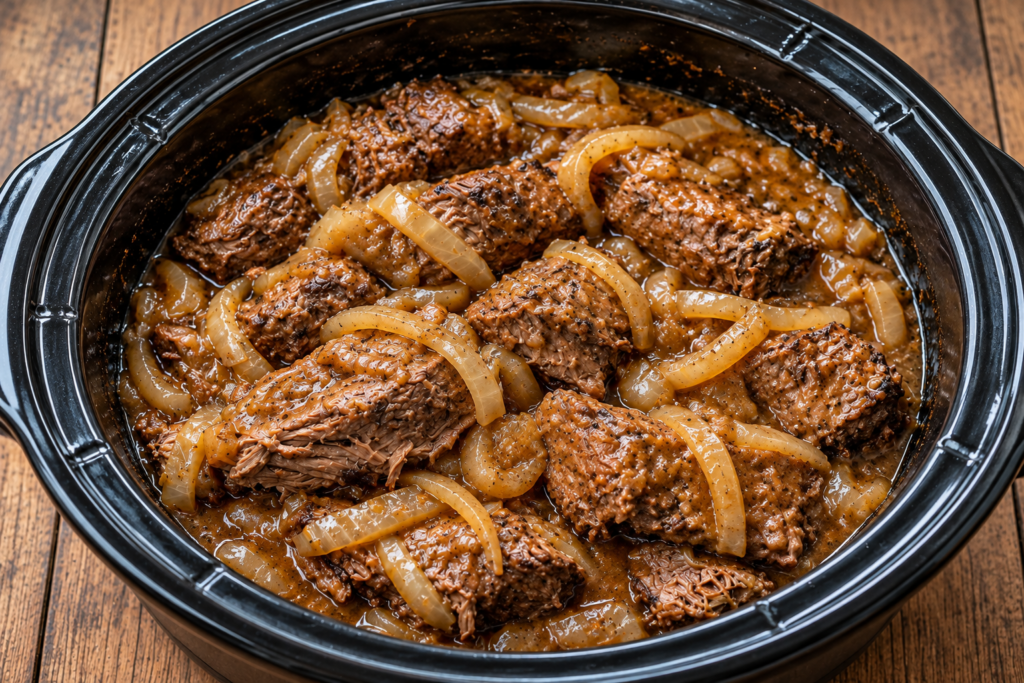
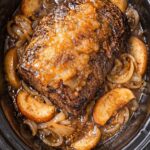
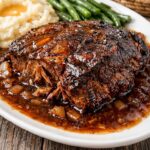
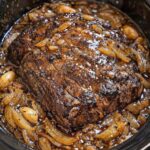
Keep the pieces fairly large. Substantial chunks give you the tender, rustic appearance shown in the image. They also hold together better when lifted from the cooker.
Avoid repeatedly opening the lid. Each opening releases heat and can extend the cooking time. Check near the end of the suggested range.
Thicken at the end. Adding cornstarch after the beef is tender gives you more control over the gravy. Always mix it with cold water first to prevent lumps.
Adjust the consistency gradually. If the gravy becomes too thick, add broth a tablespoon at a time. For thicker gravy, use a small additional slurry and heat until it thickens.
Ingredient Notes and Variations
Yellow onions provide a balanced savory sweetness. White onions also work, while sweet onions produce a slightly sweeter gravy. Slice them thick enough that some strands remain visible after cooking.
Low-sodium broth makes seasoning easier to control. Worcestershire sauce contributes salt as well as flavor, so taste the finished dish before adding more.
For a mushroom variation, add eight ounces of thickly sliced mushrooms with the onions. Brown them first if you want a deeper flavor. A bay leaf can also be added during cooking; remove it before serving.
You can skip the browning step when short on time. Add the beef and onions directly to the cooker and mix the remaining sauce ingredients before pouring them over. The finished flavor and color will be less developed.
Storage and Reheating
Refrigerate leftovers in shallow airtight containers within two hours of cooking. Store the beef with its gravy and use within 3–4 days.
For longer storage, freeze cooled portions for up to three months for best quality. Leave a little space in the container for expansion and thaw overnight in the refrigerator.
Reheat in a covered saucepan over gentle heat, adding a splash of broth if necessary. Stir carefully and heat leftovers to 165°F (74°C) throughout. Avoid using the slow cooker to reheat cold leftovers.
Serving Ideas
Creamy mashed potatoes are a classic pairing because they catch the onion gravy. Buttered egg noodles, steamed rice, and baked potatoes are equally satisfying alternatives.
Add green beans, steamed broccoli, or roasted carrots for a vegetable side. A crisp green salad brings freshness to the rich meal. Leftover beef can also be gently shredded and served in a toasted roll with some of the thickened onions.
Estimated Nutritional Information
Per serving, based on six portions without side dishes:
Calories: Approximately 420
Protein: 38 g
Carbohydrates: 12 g
Fat: 24 g
These are estimates. The amount of fat in the chuck roast, trimming, and how much cooking fat is removed can substantially change the values.
Nutrition Benefits
Beef provides protein, iron, zinc, and vitamin B12. Onions contribute a small amount of fiber and add flavor without requiring a packaged gravy mix. Serving the dish with vegetables adds variety, while using low-sodium broth gives you greater control over the salt.
Frequently Asked Questions
Why is my beef still tough?
Chuck often needs more time to become tender. Continue cooking with the lid on until it separates easily with a fork.
Can I use frozen beef?
Thaw the beef fully in the refrigerator before using it in this slow cooker recipe.
Can I prepare this ahead?
Yes. Cook the dish, cool and refrigerate it promptly, then reheat gently. The gravy may need a splash of broth.
Can I use flour instead of cornstarch?
Yes, but flour requires a different method. For the simplest, smoothest result with these instructions, use the cornstarch slurry.




Pingback: Cheesy Croissant Bake with Creamy Garlic Sauce