
# Garlic Rosemary Butter Bone-In Ribeye Steaks
## Description
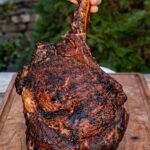
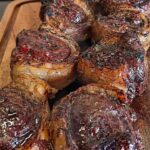
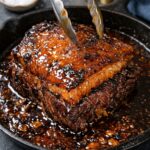
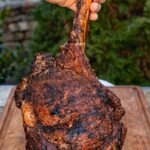
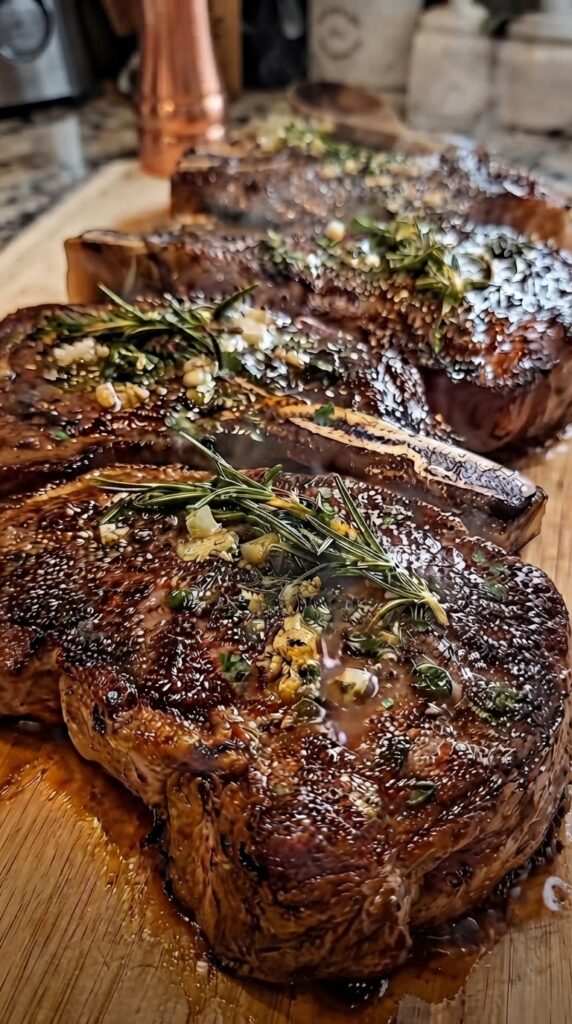
These Garlic Rosemary Butter Bone-In Ribeye Steaks are inspired by the thick, beautifully seared steaks shown in your photo. The steaks have a deeply browned crust, a juicy center, and a rich garlic-herb butter finish. Fresh rosemary, thyme, crushed garlic, butter, and the natural beef juices create a glossy pan sauce that coats every bite.
Bone-in ribeye is especially good for this preparation because its marbling helps keep the meat tender and flavorful during high-heat searing. The bone also gives the steak an impressive steakhouse-style appearance. The key to getting that dark caramelized exterior is to dry the meat well, season generously, and cook it in a very hot heavy skillet before lowering the heat and repeatedly spooning aromatic butter over the steaks.
You can prepare this recipe for a special dinner, weekend meal, holiday gathering, or whenever you want a restaurant-style steak at home.
Prep Time: 15 minutes
Resting Before Cooking: 30–45 minutes
Cook Time: 15–20 minutes
Resting After Cooking: 8–10 minutes
Total Time: About 1 hour 15 minutes
Servings: 4
## Ingredients
For the Steaks
2 large bone-in ribeye steaks, about 1 1/2 to 2 inches thick
2 tablespoons olive oil or avocado oil
2 teaspoons kosher salt
1 1/2 teaspoons freshly ground black pepper
1 teaspoon garlic powder
1/2 teaspoon onion powder
For the Garlic Herb Butter
4 tablespoons unsalted butter
5 garlic cloves, lightly crushed or roughly chopped
3 fresh rosemary sprigs
4 fresh thyme sprigs
1 tablespoon chopped fresh parsley
1 teaspoon Worcestershire sauce, optional
1 teaspoon fresh lemon juice, optional
For Finishing
1 tablespoon melted butter
Fresh rosemary or thyme
Flaky sea salt, optional
Freshly ground black pepper
Pan juices from cooking
## Instructions
### 1. Bring the Steaks Toward Room Temperature
Remove the steaks from the refrigerator approximately 30–45 minutes before cooking.
Place them on a plate or cutting board and allow them to lose some of their refrigerator chill. Extremely cold steaks can cook unevenly, especially when they are as thick as those pictured.
Do not leave raw meat at room temperature for extended periods.
### 2. Dry the Steaks Thoroughly
Pat every surface of the steaks very dry with paper towels.
This is one of the most important steps for creating a dark, flavorful crust. Moisture on the outside of the meat produces steam, which can interfere with browning.
Make sure to dry around the bone and along the fatty edges as well.
### 3. Season Generously
Mix the salt, black pepper, garlic powder, and onion powder.
Season both sides of each steak generously. Rub a little seasoning along the edges as well.
The steaks in the photograph appear thick, so they can handle a substantial amount of seasoning.
For even deeper seasoning, salt the steaks several hours before cooking and leave them uncovered in the refrigerator. Then bring them out shortly before cooking.
### 4. Preheat the Skillet
Place a large cast-iron or heavy-bottomed skillet over medium-high to high heat.
Allow it to become very hot.
Add the oil and swirl it around the skillet. The oil should shimmer but should not be allowed to burn heavily.
Cast iron works particularly well because it maintains high temperatures and helps develop the beautiful brown crust associated with steakhouse-style steaks.
### 5. Sear the First Side
Carefully place the steaks in the hot skillet.
Do not move them immediately.
Cook for approximately 3–4 minutes, depending on thickness, until a deep brown crust has developed.
The exact cooking time varies, so use appearance and internal temperature rather than relying only on the clock.
### 6. Flip the Steaks
Turn the steaks over with sturdy kitchen tongs.
Sear the second side for another 3 minutes.
If the steaks have a thick fatty edge, hold each steak upright with tongs and sear the fat for approximately 30–60 seconds. Rendering some of this fat adds flavor and improves the texture.
### 7. Add Garlic, Butter, and Herbs
Reduce the heat to medium.
Add the butter, crushed garlic cloves, rosemary, and thyme.
As the butter melts, gently swirl the skillet.
The garlic and fresh herbs will begin flavoring the butter while the beef juices mix into it.
Avoid letting the garlic become black or burned.
### 8. Baste the Steaks
Tilt the skillet slightly so the melted butter collects toward one side.
Using a large spoon, repeatedly scoop the hot garlic-herb butter and pour it over the steaks.
Continue basting for approximately 2–4 minutes.
Turn the steaks once or twice during this process so both surfaces receive plenty of flavored butter.
This repeated butter basting gives the steaks the glossy appearance and rich herb coating visible in the photograph.
### 9. Check the Internal Temperature
Use an instant-read meat thermometer inserted into the thickest section of the steak, avoiding contact with the bone.
For steak doneness, approximate temperatures when removing the meat from the pan are:
Rare: 120–125°F
Medium-rare: 125–130°F
Medium: 135–140°F
Medium-well: 145–150°F
Remember that the temperature can rise several degrees while the steak rests.
For food-safety guidance, USDA recommends cooking whole cuts of beef to at least 145°F followed by a minimum 3-minute rest.
### 10. Rest the Steaks
Transfer the cooked steaks to a cutting board.
Spoon some of the garlic, herbs, and browned butter over the top.
Allow the steaks to rest for approximately 8–10 minutes before slicing.
Resting allows the juices to redistribute through the meat. Cutting immediately can cause much of the flavorful liquid to run onto the board.
### 11. Finish and Serve
Immediately before serving, spoon some of the pan juices over each steak.
Add a small amount of melted butter if desired.
Sprinkle with chopped parsley, fresh thyme, rosemary, flaky sea salt, or freshly cracked black pepper.
Serve the steaks whole for an impressive presentation or slice them across the grain into thick strips.
## Recipe Notes
The thickness of your steak has a major effect on cooking time. A 1-inch steak cooks much more quickly than a 2-inch bone-in ribeye.
If your steaks are extremely thick, sear them first and then transfer the skillet to a 400°F oven for several minutes until the preferred internal temperature is reached.
A meat thermometer is particularly useful with expensive thick-cut steaks because it reduces the risk of overcooking.
Use unsalted butter so you can control the overall salt level.
Fresh rosemary and thyme produce the strongest steakhouse-style aroma, although dried herbs can be used when fresh herbs are unavailable. Use dried herbs more sparingly because their flavor is more concentrated.
If cooking several steaks, work in batches. Crowding a skillet reduces the heat and can prevent proper browning.
## Tips for the Best Steak
Start with well-marbled ribeye. Fine streaks of fat running through the meat melt as the steak cooks, contributing tenderness and flavor.
Dry the steak thoroughly before seasoning.
Use a heavy skillet capable of maintaining high heat.
Do not continuously flip the meat during the initial searing stage. Give each side enough uninterrupted contact with the skillet to create a strong crust.
Add butter after the initial high-heat searing rather than at the beginning. Butter contains milk solids that can burn under extremely high heat.
Crushing the garlic rather than finely mincing it reduces the chance of it burning while still flavoring the butter.
Use tongs instead of a fork when flipping steaks. Piercing the meat unnecessarily can release juices.
Do not determine doneness by appearance alone. A thermometer gives much more consistent results.
Most importantly, let the meat rest after cooking.
## Storage
Cooked steak is best enjoyed immediately, but leftovers can be refrigerated.
Allow the steak to cool, then transfer it to an airtight container.
Store in the refrigerator for up to 3–4 days.
Keep any leftover garlic-herb butter or pan juices separately if possible. Spoon them over the steak during reheating.
For longer storage, wrap the steak tightly and freeze it in a freezer-safe container for approximately 2–3 months.
Thaw frozen steak overnight in the refrigerator.
For reheating, place the steak in a covered baking dish in a 275°F oven until gently warmed. Low-temperature reheating helps prevent the meat from becoming tough.
You can then briefly place it in a hot skillet to refresh the exterior crust.
## Serving Ideas
These Garlic Rosemary Butter Ribeye Steaks pair naturally with steakhouse-style side dishes.
Creamy mashed potatoes are one of the best options because they absorb the garlic butter and beef juices.
Roasted garlic potatoes, crispy oven potatoes, baked potatoes, or cheesy scalloped potatoes also work beautifully.
For vegetables, try roasted asparagus, garlic green beans, sautéed mushrooms, roasted carrots, creamed spinach, Brussels sprouts, or grilled zucchini.
Corn on the cob provides a sweeter side that balances the rich beef.
A fresh salad is another good choice if you want to lighten the meal. A simple combination of lettuce, cucumber, tomato, red onion, and vinaigrette provides acidity and freshness.
For an especially classic steak dinner, serve the ribeye with mashed potatoes, sautéed mushrooms, asparagus, and warm dinner rolls.
## Nutritional Information
Approximate nutrition per serving when the recipe serves four:
Calories: 650–750
Protein: 48–55 grams
Total Fat: 48–58 grams
Saturated Fat: 19–23 grams
Carbohydrates: 2–4 grams
Fiber: Less than 1 gram
Sugar: Less than 1 gram
Sodium: Approximately 700–900 mg
Iron: Approximately 4–5 mg
These values are estimates. Actual nutrition varies considerably according to steak size, fat content, how much cooking fat remains on the steak, and the amount of salt used.
## Nutrition Benefits
Ribeye steak is naturally rich in complete protein. Protein provides amino acids needed for maintaining and repairing muscle and other body tissues.
Beef is also a source of heme iron, a form of iron that the body generally absorbs efficiently. Iron contributes to normal red blood cell formation and oxygen transport.
Beef supplies vitamin B12, which supports normal nerve function and red blood cell formation.
It also provides zinc, selenium, phosphorus, niacin, and other B vitamins.
Garlic and fresh herbs add flavor and plant compounds without requiring sugary sauces.
Because ribeye is one of the richer beef cuts, it contains a substantial amount of fat and saturated fat. Portion size and side-dish choices can therefore make a significant difference in the overall nutritional profile of the meal.
Pairing the steak with vegetables and a fresh salad can add fiber, potassium, vitamins, and other nutrients to the plate.
## Questions and Answers
### What cut of steak works best for this recipe?
Bone-in ribeye is ideal because it contains excellent marbling and stays juicy during high-temperature cooking. Boneless ribeye, New York strip, or thick sirloin can also be prepared with the same garlic-butter technique.
### Can I cook these steaks without a cast-iron skillet?
Yes. Use a heavy stainless-steel skillet or another pan designed for high heat. Thin nonstick pans usually do not produce the same strong crust.
### Why do I need to dry the steak before cooking?
Surface moisture turns into steam in the hot skillet. Drying the steak allows the meat to make better direct contact with the pan, creating deeper browning.
### Can I use dried rosemary instead of fresh?
Yes. Use approximately 1 teaspoon dried rosemary instead of several fresh sprigs. Fresh rosemary is preferable for butter basting because it releases its aroma gradually without leaving many tiny dried pieces on the steak.
### Should I marinate ribeye steak?
It is not necessary. Ribeye already has plenty of natural beef flavor and marbling. Salt, pepper, garlic, herbs, and butter are usually enough.
### How can I get a darker crust?
Make sure the steak is completely dry and the skillet is properly preheated. Do not overcrowd the pan, and avoid moving the steak during the first few minutes of cooking.
### Why is butter added after searing?
Butter can burn at very high temperatures. Oil handles the initial sear better, while butter is added later for flavor and basting once the heat has been reduced.
### How do I keep the steak juicy?
Choose a well-marbled steak, avoid overcooking it, use a thermometer, and allow the meat to rest before cutting.
### Can I prepare this recipe on the grill?
Yes. Grill the steaks over high heat until nearly done, then finish them in a cast-iron skillet or grill-safe pan with garlic, butter, rosemary, and thyme.
### What is the best sauce for this steak?
The garlic-herb butter and natural pan juices are usually enough. Mushroom sauce, peppercorn sauce, chimichurri, or creamy horseradish sauce can also be served alongside.
### Can leftover steak be used in another recipe?
Absolutely. Thinly sliced leftovers are excellent in steak sandwiches, wraps, salads, breakfast eggs, quesadillas, tacos, or steak-and-potato bowls.
### What makes this recipe look like a restaurant steak?
The combination of a thick-cut steak, extremely hot sear, dark caramelized crust, butter basting, whole garlic, fresh rosemary and thyme, and a short resting period creates the glossy, richly browned steakhouse-style result.