
Classic Slow-Roasted Pot Roast with Baby Potatoes and Carrots
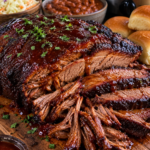
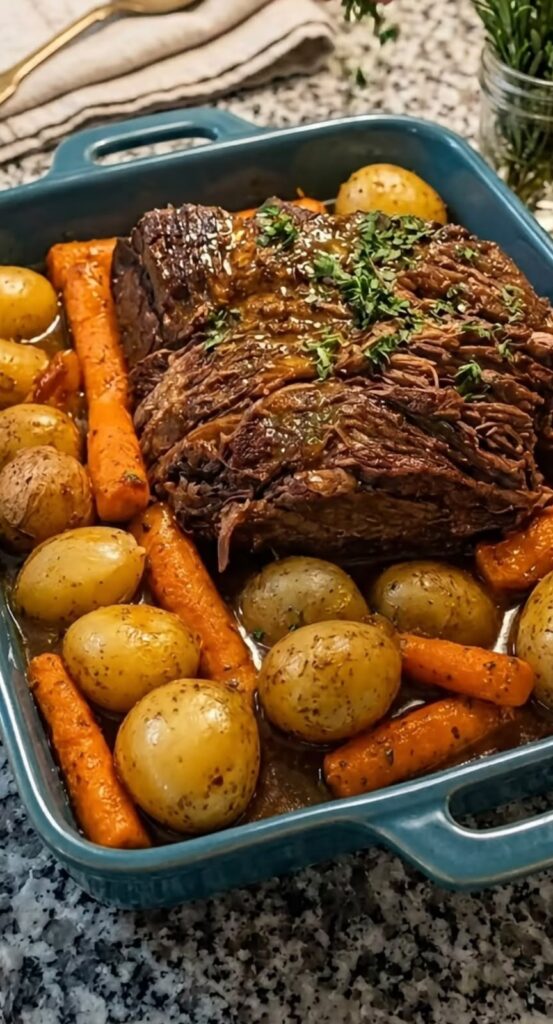
Nothing says comfort food quite like a tender Classic Slow-Roasted Pot Roast. A well-browned chuck roast slowly cooks with baby potatoes, carrots, onion, garlic, and savory herbs until the beef is fork-tender and the vegetables are infused with rich flavor. Serve it with plenty of the flavorful pan gravy for a satisfying family dinner.
Prep Time: 20 minutes
Cook Time: 3–4 hours in the oven or 8 hours in a slow cooker
Total Time: About 3½–4 hours
Servings: 6–8
🛒 Ingredients
3–4 lbs beef chuck roast, or beef brisket/shoulder roast
1½ lbs baby yellow potatoes, washed and left whole
1 lb whole carrots, peeled and cut into large pieces
1 large yellow onion, cut into wedges
4 cloves garlic, minced
2 cups beef broth
1 tbsp Worcestershire sauce
1 tbsp tomato paste
2 tbsp olive oil, for searing
1 tsp dried thyme
1 tsp dried rosemary, or fresh rosemary sprigs
Salt and freshly cracked black pepper, to taste
Fresh parsley or thyme, chopped, for garnish
👩🍳 Instructions
1. Season the Beef
Remove the roast from its packaging and pat it thoroughly dry with paper towels.
Season generously on all sides with salt and freshly cracked black pepper. Let the roast sit for about 10–15 minutes while you prepare the pan.
2. Sear the Roast
Heat the olive oil in a large Dutch oven over medium-high heat.
Place the seasoned roast into the hot oil and sear for 3–4 minutes per side, including the edges where possible.
Continue until a deep brown crust develops.
Transfer the roast to a plate and set aside.
Tip: Don’t skip the searing step. Those browned surfaces add a deep, savory flavor to the finished pot roast.
3. Build the Flavorful Broth
Reduce the heat to medium.
Add the chopped onion and minced garlic to the same Dutch oven. Cook for about 1–2 minutes, stirring frequently.
Add the tomato paste, Worcestershire sauce, dried thyme, and dried rosemary. Stir for about 30–60 seconds.
Pour in the beef broth and use a wooden spoon to scrape up the browned bits from the bottom of the pan.
Bring the liquid to a gentle simmer.
4. Add the Roast and Vegetables
Return the seared roast to the Dutch oven.
Arrange the baby potatoes and large carrot pieces around the beef.
Pour the hot seasoned broth over and around the roast.
The liquid should come partway up the sides of the meat rather than completely cover it.
🔥 Oven Method
Preheat the oven to 300°F (150°C).
Cover the Dutch oven tightly with its lid. If your pot doesn’t have a tight-fitting lid, cover it securely with heavy-duty foil.
Transfer it to the oven and cook for approximately 3–3½ hours.
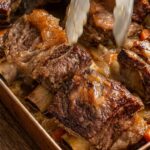
Check the roast toward the end of cooking. It should be extremely tender and easy to pull apart with a fork.
If the beef is still firm, continue cooking for another 20–30 minutes and check again.
5. Rest the Roast
Carefully remove the Dutch oven from the oven.
Transfer the roast to a large serving platter and let it rest for 10–15 minutes.
Keep the potatoes and carrots warm in the cooking liquid.
🥘 Slow Cooker Method
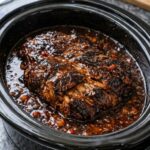
After searing the beef and preparing the seasoned broth, transfer the roast to a slow cooker.
Arrange the potatoes, carrots, and onion around the meat.
Pour the seasoned broth over everything.
Cover and cook on:
LOW: About 8 hours
HIGH: About 4–5 hours
The roast is ready when it is fork-tender and pulls apart easily.
6. Make a Simple Gravy
For a thicker gravy, carefully strain or ladle some of the cooking liquid into a saucepan.
Bring it to a gentle simmer.
For a quick thickening option, mix 1 tbsp cornstarch with 2 tbsp cold water to make a slurry. Whisk it into the simmering broth and cook until the gravy reaches your desired consistency.
Taste and adjust the seasoning with salt and pepper if needed.
7. Serve
Arrange the tender pot roast on a large serving platter.
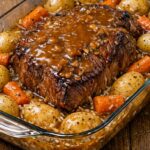
Surround it with the baby potatoes and carrots.
Spoon the rich gravy over the beef and vegetables, then garnish with freshly chopped parsley or thyme.
Serve hot.
⭐ Tips for the Best Pot Roast
Choose a well-marbled roast: Chuck roast is especially good for slow cooking because its connective tissue breaks down during the long cooking process.
Dry before searing: Patting the beef dry helps it develop a much better brown crust.
Don’t overcrowd the pan: If your Dutch oven is small, sear the roast separately in batches or use a large skillet.
Keep the lid closed: Every time you remove the lid during oven cooking, heat and moisture escape.
Cut vegetables into large pieces: Large potatoes and carrots hold up better during several hours of cooking.
Cook until tender, not just until a certain time: Cooking time can vary based on the roast’s size and shape. Fork tenderness is the best indicator.
🥩 Which Beef Cut Is Best?
Chuck roast: The classic choice. It becomes exceptionally tender and flavorful after several hours of slow cooking.
Brisket: Works well and has a rich beefy flavor, although its texture can be somewhat different from chuck roast.
Shoulder roast: Another good option for slow braising and pot roast-style cooking.
For the most traditional texture, beef chuck roast is the easiest choice.
🥕 Easy Variations
Mushroom Pot Roast: Add sliced mushrooms during the final 1–2 hours of cooking.
Garlic Herb Roast: Add extra garlic along with fresh rosemary and thyme.
Rich Gravy: Replace ½ cup of the beef broth with red wine for additional depth of flavor.
Extra Vegetables: Add celery, parsnips, or pearl onions.
Spicy Version: Add a small pinch of red pepper flakes to the broth.
🍽️ What to Serve with Pot Roast
Because this recipe already includes potatoes and carrots, it works beautifully as a complete one-pot dinner.
For a larger meal, serve it with:
Warm dinner rolls
Garlic bread
Green beans
Roasted Brussels sprouts
Simple green salad
Steamed broccoli
Creamed spinach
The gravy is especially delicious spooned over the potatoes.
🧊 Storage & Reheating
Store leftover beef, potatoes, carrots, and gravy in airtight containers in the refrigerator for 3–4 days.
For longer storage, freeze the cooked beef and gravy for up to 2–3 months. The potatoes and carrots can also be frozen, although their texture may soften slightly after thawing.
Reheat gently in a covered saucepan or Dutch oven with some of the gravy until heated through.
Individual portions can also be reheated in the microwave.
❓ Frequently Asked Questions
Why is my pot roast still tough after 3 hours?
If the beef is tough, it may simply need more cooking time. Pot roast becomes tender when its connective tissue has had enough time to break down. Continue cooking until the roast is fork-tender.
Should the potatoes and carrots be completely covered with broth?
No. They can sit around the roast with some of the broth reaching their lower portions. The covered cooking environment provides plenty of moisture.
Can I prepare this the day before?
Yes. Pot roast is an excellent make-ahead meal. Refrigerate the cooked roast and vegetables with the gravy, then gently reheat before serving.
Can I skip searing the meat?
You can, but searing is highly recommended because it develops a richer, more complex flavor.
Can I use baby red potatoes?
Absolutely. Baby red potatoes or Yukon Gold potatoes work well. Keep small potatoes whole and cut larger ones in half.
📊 Approximate Nutrition
Per serving, assuming 8 servings and depending on the cut of beef and amount of gravy:
Calories: 550–650 kcal
Protein: 45–55 g
Carbohydrates: 30–35 g
Fat: 28–35 g
Fiber: 5–6 g
Nutrition is an estimate and will vary depending on the beef cut, trimming, serving size, and specific ingredients used.
❤️ Serving Tip
For the most comforting presentation, place the sliced or shredded roast in the center of a large platter, surround it with golden baby potatoes and tender carrots, then spoon the savory gravy generously over everything. Finish with fresh parsley or thyme.