Prep Time: 15 minutes
Cook Time: 25 minutes
Total Time: 40 minutes
Servings: 4
Serving Size: One salmon fillet with one-quarter of the spinach sauce
Description for Baked Salmon with Creamy Garlic Spinach
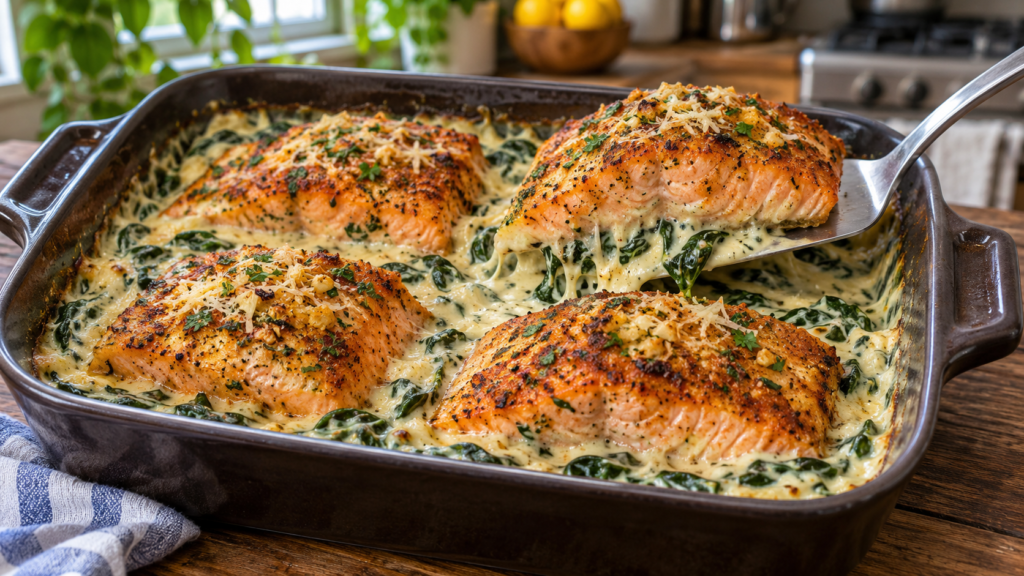
Baked Salmon with Creamy Garlic Spinach combines golden, seasoned salmon with a rich Parmesan cream sauce and tender spinach. The fish has a lightly browned surface, while the creamy vegetables underneath keep every serving moist and flavorful. Garlic, paprika, Italian herbs, and a little lemon bring balance to the richness.
This recipe is inspired by the dish in your photograph. The salmon is briefly seared to develop its golden crust, then finished in the oven over creamy spinach. This method creates an attractive dinner without complicated preparation or a long ingredient list.
Serve it straight from the baking dish for a cozy family meal, or plate each fillet over mashed potatoes or rice for a dinner-party presentation. The sauce is especially delicious spooned over the fish just before serving.
Ingredients for Baked Salmon with Creamy Garlic Spinach
For the salmon:
– 4 salmon fillets, approximately 6 ounces each
– 1 tablespoon olive oil
– 1 teaspoon paprika
– 1 teaspoon garlic powder
– 1 teaspoon dried Italian seasoning
– ½ teaspoon salt
– ½ teaspoon freshly ground black pepper
For the creamy garlic spinach:
– 2 tablespoons unsalted butter
– 1 small yellow onion, finely diced
– 5 garlic cloves, minced
– 10 ounces fresh baby spinach
– ½ cup low-sodium chicken or vegetable broth
– ¾ cup heavy cream
– ½ cup freshly grated Parmesan cheese
– ¼ teaspoon black pepper
– Salt, to taste
– 1 teaspoon fresh lemon juice
For serving:
– 1 tablespoon chopped fresh parsley
– Lemon wedges
Instructions for Baked Salmon with Creamy Garlic Spinach
1. Prepare the oven and baking dish
Preheat the oven to 400°F (200°C). Lightly grease a baking dish large enough to hold the four salmon fillets without overlapping. A 9 × 13-inch dish works well. Place your oven rack in the middle position for even cooking.
2. Dry and season the salmon
Pat the salmon thoroughly dry with paper towels. Check for small pin bones and remove any you find. Mix the paprika, garlic powder, Italian seasoning, salt, and pepper in a small bowl. Sprinkle the mixture evenly over the salmon, gently pressing it onto the surface.
3. Sear the salmon
Heat the olive oil in a large nonstick or well-seasoned skillet over medium-high heat. Place the salmon presentation-side down and cook for approximately 2–3 minutes, until lightly browned. Carefully turn and cook for another minute. Transfer to a plate; the centers should still be undercooked.
4. Cook the onion and garlic
Reduce the heat to medium. If the skillet contains blackened spices, wipe them out carefully before continuing. Add the butter and onion. Cook for 3–4 minutes, stirring occasionally, until softened. Add the minced garlic and cook for about 30 seconds, just until fragrant.
5. Wilt the spinach
Add the spinach in batches, stirring as each batch softens. Continue cooking until all the leaves have wilted and most of the released moisture has evaporated. This step prevents the finished sauce from becoming watery. If necessary, cook for another minute before adding the liquids.
6. Make the cream sauce
Pour in the broth and gently scrape up any golden cooking residue. Add the heavy cream and bring to a gentle simmer. Cook for 2–3 minutes, stirring occasionally. Reduce the heat to low and gradually stir in the Parmesan until melted. Add the pepper and taste before adding more salt.
7. Assemble the dish
Spread the creamy spinach mixture evenly in the prepared baking dish. Arrange the salmon on top, browned-side up, leaving a little space between the fillets. Spoon a small amount of sauce around the sides of each piece, keeping the golden tops mostly uncovered.
8. Finish in the oven
Bake for approximately 8–12 minutes, depending on the thickness of the salmon. Start checking early. The fish should reach an internal temperature of 145°F (63°C) in its thickest part. Use a food thermometer for the most reliable result, since fillet sizes and ovens vary.
9. Finish and serve
Remove the dish from the oven. Gently stir the lemon juice into the sauce around the salmon and sprinkle with parsley. Serve promptly with lemon wedges. Use a wide spatula to lift each fillet, then spoon the creamy garlic spinach alongside or underneath it.
Tips for the Best Results for Baked Salmon with Creamy Garlic Spinach
Choose similar-sized fillets. Pieces of equal thickness cook more evenly. A thin tail portion may finish before a thick center-cut fillet.
– Dry the salmon well. Surface moisture prevents browning and can make the spices slide off.
– Avoid crowding the skillet. Sear in two batches if needed so the salmon browns properly.
– Keep the sauce at a gentle simmer. A hard boil can make the dairy sauce separate or become greasy.
– Grate Parmesan finely. Finely grated cheese melts more easily and gives the sauce a smoother consistency.
– Check the fish early. A few extra minutes can make salmon noticeably drier.
– Add lemon at the end. This keeps its flavor fresh and gives you better control over the sauce’s acidity.
Recipe Notes for Baked Salmon with Creamy Garlic Spinach
Fresh or frozen salmon: Either works well. Thaw frozen salmon completely in the refrigerator before cooking, then pat it dry. Adding frozen fish directly to this dish changes the cooking time and releases extra water into the sauce.
Skin-on salmon: You can use skin-on fillets, although the skin will soften where it touches the creamy spinach. For easy serving and a texture closer to the photograph, skinless fillets are convenient.
Frozen spinach: Substitute approximately 8 ounces of frozen chopped spinach. Thaw it fully and squeeze out as much liquid as possible before adding it to the skillet.
Cream alternatives: Half-and-half produces a lighter but thinner sauce and may separate more easily during baking. For the most dependable texture, use the heavy cream listed in the recipe.
Salt adjustment: Parmesan and broth contribute salt. Taste the completed sauce before seasoning further, especially if you use regular broth instead of a low-sodium version.
Easy Variations for Baked Salmon with Creamy Garlic Spinach
For a little heat, add ¼ teaspoon red pepper flakes with the garlic. This gives the sauce a gentle kick without overpowering the salmon.
For a mushroom version, sauté 8 ounces of sliced mushrooms after the onion, cooking until their moisture evaporates before continuing.
For extra tangy flavor, stir ¼ cup drained, chopped sun-dried tomatoes into the spinach. Choose tomatoes packed in oil and blot away excess oil first.
You can also replace the Italian seasoning with dried dill and parsley for a different herb combination. Keep the total dried herbs close to one teaspoon so the salmon remains the main flavor.
What to Serve with Creamy Garlic Salmon
Mashed potatoes make a comforting accompaniment because they catch the sauce beautifully. Steamed rice, buttered noodles, or small roasted potatoes also work well.
For a vegetable-focused plate, serve the salmon with roasted asparagus, broccoli, green beans, or cauliflower mash. A crisp cucumber salad with a light lemon dressing adds freshness alongside the creamy sauce.
Crusty bread is useful for scooping up the spinach and garlic cream. If serving bread, a simple green salad can complete the meal without requiring another cooked side.
Storage and Reheating for Baked Salmon with Creamy Garlic Spinach
Refrigerate leftovers in a shallow, airtight container within two hours of cooking. Store for up to three days.
Reheat individual portions gently in a covered skillet over low heat, adding a splash of water or broth to loosen the sauce. Heat leftovers to 165°F (74°C), checking the center of the fish. Avoid prolonged cooking once heated, which can dry it out.
Freezing is possible, but the cream sauce may separate and the spinach can soften further after thawing. For the best texture, enjoy this dish freshly cooked or refrigerated and reheated.
Estimated Nutritional Information for Baked Salmon with Creamy Garlic Spinach
Per serving, including one salmon fillet and one-quarter of the sauce, without side dishes:
– Calories: Approximately 650
– Protein: 44 g
– Carbohydrates: 9 g
– Fat: 49 g
– Saturated Fat: 22 g
– Fiber: 2 g
– Sugar: 3 g
– Sodium: Approximately 700 mg
These values are estimates. Salmon variety, cheese brand, broth, and added salt will affect the final amounts.
Nutritional Benefits for Baked Salmon with Creamy Garlic Spinach
Salmon provides protein and naturally contains omega-3 fats. It also supplies nutrients such as vitamin B12 and selenium.
Spinach contributes fiber, folate, and vitamin K, while Parmesan adds calcium and additional protein. Garlic, onion, herbs, and lemon provide plenty of flavor throughout the dish.
The cream and butter make this a rich meal. Pairing it with vegetables and choosing a portion of sauce that suits your needs can help balance the plate. Nutritional values will increase if you add bread, pasta, or potatoes.
Discover 60+ high-protein, low-carb recipes with simple instructions and everyday ingredients. Find breakfast, lunch, dinner, salad, and snack ideas—plus a 30-day meal plan to help you plan ahead.
Frequently Asked Questions for Baked Salmon with Creamy Garlic Spinach
Can I skip searing the salmon?
Yes. Place the seasoned raw salmon over the warm spinach sauce and bake until it reaches 145°F. Begin checking around 12 minutes; thicker pieces may take longer. The surface will be less browned.
Why is my sauce watery?
Spinach releases moisture as it cooks. Let that moisture evaporate before adding the cream. Thawed frozen spinach needs thorough squeezing.
Can I prepare this ahead?
Prepare the spinach sauce up to one day ahead and refrigerate it. Warm it gently before assembling, then cook the salmon just before serving for the best texture.
Can I use another fish?
Yes. Cod or haddock can work, but cooking time will depend on thickness. Cook fish to 145°F in the center.