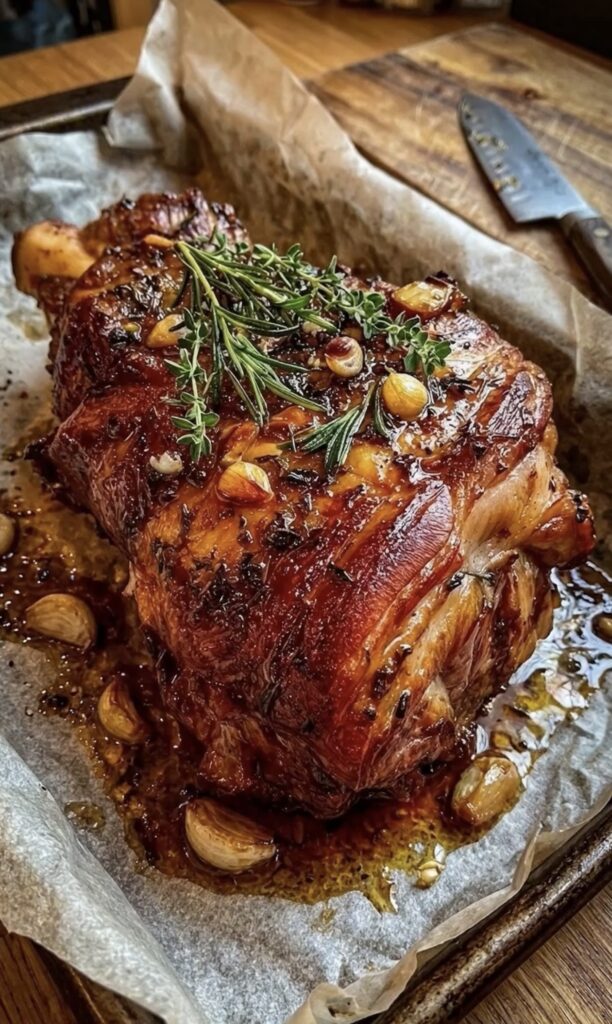
thi is a delicious, comforting dinner featuring tender, slow-roasted pork coated in a buttery garlic and herb sauce. The combination of fresh rosemary, thyme, Dijon mustard, honey, and Worcestershire sauce creates a rich, savory flavor with a touch of
This recipe is perfect for Sunday family dinners, holiday gatherings, special occasions, or meal preparation. Serve it with creamy mashed potatoes, roasted vegetables, or buttery dinner rolls for a satisfying homemade meal.
Recipe Information
Prep Time: 20 minutes
Cook Time: Approximately 3–4 hours, plus 10–15 minutes for browning
Resting Time: 15–20 minutes
Total Time: Approximately 3 hours 45 minutes to 4 hours 55 minutes
Servings: 6–8
Cooking Method: Oven roasting
Oven Temperature: 325°F (165°C), then 425°F (220°C)
Difficulty Level: Easy
Ingredients
For the Pork Shoulder
3–4 lbs boneless pork shoulder roast
2 tablespoons olive oil
1½ teaspoons salt
1 teaspoon freshly ground black pepper
1 teaspoon smoked paprika
For the Garlic Herb Butter Glaze
5 tablespoons unsalted butter, melted
8 garlic cloves, finely minced
2 tablespoons fresh rosemary, finely chopped
1 tablespoon fresh thyme leaves, chopped
1 tablespoon Dijon mustard
2 tablespoons honey
1 tablespoon Worcestershire sauce
For Roasting
½ cup chicken broth
6 whole garlic cloves, peeled
Fresh rosemary sprigs for garnish
Fresh thyme sprigs for garnish
Step-by-Step Instructions
Step 1: Preheat the Oven
Preheat your oven to 325°F (165°C).
Prepare a large roasting pan or oven-safe Dutch oven that comfortably fits the pork shoulder.
Make sure the pan is deep enough to hold the broth, melted butter, and natural juices released during cooking.
If using a roasting pan, keep aluminum foil nearby so you can tightly cover the pork during the slow-roasting process.
Step 2: Prepare the Pork Shoulder
Remove the pork shoulder from its packaging and place it on a clean cutting board.
Pat the entire roast dry using paper towels. Removing excess moisture helps the surface develop a beautiful golden-brown crust during searing.
Trim away any loose pieces of excess fat, but leave most of the fat intact. Pork shoulder contains natural fat and connective tissue that help keep it moist during slow cooking.
Rub the pork shoulder evenly with olive oil.
Sprinkle salt, black pepper, and smoked paprika over all sides of the meat.
Massage the seasoning into the pork, making sure the entire surface is evenly coated.
Step 3: Prepare the Garlic Herb Butter
In a medium mixing bowl, combine the melted unsalted butter, minced garlic, chopped rosemary, and fresh thyme.
Add Dijon mustard, honey, and Worcestershire sauce.
Stir everything together until the ingredients are thoroughly combined.
The butter adds richness, while the garlic provides a deep savory flavor. Rosemary and thyme give the roast its fresh herbal aroma.
Dijon mustard adds a mild tanginess, honey balances the savory ingredients with sweetness, and Worcestershire sauce contributes extra depth.
Set the mixture aside until ready to use.
Step 4: Sear the Pork Shoulder
Heat a large, heavy-bottomed skillet over medium-high heat.
Once the skillet is hot, carefully place the seasoned pork shoulder inside.
Sear each side for approximately 3–4 minutes, until a golden-brown crust develops.
Use sturdy kitchen tongs to carefully turn the meat and brown all sides.
This process adds extra flavor through browning and creates a delicious outer crust. Searing does not seal in juices, but it improves the overall taste and appearance.
Once browned, remove the pork from the skillet and transfer it to the prepared roasting pan.
Step 5: Coat with Garlic Herb Butter
Using a pastry brush or spoon, generously spread the prepared garlic herb butter mixture over the pork shoulder.
Make sure the top, sides, and any natural crevices are thoroughly coated.
Reserve a small amount of the mixture if desired for brushing over the roast later, provided it has not touched the raw pork.
As the pork cooks, the butter and herbs will combine with the natural meat juices to create a flavorful roasting sauce.
Step 6: Add Garlic and Chicken Broth
Scatter the six whole garlic cloves around the pork shoulder.
Slow roasting will soften the garlic cloves and turn them sweet, buttery, and tender.
Pour ½ cup chicken broth into the bottom of the roasting pan, avoiding washing the herb butter coating off the top of the meat.
The broth helps provide moisture during cooking and combines with the garlic butter and meat drippings to create a rich sauce.
Cover the roasting pan tightly with aluminum foil or use a snug-fitting lid.
Step 7: Slow Roast the Pork
Place the covered roasting pan in the preheated oven.
Roast at 325°F (165°C) for approximately 3–4 hours, depending on the size, thickness, and shape of the pork shoulder.
The pork will gradually become tender as its connective tissue breaks down during cooking.
Start checking the internal temperature and tenderness before the estimated cooking time ends.
For a soft, shreddable texture, aim for an internal temperature of approximately 195–205°F (90–96°C).
Insert a meat thermometer into the thickest part of the pork, avoiding large pockets of fat.
The pork should also feel tender when pierced with a fork or thermometer probe. If it still feels firm, cover it again and continue roasting, checking periodically.
For food safety, whole pork roasts must reach at least 145°F (63°C) followed by a three-minute rest, but pork shoulder usually needs a much higher temperature to become pull-apart tender.
If the pan begins to dry out during roasting, add a small amount of warm chicken broth.
Step 8: Create a Golden Garlic Butter Crust
Once the pork shoulder is fully tender, carefully remove the roasting pan from the oven.
Remove the aluminum foil and increase the oven temperature to 425°F (220°C).
Spoon a little of the buttery pan liquid over the pork.
Return the uncovered pork shoulder to the oven.
Roast for another 10–15 minutes, or until the exterior becomes deeply golden brown and slightly caramelized.
The honey in the glaze will help create a glossy, appetizing finish.
Watch closely because honey and garlic can burn quickly at higher temperatures.
For additional browning, you can broil the pork for approximately 2–3 minutes, keeping a close eye on it.
Step 9: Baste with Buttery Pan Juices
Remove the roasting pan from the oven.
Use a large spoon to collect the flavorful garlic butter juices from the bottom of the pan.
Gently spoon the juices over the top and sides of the roast.
The combination of roasted garlic, rosemary, thyme, butter, and pork drippings creates a rich, savory coating.
For a smoother sauce, strain some of the pan juices into a small saucepan and simmer briefly to concentrate the flavor.
If the juices are too salty or strongly flavored, add a little unsalted chicken broth.
Step 10: Rest and Serve
Transfer the roasted pork shoulder to a serving platter or cutting board.
Allow it to rest for approximately 15–20 minutes before serving.
Resting makes the roast easier to handle and helps reduce moisture loss when cutting.
For sliced pork, cut across the grain into thick pieces if the meat is firm enough to hold its shape.
For pulled pork, use two forks to gently shred the tender meat into smaller pieces.
Spoon additional garlic butter pan juices over the pork.
Garnish with fresh rosemary, thyme, and the soft roasted garlic cloves.
Serve immediately while warm.
Expert Cooking Tips
1. Choose the right pork cut. Pork shoulder or pork butt works best for slow roasting because it contains enough fat and connective tissue to become tender and flavorful.
2. Avoid cooking at excessively high temperatures. The low oven temperature allows the pork to become tender without excessively drying the outside.
3. Use fresh herbs when possible. Fresh rosemary and thyme provide a wonderful aroma and pair beautifully with garlic and butter.
4. Do not skip the searing step. Browning the pork before roasting adds a richer savory flavor to the finished dish.
5. Check tenderness, not just cooking time. Some pork shoulders need longer than four hours. The meat should feel tender before you remove it from the oven for final browning.
6. Watch the honey glaze carefully. Because honey contains sugar, the glaze can caramelize quickly and may burn if left under intense heat too long.
7. Save the pan juices. These juices make an excellent natural sauce for spooning over the roast and side dishes.
8. Always allow resting time. Resting helps make the meat easier to slice or shred.
Recipe Notes
Can I Use Bone-In Pork Shoulder?
Yes. Bone-in pork shoulder works beautifully in this recipe.
The bone can add flavor to the cooking liquid, but bone-in roasts may need additional cooking time.
Use a thermometer and check the tenderness rather than relying entirely on the clock.
Can I Prepare This Recipe Ahead of Time?
Yes. You can mix the garlic herb butter and season the pork up to one day in advance.
Store the prepared pork in a covered container in the refrigerator until ready to cook.
Keep the garlic herb butter refrigerated separately and soften it slightly before applying.
How Do I Prevent Dry Pork?
Choose a well-marbled pork shoulder, keep the roasting pan covered during most of the cooking process, and maintain some liquid in the bottom of the pan.
Avoid extending the final high-temperature roasting step longer than necessary.
Can I Use Dried Herbs?
Yes. If fresh herbs are unavailable, substitute approximately 2 teaspoons dried rosemary for the 2 tablespoons fresh rosemary and 1 teaspoon dried thyme for the 1 tablespoon fresh thyme.
Crush the dried rosemary slightly before adding it to the butter.
Delicious Side Dishes
Creamy Mashed Potatoes
Soft, buttery mashed potatoes are perfect for soaking up the rich garlic herb pan juices.
Roasted Vegetables
Roasted carrots, Brussels sprouts, and potatoes add color, texture, and natural sweetness.
Buttery Dinner Rolls
Warm bread rolls are ideal for enjoying every last spoonful of the buttery roasting sauce.
Storage and Reheating Instructions
Refrigerator
Allow leftover pork to cool and refrigerate it within two hours of cooking.
Place leftovers in an airtight container with some of the pan juices.
Store in the refrigerator at 40°F (4°C) or below for up to 3–4 days.
Freezer
Place cooked pork in freezer-safe containers or resealable freezer bags.
Add a little roasting liquid to help retain moisture.
Freeze for approximately 2–3 months for best quality.
Thaw overnight in the refrigerator before reheating.
Reheating
Place the pork in an oven-safe dish with a small amount of broth or reserved pan juices.
Cover with foil and heat in a 300°F (150°C) oven until the center reaches 165°F (74°C).
You can also reheat individual portions in a covered skillet over medium-low heat.
Avoid overheating because it can dry out the meat.
Nutritional Information
Estimated per serving, based on 8 portions and a 3½ lb boneless pork shoulder. Actual values vary with fat content, trimming, and the amount of glaze or pan juices consumed.
Nutrient
Approximate Amount
Calories
550–700 kcal
Protein
35–45 g
Total Fat
40–55 g
Saturated Fat
14–20 g
Carbohydrates
7–10 g
Sugars
5–7 g
Fiber
Less than 1 g
Sodium
550–850 mg
These are broad estimates rather than laboratory-tested nutritional values.
Nutritional Benefits
1. Excellent Source of Protein
Pork shoulder provides protein that supports muscle maintenance, tissue repair, and normal body function.
2. Contains Essential B Vitamins
Pork provides several B vitamins, particularly thiamine and vitamin B12, which support energy metabolism and nervous system function.
3. Provides Important Minerals
Pork contains zinc, selenium, phosphorus, and iron, which contribute to normal immune function and other essential bodily processes.
4. Includes Flavorful Herbs and Garlic
Rosemary, thyme, and garlic contain naturally occurring plant compounds and add flavor without requiring additional sugar or salt.
5. A Satisfying Main Dish
The combination of protein and fat makes this a filling main course. Pairing a moderate portion with vegetables can help create a balanced meal.
Because pork shoulder and butter contain substantial fat and saturated fat, portion size is worth considering.
Frequently Asked Questions (Q&A)
Q1. What is the best temperature for roasting pork shoulder?
325°F (165°C) works well for this recipe. It provides gentle heat that allows the meat to become tender over several hours.
Q2. How long does a 4-pound pork shoulder take to cook?
A 4-pound boneless pork shoulder may take approximately 3–4 hours or longer at 325°F, depending on its thickness and shape. Check for tenderness and an internal temperature around 195–205°F if you want shreddable meat.
Q3. Should pork shoulder be covered while roasting?
Yes. Covering the pork during the initial slow roast helps retain moisture and prevents the exterior from drying out before the inside becomes tender.
Q4. Why is my pork shoulder still tough?
Pork shoulder contains substantial connective tissue. If the meat is tough, it often needs additional cooking time to soften.
Q5. Can I make this recipe without honey?
Yes. You can omit the honey for a more savory garlic herb flavor. However, the exterior may not caramelize as deeply.
Q6. Can I use pork loin instead of pork shoulder?
Pork loin is much leaner and should not be cooked to the same high internal temperature as pork shoulder. It requires a different cooking time and approach, so pork shoulder is recommended for this recipe.
Q7. Can I cook this recipe in a slow cooker?
Yes. Sear the seasoned pork first, then transfer it to a slow cooker with the garlic butter mixture, whole garlic cloves, and broth.
Cook on low for approximately 8–10 hours or until fork-tender. Cooking time will vary.
For a caramelized crust, transfer the cooked pork to an oven-safe tray and briefly broil it, watching carefully.
Q8. Can I make the sauce thicker?
Yes. Transfer the pan juices to a saucepan and simmer until slightly reduced. You can also use a small cornstarch slurry if you prefer a thicker gravy.
Q9. How do I know when the pork is ready?
The internal temperature should be around 195–205°F for easily shredded pork, and a fork or thermometer probe should slide into the meat with little resistance.
Q10. Is this recipe suitable for holiday dinners?
Absolutely. Its golden garlic herb crust, rich flavor, and tender texture make it an excellent centerpiece for family gatherings and holiday meals.
Final Thoughts
Garlic Butter Herb Roasted Pork Shoulder is a comforting oven-roasted dinner that combines rich garlic butter, fragrant herbs, tender pork, and a beautifully caramelized exterior.
The combination of slow cooking and a final high-temperature roast gives this recipe its signature juicy interior and flavorful crust.
Whether served with mashed potatoes, roasted vegetables, or warm dinner rolls, this pork shoulder is a satisfying centerpiece for family dinners, weekend meals, and special occasions.
With just a little preparation and patience, you can create a delicious homemade roast that is tender enough to shred, flavorful enough to serve on its own, and perfect for enjoying with your favorite side dishes.