Prep Time: 15 minutes
Cook Time: 35–45 minutes
Total Time: 50–60 minutes
Servings: 6 as a side dish
Description for Honey Balsamic Sweet Potato Wedges with Feta
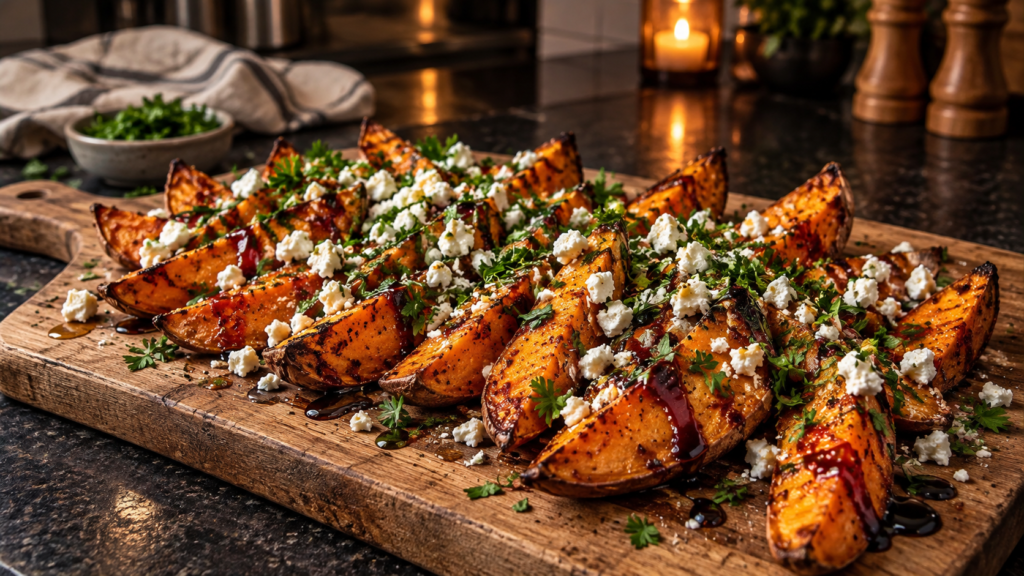
Honey Balsamic Roasted Sweet Potato Wedges with Feta & Fresh Herbs combine caramelized sweet potatoes, salty feta, fragrant herbs, and a glossy balsamic drizzle. The wedges become tender inside with beautifully browned edges, creating a satisfying contrast with the creamy cheese and fresh parsley.
Smoked paprika adds gentle smokiness, while garlic and oregano give the potatoes a savory foundation. Honey enhances their natural sweetness, and lemon juice brightens the finished dish. The balsamic glaze brings everything together with a concentrated sweet-and-tangy flavor.
The key is to roast the wedges with oil and seasonings first, then add the honey near the end. This gives the potatoes time to brown without exposing the honey to prolonged high heat. Finish with balsamic glaze, feta, and herbs immediately before serving.
These colorful wedges work equally well beside a simple weeknight dinner or as part of a holiday spread. Serve them on a wide platter or wooden serving board so the toppings reach every portion.
Ingredients for Honey Balsamic Sweet Potato Wedges with Feta
3 large sweet potatoes, approximately 2¼ lbs total, cut into thick wedges
3 tablespoons olive oil
2 tablespoons honey
2 tablespoons balsamic glaze
1 teaspoon smoked paprika
½ teaspoon garlic powder
½ teaspoon salt
½ teaspoon black pepper
½ cup crumbled feta cheese
2 tablespoons fresh parsley, chopped
1 teaspoon dried oregano
1 tablespoon fresh lemon juice
Instructions for Honey Balsamic Sweet Potato Wedges with Feta
1. Preheat the oven.
Preheat your oven to 425°F (220°C), or approximately 400°F (200°C) fan. Position a rack near the middle.
Prepare a large rimmed baking sheet with parchment rated for this temperature, or lightly oil the tray. Use two baking sheets if needed to prevent crowding.
2. Wash and dry the sweet potatoes.
Scrub the sweet potatoes under running water to remove dirt. Dry thoroughly with a clean kitchen towel.
Leave the skins on for a rustic appearance and firmer edges. You can peel them if preferred, but remove any damaged spots either way.
3. Cut into even wedges.
Slice each sweet potato lengthwise in half, then cut each half into three or four wedges, depending on its size.
Aim for wedges approximately ¾–1 inch thick at their widest point. Similar thickness helps them finish cooking together without thin pieces burning.
4. Mix the savory seasoning.
In a large bowl, combine the olive oil, smoked paprika, garlic powder, salt, black pepper, and dried oregano.
Stir well so the spices are distributed throughout the oil. Reserve the honey, balsamic glaze, lemon juice, feta, and parsley for later.
5. Coat the wedges.
Add the sweet potato wedges to the bowl. Toss gently with your hands or a large spoon until all sides have a light, even coating.
Scrape the remaining seasoned oil from the bowl over the potatoes. Avoid adding extra oil simply because some spices cling to the bowl.
6. Arrange on the baking sheet.
Spread the wedges in a single layer with a flat cut side against the tray. Leave small gaps between pieces.
Space allows moisture to escape and encourages browning. If the potatoes overlap or sit tightly packed, divide them between two trays.
7. Roast and turn.
Roast for 20 minutes, then use a thin spatula to turn the wedges onto their other cut side.
Continue roasting for another 10–15 minutes. If using two trays, rotate their positions when turning the potatoes to encourage more even cooking.
8. Add the honey.
When the wedges are nearly tender, drizzle the honey lightly over them. Turn carefully to distribute it without breaking the softened potatoes.
Return to the oven for approximately 5 minutes, checking closely. The honey should form a light coating without turning black or smelling burned.
9. Check for tenderness.
Pierce the thickest wedge with a fork or small knife. It should slide into the center easily, while the outside shows browned patches.
Total roasting time is usually 35–45 minutes, depending on wedge thickness and oven performance. Remove smaller pieces earlier if necessary.
10. Add lemon and balsamic glaze.
Let the wedges stand for about 2 minutes, then transfer to a serving platter. Sprinkle the lemon juice lightly over them.
Drizzle with balsamic glaze in thin lines. Keep some orange surface visible rather than covering every wedge with a thick layer.
11. Finish with feta and herbs.
Scatter the crumbled feta and chopped parsley evenly over the warm wedges. The heat will soften the cheese slightly without fully melting it.
Taste a small piece before adding extra salt. Feta and balsamic glaze already contribute plenty of flavor.
12. Serve immediately.
Serve while warm, with a wide spatula or serving spoon to lift the wedges and toppings together.
For the best texture, assemble shortly before eating. Leaving the finished dish covered for a long time traps steam and softens the browned edges.
Recipe Notes for Honey Balsamic Sweet Potato Wedges with Feta
Balsamic glaze versus vinegar: This recipe uses thick balsamic glaze, which clings to the wedges. Ordinary balsamic vinegar is thinner and sharper, so it will produce a different finish. If substituting vinegar, start with a small amount and taste before adding more.
Choosing sweet potatoes: Orange-fleshed varieties provide the color and creamy texture shown in the photograph. Choose firm potatoes without soft spots, and select similarly sized ones for easier cutting.
Understanding the texture: These wedges should have browned edges and soft centers. Sweet potatoes generally do not become as uniformly crunchy as traditional potato fries, especially after adding honey, glaze, and cheese.
Adjusting sweetness: For a less sweet version, reduce the honey to 1 tablespoon. You can also use slightly less balsamic glaze while keeping the lemon juice for balance.
Tips for the Best Results for Honey Balsamic Sweet Potato Wedges with Feta
Dry thoroughly: Surface water encourages steaming and can prevent good browning.
Cut consistently: Even wedges cook more predictably than a mixture of thick and thin pieces.
Use enough tray space: Three large sweet potatoes may require two baking sheets.
Delay the honey: Adding it near the end reduces the chance of scorching.
Turn gently: A thin spatula protects the tender centers better than repeatedly tossing them.
Choose block feta: Crumbling it yourself gives varied pieces and often a creamier texture.
Finish with fresh parsley: Add it after roasting to preserve its color and fresh flavor.
Dress just before serving: Lemon juice and glaze gradually soften the exterior.
Servings and Serving Suggestions
This recipe makes approximately 6 side-dish portions, depending on the size of your sweet potatoes and the rest of the meal.
Serve alongside roasted chicken, grilled salmon, turkey, or lamb. The sweet-and-salty flavors also pair well with chickpeas, lentils, and grain salads.
For a vegetarian meal, add the wedges to bowls with quinoa, leafy greens, and chickpeas. Choose feta made with vegetarian rennet if needed.
For entertaining, spread the wedges across a shallow platter rather than piling them deeply. This keeps the toppings evenly distributed and makes serving easier. Add the final parsley sprinkle just before bringing the platter to the table.
Estimated Nutritional Information for Honey Balsamic Sweet Potato Wedges with Feta
Approximate values per serving, based on six servings and about 1 kg of sweet potatoes, including all oil and toppings:
Nutrient Estimated amount
Calories 270
Protein 5 g
Carbohydrates 43 g
Total fat 10 g
Saturated fat 3 g
Fiber 5 g
Total sugars 18 g
Sodium 420 mg
These figures are estimates. Sweet potato size, feta brand, and the sugar content of the balsamic glaze can change the totals. Using less honey or cheese will also alter the nutrition.
Nutritional Benefits
Sweet potatoes provide carbohydrates for energy and fiber that supports normal digestion. Orange-fleshed varieties contain beta-carotene, which the body can convert into vitamin A, a nutrient involved in normal vision and immune function.
Olive oil contributes mostly unsaturated fat. Feta adds calcium and some protein, while parsley and lemon provide flavor without requiring a heavy sauce.
Honey and balsamic glaze contribute added sugars, and feta contributes sodium. Adjust their quantities to suit your preferences. Pairing the wedges with a protein source and additional vegetables creates a more complete meal.
Make Everyday Cooking Easier
Discover 60+ high-protein, low-carb recipes with simple instructions and everyday ingredients. Explore breakfasts, lunches, dinners, salads, and snacks—plus a 30-day meal plan to help you plan ahead.
Refrigerate leftovers promptly in a covered container and use within 3–4 days. If preparing ahead, store the roasted wedges separately from the feta, parsley, and finishing drizzle whenever possible.
Reheat the wedges on a baking sheet at 400°F (200°C) until hot throughout, usually about 10–15 minutes depending on their size. Watch closely because the honey can darken.
Microwaving is convenient, but the wedges will be softer. Add fresh parsley and any reserved toppings after reheating.
Questions and Answers for Honey Balsamic Sweet Potato Wedges with Feta
Can I prepare these ahead of time?
Yes. Roast the wedges ahead and refrigerate them after cooling briefly. Reheat on a baking sheet, then add lemon juice, balsamic glaze, feta, and parsley before serving.
Do I need to peel the sweet potatoes?
No. The skins are edible when scrubbed clean and give the wedges structure. Peel them if you prefer a smoother texture.
Why are my wedges soft instead of browned?
Crowding, excess surface moisture, or insufficient oven heat are common causes. Dry the potatoes well and spread them across two trays if necessary.
Can I replace the feta?
Goat cheese offers a creamy, tangy alternative. For a dairy-free version, use a suitable plant-based feta substitute or omit the cheese.
Can I make this vegan?
Yes. Replace the honey with maple syrup and use plant-based feta. Check the balsamic glaze label to confirm its ingredients suit your needs.
Can I use fresh garlic?
Yes, but finely minced garlic can burn at this roasting temperature. Add it later in cooking, or use garlic powder as written for a more even coating.