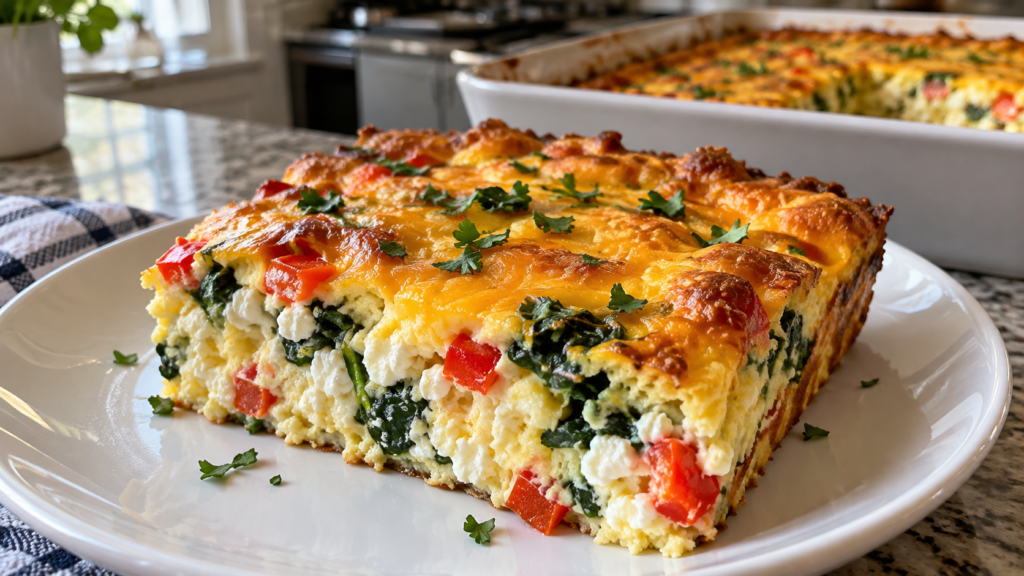

Cottage Cheese Egg Bake
Cottage Cheese Egg Bake combines fluffy eggs, creamy cottage cheese, tender spinach, and sweet red bell pepper beneath a golden cheddar topping. Each slice has a soft, savory center with lightly browned edges, making it a comforting breakfast that feels special without requiring complicated ingredients.
Unlike a traditional breakfast casserole made with bread or potatoes, this version lets the eggs and cheese form the structure. Cottage cheese adds moisture and protein, while the vegetables bring color and flavor. You can leave the curds intact for a slightly textured filling or blend them with the eggs for a smoother result.
Serve it fresh from the oven for a relaxed weekend breakfast, or refrigerate individual portions for busy mornings. It also works beautifully as a simple brunch dish alongside toast, fresh fruit, or a lightly dressed salad.
Recipe Details
Prep time: 15 minutes
Cook time: 35–45 minutes
Resting time: 10 minutes
Total time: Approximately 1 hour
Servings: 6
Baking dish: 8-inch square dishOven temperature: 375°F (190°C)
Ingredients for Cottage Cheese Egg Bake
For the Egg Bake
8 large eggs
1 cup cottage cheese, preferably 2% milk fat
1 cup shredded cheddar cheese, divided
2 cups fresh baby spinach, roughly chopped
½ cup finely diced red bell pepper
1 teaspoon olive oil
½ teaspoon garlic powder
¼ teaspoon salt, or to taste
¼ teaspoon freshly ground black pepper
A little olive oil or cooking spray, for greasing
Optional Garnish
1 tablespoon chopped fresh parsleyFreshly ground black pepper
Instructions for Cottage Cheese Egg Bake
1. Prepare the Oven and Baking Dish
Preheat your oven to 375°F (190°C) with a rack positioned in the center. Lightly grease the bottom and sides of an 8-inch square baking dish.
Greasing the sides helps the egg bake release cleanly after resting. Use a dish deep enough to leave some space above the uncooked mixture, because the eggs will puff slightly during baking.
2. Prepare the Vegetables
Wash the spinach and dry it thoroughly. Chop it roughly so the leaves distribute evenly throughout the casserole.
Dice the red bell pepper into small, similar-sized pieces. Smaller pieces soften quickly and make the finished slices easier to cut.
Heat 1 teaspoon olive oil in a skillet over medium heat. Add the bell pepper and cook for 3–4 minutes, stirring occasionally, until slightly softened.
Add the spinach and cook for another 1–2 minutes, until wilted. Continue cooking briefly if liquid remains in the skillet. Remove from the heat and let the vegetables cool slightly.
3. Mix the Eggs and Cottage Cheese
Crack the eggs into a large mixing bowl and whisk until the whites and yolks are fully combined.
Add the cottage cheese, garlic powder, salt, and black pepper. Whisk gently until evenly mixed. Small cottage cheese curds are completely normal and will soften as the casserole bakes.
For a smoother center, briefly blend the eggs and cottage cheese before adding the seasonings. Blend only until combined; excessive blending creates unnecessary foam.
4. Add the Vegetables and Cheddar
Stir the slightly cooled vegetables into the egg mixture, followed by ½ cup shredded cheddar.
Mix gently, making sure the spinach and bell pepper are distributed throughout. If the vegetables are still very hot, give them another minute to cool before adding them to the eggs.
5. Assemble the Egg Bake
Pour the mixture into the prepared dish. Spread the vegetables evenly with a spoon if they collect in one area.
Sprinkle the remaining ½ cup cheddar cheese over the top. An even layer gives each portion a golden, cheesy finish without weighing down the center.
6. Bake Until Set
Bake for 35–45 minutes. Begin checking around 35 minutes, since oven temperatures and baking dishes vary.
The edges should be set, the top lightly golden, and the center should no longer look liquid. A thermometer inserted into the middle should register 160°F (71°C).
If the cheese browns before the center finishes cooking, loosely cover the dish with foil and continue baking. Avoid overbaking, which can make the eggs firm and cause liquid to separate.
7. Rest Before Slicing
Remove the baking dish from the oven and let it rest for 10 minutes.
The casserole will settle slightly as it cools. This is normal. Resting also helps the interior firm up so you can cut neat squares without the filling breaking apart.
8. Garnish and Serve
Cut into six portions and sprinkle with parsley, if using. Serve warm, with an extra pinch of black pepper if desired.
Pair with whole-grain toast for a heartier breakfast, or fresh berries for a simple contrast to the savory cheese filling.
Tips for the Best Cottage Cheese Egg Bake
Cook moisture out of the vegetables. Spinach releases water as it wilts. Adding that liquid to the eggs can produce a watery bottom, so let it evaporate in the skillet first.
Check your cottage cheese. Brands vary in thickness. If yours has a noticeable pool of loose liquid, spoon off the excess before measuring. You do not need to squeeze the curds dry.
Grate the cheddar yourself when convenient. Freshly grated cheese generally melts smoothly. Packaged shredded cheese also works and keeps preparation easy.
Use gentle mixing. You want a combined mixture, rather than a bowl full of foam. Too much air can cause excessive puffing followed by a more noticeable collapse.
Watch the center. A browned surface does not always mean the middle is cooked. Checking the internal temperature gives a more dependable result.
Rest before serving. Cutting immediately can make even a properly baked casserole appear loose. Give it time to settle.
Recipe Notes and Variations for Cottage Cheese Egg Bake
Both small-curd and large-curd cottage cheese work. Small curds distribute more evenly, while larger curds create visible creamy pockets.
The recipe uses 2% cottage cheese for a balance of moisture and richness. Full-fat cottage cheese can also be used. Fat-free varieties may produce a slightly different texture.
Vegetable Substitutions
Replace the bell pepper with sautéed mushrooms, softened broccoli, or cooked asparagus pieces. Keep the amount of cooked vegetables similar to the original recipe.
Frozen spinach works too. Thaw it completely and squeeze it very thoroughly before measuring roughly ½ cup for the filling.
Cheese Options
Discover 60+ high-protein, low-carb recipes with simple instructions and everyday ingredients. Find breakfast, lunch, dinner, salad, and snack ideas—plus a 30-day meal plan to help you plan ahead.
Explore the Elite Protein Kitchen Cookbook
Try Monterey Jack for a milder flavor or a cheddar-and-mozzarella combination for a softer topping. Feta can replace some of the cheddar, but reduce the added salt because feta is salty.
Making a Larger Batch
Double the ingredients and use a 9-by-13-inch baking dish. Baking time may change, so check the center rather than relying only on the clock.
Storage and Reheating for Cottage Cheese Egg Bake
Refrigerate leftovers in a covered container within two hours of cooking. Store for 3–4 days.
For easy breakfasts, divide the cooled bake into individual portions before refrigerating. Reheat a portion in the microwave in short intervals until hot throughout. Cover loosely to help retain moisture.
You can also reheat portions in a covered oven-safe dish at 325°F (165°C). Refrigerated leftovers should reach 165°F (74°C) when reheated.
For freezing, wrap cooled portions individually and place them in a freezer-safe container. Use within about two months for best quality. Thaw overnight in the refrigerator before reheating. The texture may release a little moisture after freezing.
Estimated Nutritional Information for Cottage Cheese Egg Bake
Per serving, based on six servings:
Nutrient Approximate amount
Calories 235
Protein 19 g
Carbohydrates 4 g
Total fat 15 g
Saturated fat 7 g
Fiber 0.5 g
Sodium 470 mg
These values are estimates using large eggs, 2% cottage cheese, and regular cheddar. Actual nutrition varies with brands, ingredient measurements, and portion sizes. Side dishes are not included.
Nutritional Benefits for Cottage Cheese Egg Bake
Protein from several ingredients: Eggs, cottage cheese, and cheddar contribute protein, making this a practical way to include more protein at breakfast.
Calcium-containing dairy: Both cheeses contribute calcium, a nutrient involved in maintaining bones and teeth.
Vegetable variety: Spinach and red bell pepper add vegetables to a meal that can otherwise be dominated by bread or cereal. They also provide color and micronutrients.
Flexible meal planning: Preparing breakfast ahead can make it easier to put together a balanced morning meal. Add fruit, whole grains, or other sides according to your preferences.
No flour or bread required: The recipe sets without a crust. If preparing it for someone who avoids gluten, check packaged ingredient labels.
Frequently Asked Questions for Cottage Cheese Egg Bake
Does the finished bake taste strongly of cottage cheese?
Usually, the cheddar and eggs are more noticeable. Cottage cheese mainly adds moisture and a mild dairy flavor. Blending it with the eggs makes the curds less visible.
Why is my egg bake watery?
Common causes include wet spinach, excess liquid in the cottage cheese, or overcooking. Cook vegetables first, remove obvious loose liquid, and stop baking once the center is properly set.
Can I prepare it the night before?
Yes. Assemble, cover, and refrigerate overnight. Bake the next morning, allowing extra time because the mixture starts cold. Follow your baking dish manufacturer’s guidance about moving a cold dish into a hot oven.
Can I make it without spinach?
Yes. Leave it out or substitute another cooked vegetable. Avoid adding large amounts of raw, watery vegetables, which can change how the casserole sets.
Can I bake it in a muffin pan?
Yes. Divide the mixture among greased muffin cups, leaving room for expansion. Start checking around 18–20 minutes; timing depends on cup size. The centers should reach 160°F (71°C).
Is it suitable for meal preparation?
Yes. It portions easily and reheats well. Keep portions refrigerated and take out only what you plan to reheat.
https://ketosl.com/cranberry-spinach-feta-stuffed-chicken-breast/






Pingback: Toasted Caramel Coconut Cheesecake Fluff