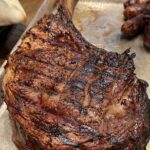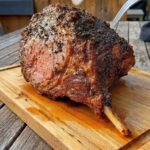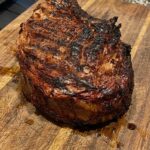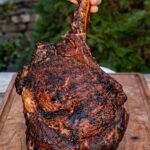

Garlic Herb Butter Ribeye Steak with Crispy Golden Crust
Recipe Information
Prep Time: 15 minutes
Cook Time: 15–20 minutes
Resting Time: 5–10 minutes
Total Time: 35–45 minutes
Servings: 2–4
Cuisine: American
Cooking Method: Cast-Iron Pan-Seared
Course: Main Course
Difficulty: Easy to Moderate
Ingredients
For the Ribeye Steaks
2 thick-cut bone-in ribeye steaks (1¼–1½ inches thick, approximately 14–18 oz each)
2 tablespoons olive oil or avocado oil
2 teaspoons kosher salt
1½ teaspoons freshly ground black pepper
1 teaspoon garlic powder
½ teaspoon smoked paprika
½ teaspoon onion powder
2 tablespoons unsalted butter
4 garlic cloves, lightly smashed
3 fresh rosemary sprigs
4 fresh thyme sprigs
For the Garlic Herb Compound Butter
6 tablespoons unsalted butter, softened
3 garlic cloves, finely minced
1 tablespoon fresh parsley, finely chopped
1 teaspoon fresh rosemary, finely chopped
1 teaspoon fresh thyme leaves
½ teaspoon freshly ground black pepper
¼ teaspoon kosher salt
1 teaspoon fresh lemon juice
For Garnishing
Fresh rosemary sprigs
Fresh thyme leaves
Flaky sea salt
Freshly ground black pepper
Instructions
Step 1: Prepare the Ribeye Steaks
Remove the ribeye steaks from the refrigerator approximately 20–30 minutes before cooking.
Place them on a clean cutting board and pat both sides thoroughly dry using paper towels.
Removing surface moisture is important because it allows the steaks to develop a deep, caramelized crust during searing.
In a small mixing bowl, combine the kosher salt, black pepper, garlic powder, smoked paprika, and onion powder.
Season both sides of each ribeye steak evenly with the mixture.
Gently press the seasonings into the surface of the meat.
Set the steaks aside while preparing the garlic herb compound butter.
Step 2: Prepare the Garlic Herb Compound Butter
In a medium mixing bowl, combine the softened unsalted butter, minced garlic, chopped parsley, rosemary, thyme, black pepper, salt, and lemon juice.
Use a fork or small spatula to mix everything until the ingredients are evenly incorporated.
The butter should have a smooth consistency with visible pieces of fresh herbs.
Transfer the mixture onto parchment paper or plastic wrap.
Shape the butter into a small log, approximately 1½ inches thick.
Wrap tightly and refrigerate for 20–30 minutes until firm.
Once chilled, slice the compound butter into thick, round pieces.
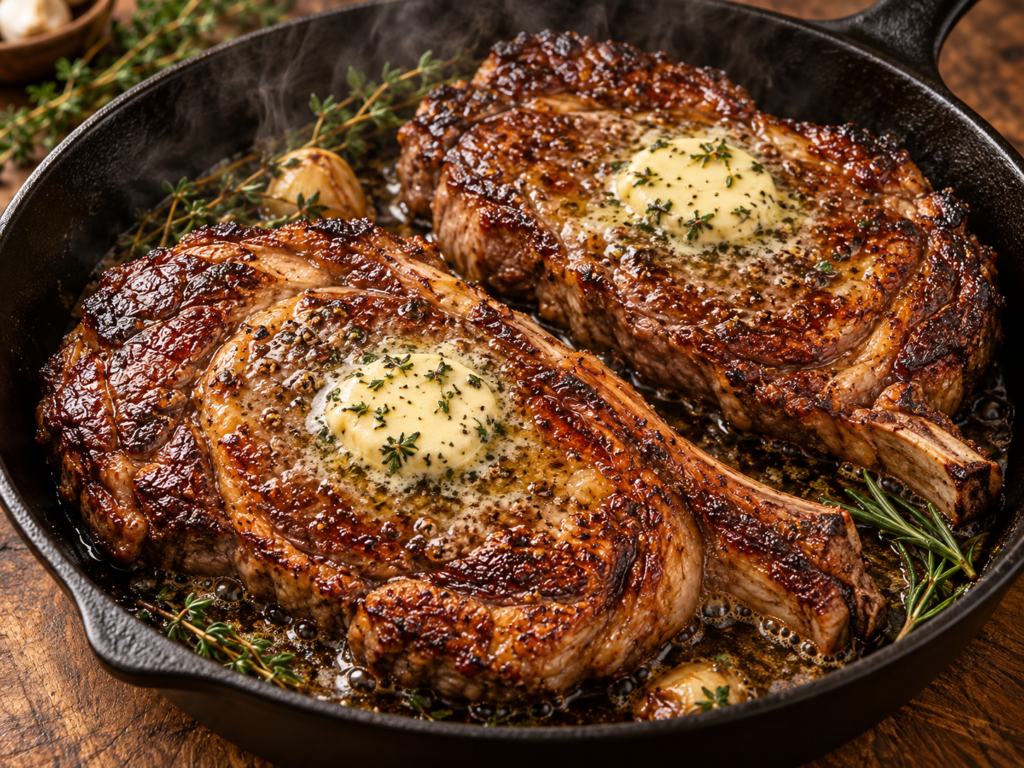
These butter rounds will melt beautifully over the hot steaks, creating the rich garlic herb topping shown in the finished dish.
Step 3: Preheat the Cast-Iron Skillet
Place a large, heavy cast-iron skillet over medium-high heat.
Allow the skillet to preheat for approximately 3–5 minutes.
Add the olive oil or avocado oil and swirl gently to coat the cooking surface.
The oil should appear hot and shimmering before adding the steaks.
A properly heated skillet helps create a deeply browned exterior while keeping the inside juicy.
For the best results, use a skillet large enough to accommodate both steaks without overcrowding.
If necessary, cook the steaks one at a time.
Step 4: Sear the Ribeye Steaks
Carefully place the seasoned ribeye steaks into the hot skillet.
Allow them to sear undisturbed for approximately 3–4 minutes on the first side.
During this time, the surface will begin developing a beautiful golden-brown crust.
Using stainless steel kitchen tongs, gently flip each steak.
Sear the second side for another 3–4 minutes.
Avoid pressing down on the steaks because doing so can squeeze out valuable juices.
If the steaks have thick fat edges, carefully hold them upright with tongs for approximately 30–60 seconds to render and brown the fat.
Step 5: Add Garlic Butter and Fresh Herbs
Reduce the heat to medium-low.
Add 2 tablespoons of unsalted butter to the skillet.
Place the smashed garlic cloves, rosemary sprigs, and thyme sprigs around the steaks.
Allow the butter to melt gently and begin bubbling.
Tilt the skillet slightly toward you so the melted butter collects along one side.
Using a large spoon, continuously scoop the melted garlic herb butter and pour it over the steaks.
Continue basting for approximately 2–3 minutes.
The hot butter carries the flavors of garlic, rosemary, and thyme across the surface of the meat, enhancing its aroma and richness.
If the butter begins turning dark or the garlic starts burning, reduce the heat immediately.
Step 6: Check the Internal Temperature
Insert an instant-read meat thermometer into the thickest part of each steak, avoiding the bone.
The USDA recommends cooking whole beef steaks to an internal temperature of 145°F (63°C), followed by at least 3 minutes of resting.
Because thick bone-in ribeye steaks vary in size, cooking times may differ.
If the outside is beautifully browned but the center needs additional cooking, reduce the heat and continue gently, or finish the steaks in a 400°F (200°C) oven for several minutes using an oven-safe skillet.
Avoid relying on cooking time alone.
A meat thermometer provides the most reliable indication of doneness.
Step 7: Add the Garlic Herb Compound Butter
Once the steaks reach their desired safe internal temperature, remove the skillet from the heat.
Place one thick round of chilled garlic herb compound butter directly on top of each hot ribeye steak.
The butter will gradually soften and melt across the beautifully seared crust.
Spoon a small amount of the warm skillet juices over the steaks to encourage the butter to melt.
The result is a glossy, flavorful garlic herb butter coating with fresh herbs distributed across the meat.
Step 8: Rest the Steaks
Transfer the cooked steaks to a warm serving platter or cutting board.
Allow them to rest for approximately 5–10 minutes before slicing.
Resting helps reduce moisture loss when the steak is cut.
Keep the steaks loosely covered with aluminum foil if necessary.
Avoid wrapping them tightly because trapped steam can soften the crispy exterior.
Step 9: Slice and Serve
Place the rested ribeye steaks on a wooden serving board or individual dinner plates.
If slicing, use a sharp knife to cut the meat against the grain.
Arrange the slices neatly and drizzle any accumulated resting juices over the top.
Garnish with additional fresh thyme, rosemary, and a small sprinkle of flaky sea salt.
Serve immediately while the steaks are warm and the garlic herb butter is melted.
Tips for Perfect Garlic Herb Butter Ribeye Steak
Choose Thick-Cut Ribeye Steaks
Thick-cut ribeye steaks are ideal because they are easier to sear without overcooking the center.
Look for steaks with generous marbling throughout the meat.
The natural fat contributes flavor, tenderness, and juiciness.
Pat the Steaks Completely Dry
Moisture prevents effective browning.
Drying the steak surface helps produce the crispy golden-brown crust associated with restaurant-style ribeye.
Use a Cast-Iron Skillet
Cast iron retains heat exceptionally well, making it an excellent choice for achieving a rich seared crust.
A heavy stainless steel skillet also works.
Avoid Constantly Flipping the Steaks
Allow the first side to develop a good crust before turning.
For this method, start with approximately 3–4 minutes on each side, adjusting according to thickness and temperature.
Add Butter Near the End
Butter can burn when exposed to high heat for too long.
Add it during the final stage of cooking after the steaks have developed their initial crust.
Use Fresh Herbs
Fresh rosemary and thyme provide a wonderful aroma and pair naturally with beef.
Fresh parsley adds color and a mild herbal flavor to the compound butter.
Don’t Overcook the Beef
Ribeye is naturally tender when cooked correctly.
Use an instant-read thermometer to prevent unnecessary cooking and dryness.
Always Rest Before Slicing
Allowing the steaks to rest makes them easier to carve and helps retain their natural juices.
Best Side Dishes for Garlic Butter Ribeye Steak
Garlic Herb Butter Ribeye Steak pairs beautifully with many comforting side dishes.
Creamy garlic mashed potatoes are an excellent choice because their soft texture complements the crispy steak crust.
Crispy roasted baby potatoes provide another delicious option and can absorb the melted garlic butter.
For a classic steakhouse-style dinner, serve the ribeye with roasted asparagus, sautéed mushrooms, or steamed green beans.
Macaroni and cheese creates a rich, indulgent combination that works especially well for family dinners.
A fresh garden salad with lemon vinaigrette offers a lighter contrast to the buttery beef.
You can also serve these ribeye steaks with baked potatoes, grilled corn, roasted Brussels sprouts, or garlic bread.
Recipe Variations
Parmesan Garlic Butter Ribeye Steak
Add 2 tablespoons of freshly grated Parmesan cheese to the compound butter mixture.
The Parmesan adds a savory, slightly nutty flavor.
Spicy Garlic Butter Steak
Mix ½ teaspoon crushed red pepper flakes or a pinch of cayenne pepper into the herb butter.
This variation provides a gentle spicy kick.
Lemon Rosemary Ribeye Steak
Increase the lemon juice to 2 teaspoons and add extra fresh rosemary.
The citrus helps balance the richness of the meat.
Mushroom Garlic Butter Ribeye
After cooking the steaks, sauté 1 cup of sliced mushrooms in the remaining skillet juices.
Serve the mushrooms alongside the steaks for additional savory flavor.
Nutritional Information
Estimated nutrition per serving, based on four servings:
Calories: 650 kcal
Protein: 46 g
Carbohydrates: 3 g
Total Fat: 50 g
Saturated Fat: 22 g
Fiber: Less than 1 g
Sugar: Less than 1 g
Sodium: 850 mg
These nutritional values are estimates and may vary depending on the ribeye size, fat content, bone weight, and amount of compound butter consumed.
Nutritional Benefits
Ribeye steak provides high-quality protein that contributes to muscle maintenance and normal body functions.
Beef is also a natural source of iron, zinc, selenium, and vitamin B12.
These nutrients support various functions, including normal red blood cell production and immune function.
Fresh garlic and herbs contribute flavor along with small amounts of naturally occurring plant compounds.
However, ribeye steak and butter are rich in saturated fat, so enjoying moderate portions alongside vegetables can help create a more balanced meal.
Storage
Refrigerator
Allow leftover steak to cool slightly before transferring it to an airtight container.
Refrigerate within 2 hours of cooking.
Store cooked ribeye steak in the refrigerator for up to 3–4 days.
Keep the remaining garlic herb butter in a separate covered container.
Freezer
Cooked ribeye steak can be frozen for approximately 2–3 months for best quality.
Wrap individual portions tightly in freezer-safe packaging.
Thaw overnight in the refrigerator before reheating.
Garlic herb compound butter can also be frozen separately for up to 3 months.
Reheating
For best results, place leftover steak in a covered oven-safe dish with a small splash of beef broth.
Warm gently in a low-temperature oven until reheated thoroughly.
For food safety, reheat leftovers to 165°F (74°C).
Avoid excessive reheating because steak can become tough and dry.
Frequently Asked Questions
What is the best ribeye steak for this recipe?
A thick-cut bone-in ribeye with good marbling is an excellent choice.
A steak approximately 1¼–1½ inches thick works particularly well for pan-searing.
Can I make garlic herb butter ahead of time?
Yes. Prepare the compound butter up to 3 days ahead and store it in the refrigerator.
Slice the butter just before serving.
Can I use boneless ribeye steak?
Absolutely. Boneless ribeye works well with the same seasonings and butter.
However, its cooking time may differ depending on thickness.
Why is my ribeye steak tough?
Steak can become tough when overcooked, sliced incorrectly, or cooked without sufficient resting time.
Choose well-marbled meat, monitor its temperature, and slice against the grain.
Can I cook ribeye steak without a cast-iron skillet?
Yes. A heavy stainless steel skillet can produce excellent results.
Choose a pan that can tolerate high cooking temperatures.
Can I use dried herbs instead of fresh herbs?
Yes. Substitute approximately 1 teaspoon of dried herbs for each tablespoon of fresh herbs.
Fresh herbs are recommended for the best aroma and presentation.
How do I get a crispy steak crust?
Pat the steak completely dry, preheat the skillet properly, and avoid moving the meat constantly during the initial sear.
Is garlic butter ribeye steak low-carb?
Yes. The main ingredients contain relatively few carbohydrates.
However, the exact carbohydrate content depends on any additional sauces, seasonings, and side dishes.
Final Thoughts
Garlic Herb Butter Ribeye Steak with Crispy Golden Crust is an impressive yet straightforward dinner recipe that brings classic steakhouse flavors into your home.
The combination of deeply seared beef, fresh garlic, aromatic rosemary, thyme, and homemade compound butter creates a rich, satisfying meal with incredible flavor.
Whether you’re cooking for a date night, weekend dinner, or special celebration, this delicious garlic butter steak recipe is an excellent choice for anyone who enjoys tender, juicy beef and savory homemade meals.
https://ketosl.com/garlic-herb-butter-roasted-beef-with-crispy-baby-potatoes/