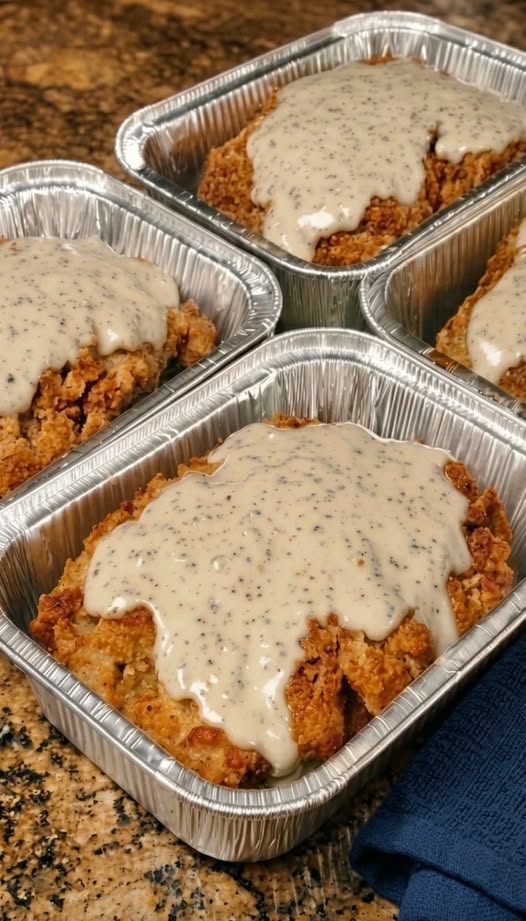
Chicken-fried steak gets its name from the way the beef is coated and fried, much like fried chicken. Tenderized steak develops a crisp, peppery crust, then gets a generous spoonful of creamy pan gravy. Serve it with mashed potatoes for a comforting Southern-style meal.
4 cube steaks, about 4–5 oz (115–140 g) each
1½ cups all-purpose flour
1 teaspoon salt
1 teaspoon freshly ground black pepper
1 teaspoon garlic powder
1 teaspoon paprika
2 large eggs
½ cup buttermilk
Neutral oil, for shallow frying
For the gravy
3 tablespoons pan drippings, with the browned bits
3 tablespoons all-purpose flour
2½ cups whole milk
½ teaspoon freshly ground black pepper, or to taste
Salt, to taste
Instructions
Prepare the steaks. Pat the cube steaks dry with paper towels. If any pieces are much thicker than the others, gently pound them to an even thickness of about ¼ inch. This helps them cook at the same rate.
Set up the coating. In a shallow dish, combine the flour, salt, pepper, garlic powder, and paprika. In a second shallow dish, whisk the eggs and buttermilk until smooth. Set a wire rack over a baking tray for the coated and cooked steaks.
Bread the steaks. Coat each steak in the seasoned flour, shaking off the excess. Dip it into the egg mixture, letting the extra drip away, then return it to the flour. Press the flour gently onto both sides and into the ridges of the meat. Place the coated steak on the rack. Repeat with the remaining steaks, then let them rest for 10 minutes so the coating can adhere.
Heat the oil. Pour about ½ inch of oil into a heavy skillet. Heat over medium heat until the oil reaches about 350°F (175°C). If you do not have a thermometer, drop in a small pinch of flour; it should sizzle immediately without burning.
Fry in batches. Carefully add one or two steaks, leaving space between them. Fry for approximately 3–4 minutes per side, until deep golden brown and cooked through. Adjust the heat as needed to keep the coating from browning too quickly. Transfer the steaks to a clean wire rack to drain. Repeat with the remaining steaks.
Save the drippings. Pour off most of the oil, leaving about 3 tablespoons in the skillet along with the browned bits. If there is less than 3 tablespoons, add a little butter or oil. Keep the skillet over medium-low heat.
Make the gravy. Sprinkle 3 tablespoons of flour into the drippings. Whisk constantly for 1–2 minutes, until the mixture turns light golden and loses its raw flour smell. Gradually whisk in the milk, adding a little at a time at first to keep the gravy smooth. Simmer gently for 4–6 minutes, stirring often, until thick enough to coat a spoon. Season with pepper and salt to taste.
Serve. Place each steak on a plate and spoon the warm gravy over it. Serve right away, with extra gravy on the side.
Tips
Choose cube steak for the classic texture. Cube steak is beef that has been mechanically tenderized, leaving small indentations across its surface. Those ridges hold the seasoned coating well. If you cannot find it, use thin slices of round steak and pound them thoroughly with a meat mallet.
Dry the meat before breading. Excess moisture makes it harder for the first layer of flour to stick. Patting the steaks dry takes only a moment and helps build a crisp, even crust.
Let the coating rest. Once breaded, give the steaks about 10 minutes on the rack before frying. The flour will absorb some moisture from the egg mixture and cling more firmly to the beef. Handle the steaks gently when transferring them to the skillet.
Keep the oil temperature steady. Oil that is too cool can leave the coating greasy; oil that is too hot can brown it before the steak cooks through. Fry in batches and give the oil a moment to return to temperature between batches. A heavy skillet helps maintain even heat.
Use a rack after frying. Setting the steaks directly on paper towels can trap steam underneath them and soften the crust. A wire rack allows air to circulate while excess oil drains away.
Season the gravy last. The browned bits and pan drippings already contain seasoning from the coating. Taste the gravy before adding salt, then add a little at a time. Plenty of freshly ground black pepper gives it its familiar Southern-style flavor.
Storage
Refrigerate leftover steak and gravy in separate airtight containers for up to 3 days. Keeping them apart helps preserve the steak’s crust.
To reheat, place the steak on a wire rack over a baking tray and warm it in a 350°F (175°C) oven until heated through. Reheat the gravy gently in a saucepan, stirring in a splash of milk if it has thickened in the refrigerator. Spoon the gravy over the steak just before serving.
You can freeze cooked steaks without gravy for up to 2 months. Let them cool, wrap them well, and freeze in a single layer before transferring them to a freezer container. Thaw in the refrigerator and reheat in the oven. Freshly made gravy will have the smoothest texture.
Serving Ideas
Creamy mashed potatoes are a natural choice because they give you another place to spoon the gravy. Green beans, buttered corn, or a simple side salad can round out the plate. Warm biscuits are also good for catching any gravy left behind.
For a hearty brunch, serve a smaller steak with eggs and roasted potatoes. If serving a group, keep the fried steaks warm on a rack in a low oven while you finish the gravy. Add the gravy only when everyone is ready to eat so each serving stays crisp.
Nutrition Benefits
Beef provides protein, iron, and vitamin B12. Milk in the gravy adds calcium. The exact nutrition varies with the size of the steaks, the amount of oil absorbed during frying, and the portion of gravy served. Pairing the steak with vegetables can make the meal more balanced.
Q&A
Why is it called chicken-fried steak if it contains beef?
The name refers to the preparation: beef steak is breaded and fried in a style similar to fried chicken. There is no chicken in this recipe.
Can I make the gravy without pan drippings?
Yes. Melt 3 tablespoons of butter in a skillet and use it in place of the drippings. The gravy will still be creamy, though it will have less of the fried steak’s flavor.
Can I use regular milk instead of buttermilk for the coating?
Yes. Regular milk works with the eggs, but buttermilk gives the coating a slightly tangy flavor. Use the same amount.
Why is my breading falling off?
The steak may have been too wet before coating, or it may have been moved too much while frying. Pat it dry, press on the final flour layer, let it rest before frying, and turn it only when the first side is firm and golden.
How do I fix gravy that is too thick?
Whisk in milk, a tablespoon or two at a time, until it reaches the consistency you like. If it is too thin, let it simmer a little longer while stirring.