
Slow Cooker Balsamic Garlic Beef Roast
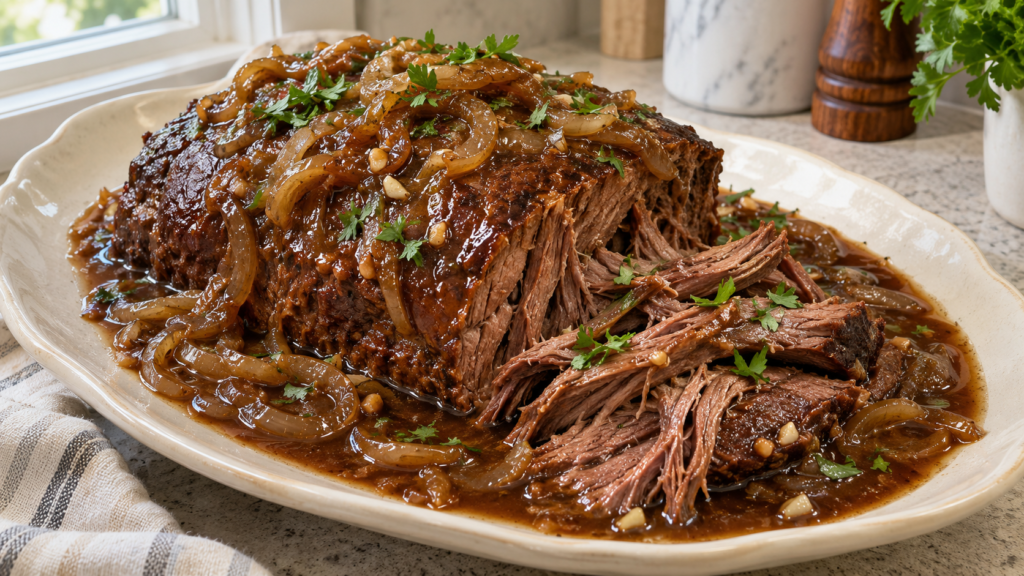
This Slow Cooker Balsamic Garlic Beef Roast cooks until the beef pulls apart with a fork and the onions are soft enough to spoon over each serving. Balsamic vinegar gives the sauce a mellow tang, while garlic, beef broth, and a spoonful of brown sugar round out the flavor. Before serving, simmer the cooking juices briefly on the stovetop to make a glossy sauce that clings to the beef.
Serve the roast in large pieces over mashed potatoes for Sunday dinner, or shred it and tuck it into toasted rolls with the balsamic onions. Most of the cooking is hands-off, and the recipe makes enough for six generous servings.
Prep Time — 20 minutes
Cook Time — 8–9 hours on LOW or 5–6 hours on HIGH, plus about 5 minutes to finish the sauce
Servings — 6
Cooking Method — Slow cooking with stovetop searing and sauce finishing
Equipment — 5- to 6-quart slow cooker, large skillet, and small saucepan
Ingredients
– 1 boneless beef chuck roast, about 3 pounds (1.36 kg), thawed
– 1 teaspoon fine sea salt
– ½ teaspoon ground black pepper
– 1 tablespoon olive oil
– 1 large yellow onion, thinly sliced
– 6 garlic cloves, finely chopped
– ¾ cup low-sodium beef broth
– ⅓ cup balsamic vinegar
– 1 tablespoon Worcestershire sauce
– 1 tablespoon packed light brown sugar
– 1 teaspoon dried thyme
– 1 tablespoon cornstarch
– 1 tablespoon cold water
– 2 tablespoons chopped fresh parsley, optional
Instructions
1. Season the beef. Pat the chuck roast dry with paper towels. Trim any thick pieces of surface fat, leaving the fine streaks of fat within the meat. Season all sides with the salt and pepper. Spread the sliced onion across the bottom of the slow cooker and scatter the chopped garlic over it.
2. Sear the roast. Heat the olive oil in a large skillet over medium-high heat. Brown the beef for about 3–4 minutes on each broad side, then use tongs to brown the edges briefly. Set the beef on top of the onions and garlic. If you’re short on prep time, you can place the seasoned roast directly in the slow cooker. Searing adds browned flavor to the sauce.
3. Mix the balsamic cooking liquid. Whisk together the beef broth, balsamic vinegar, Worcestershire sauce, brown sugar, and thyme. If you seared the roast, pour this mixture into the warm skillet and scrape up the browned bits with a wooden spoon. Pour the liquid around the beef in the slow cooker. The roast will sit partly above the liquid and release more juices as it cooks.
4. Cook until fork-tender. Cover and cook on LOW for 8–9 hours or HIGH for 5–6 hours. Start checking at the earlier time. Insert a fork into the thickest part and twist gently. When the roast is ready, the meat should separate easily. If the fork meets resistance, cover and cook for another 30 minutes before checking again.
5. Thicken the balsamic sauce. Transfer the beef to a platter and loosely cover it with foil. Skim excess fat from the cooking liquid, then transfer about 1½ cups of liquid to a small saucepan. Bring it to a gentle boil. Stir the cornstarch and cold water together until smooth, then whisk the mixture into the pan. Simmer for 1–2 minutes, stirring, until the sauce lightly coats the back of a spoon. If you prefer a thinner sauce, stir in a splash of the remaining cooking liquid.
6. Sauce the beef and serve. Divide the roast into large pieces with two forks or shred it for sandwiches. Lift the soft onions from the slow cooker with a slotted spoon and arrange them over the beef. Spoon on the balsamic garlic sauce, finish with parsley if you like, and serve the extra sauce at the table.
Helpful Cooking Tips
– Choose a well-marbled chuck roast. Look for fine streaks of fat running through the meat. Chuck has connective tissue that softens during long cooking, giving the finished beef the texture you want for a fork-tender pot roast.
– Use regular balsamic vinegar. Bottled balsamic glaze is thicker and often sweeter. Regular balsamic vinegar mixes easily with the broth and gives you more control over the sauce’s sweetness and consistency.
– Keep the lid on until the first tenderness check. Every time you lift it, heat escapes. A thick roast can take longer than a flatter roast of the same weight, so allow some extra time if you’re cooking to a dinner schedule.
– Skim the fat before making the gravy. Let the cooking liquid settle for a minute, then skim the visible fat from the surface with a spoon. A fat separator also works if you have one.
– Taste the sauce after thickening. If it tastes too tangy for you, stir in a splash of broth or a small pinch of brown sugar. If the flavor needs a lift, add a few drops of balsamic vinegar just before serving.
Recipe Notes
For a lighter pan sauce, skip the cornstarch and spoon the skimmed juices over the roast. If you want a more concentrated flavor, simmer the juices uncovered for a few minutes before using them. Taste as the liquid reduces, since the tang and saltiness will become more pronounced.
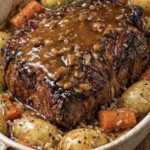
For potatoes and carrots, add up to 1 pound total of baby potatoes or large carrot chunks around the roast at the start, if your slow cooker has room. Keep the vegetables in large pieces so they hold their shape. The vegetables will pick up the balsamic flavor and can be served straight from the cooker.
For an easy dinner plate, serve the beef with mashed potatoes, buttered egg noodles, or creamy polenta. All three catch the onion gravy. Steamed green beans or a crisp green salad balance the richness. For sandwiches, pile the meat and onions onto toasted rolls and serve extra sauce on the side for dipping.
Questions & Answers
Can I use brisket instead of chuck roast?
Yes. Use a boneless brisket of similar weight and check for fork tenderness before taking it out. Cooking time can vary with the thickness of the cut. If you want slices, let the brisket rest briefly and slice across the grain.
Why is my beef still tough after eight hours?
It may need more time for the connective tissue to soften. If the roast feels firm and resists when you twist a fork into it, cover the slow cooker and continue cooking in 30-minute intervals. Once it separates readily, transfer it to the platter and spoon some sauce over it.
Can I leave out the brown sugar?
Yes. The onions add some natural sweetness, and the sauce will have a sharper balsamic flavor. Taste it after thickening. If you want to soften the tang, add a splash of beef broth.
Can I prepare it the night before?
Yes. Slice the onion, chop the garlic, and mix the cooking liquid ahead of time. Refrigerate them in covered containers and keep the raw beef refrigerated separately. In the morning, season and sear the roast, then assemble everything in the slow cooker.
Storage & Reheating Instructions
Divide the beef and sauce into shallow airtight containers and refrigerate within 2 hours of cooking, or within 1 hour if the temperature is above 90°F (32°C). Use refrigerated leftovers within 3–4 days, or freeze the beef with a little sauce for longer storage. Thaw frozen portions overnight in the refrigerator. ask.fsis.usda.gov
To reheat, put the beef and sauce in a covered skillet over medium-low heat. Add a splash of broth if the sauce has thickened in the refrigerator. Turn the beef occasionally and heat it through to 165°F (74°C). ask.fsis.usda.gov
Nutritional Information
Approximate values per serving, based on one-sixth of the roast and sauce, with most visible fat skimmed. Side dishes are excluded. The cut, amount of trimming, and broth brand will affect the numbers.
– Calories — 470
– Protein — 43 g
– Total fat — 28 g
– Saturated fat — 11 g
– Carbohydrates — 9 g
– Fiber — 1 g
– Total sugars — 5 g
– Sodium — 600 mg
Nutrition Benefits
Beef supplies protein for building and maintaining muscle. It also provides iron, which helps red blood cells carry oxygen, and vitamin B12, which supports normal nerve function and red blood cell formation. If you’d like more fiber in the meal, serve the roast with roasted broccoli, green beans, or a mixed bean salad.