
Slow Cooker Garlic Herb Pork Roast with Golden Potatoes
Prep Time: 20 minutes
Cook Time: 7–9 hours on LOW or 4–6 hours on HIGH
Optional Oven Finish: 15–20 minutes
Resting Time: 15 minutes
Servings: 8
Description for Slow Cooker Garlic Herb Pork Roast with Potatoes
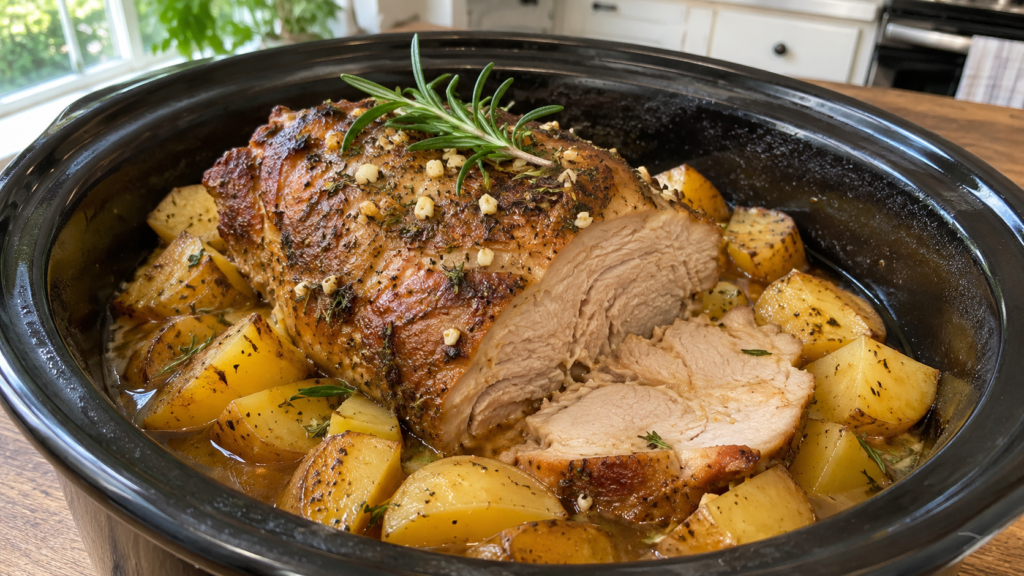
Slow Cooker Garlic Herb Pork Roast with Golden Potatoes is a comforting family dinner made with tender pork, buttery potatoes, fresh herbs, and a rich garlic sauce. The pork slowly cooks over a bed of potatoes and onions, allowing the vegetables to absorb the flavorful cooking juices.
Rosemary, thyme, Dijon mustard, and garlic create a savory coating that pairs beautifully with the richness of pork shoulder. Searing the roast before adding it to the slow cooker develops a browned exterior and adds depth to the sauce.
This recipe is inspired by the dish in your photograph. For a similar golden appearance, briefly finish the cooked potatoes in a hot oven. Slow cooking makes them tender, while the oven adds browned edges.
Serve everything with spoonfuls of the cooking juices and a simple green vegetable for a generous, satisfying meal.
Ingredients for Slow Cooker Garlic Herb Pork Roast with Potatoes
For the pork roast
3 pounds boneless pork shoulder roast
1 tablespoon olive oil
1½ teaspoons fine salt, divided
1 teaspoon freshly ground black pepper, divided
1 teaspoon sweet paprika
6 garlic cloves, finely minced
2 tablespoons Dijon mustard
2 tablespoons softened unsalted butter
1 tablespoon chopped fresh rosemary
2 teaspoons fresh thyme leaves
For the potatoes and cooking liquid
2 pounds Yukon Gold potatoes, cut into large, approximately 2-inch chunks
1 large yellow onion, thickly sliced
¾ cup low-sodium chicken broth
1 tablespoon Worcestershire sauce
1 tablespoon apple cider vinegar
Optional finishing ingredients
1 tablespoon olive oil for browning the potatoes
1 tablespoon cornstarch mixed with 1 tablespoon cold water
Chopped fresh parsley or rosemary sprigs for serving
Instructions for Slow Cooker Garlic Herb Pork Roast with Potatoes
1. Prepare the vegetables
Wash the potatoes and cut them into large, evenly sized pieces. Leave the skins on for extra texture and easier preparation.
Place the sliced onion across the bottom of a 6-quart slow cooker. Add the potatoes, then season with ½ teaspoon salt and ¼ teaspoon pepper. Large potato pieces hold their shape better during the long cooking time.
2. Season the pork
Pat the pork shoulder thoroughly dry with paper towels. Trim away any very thick, hard pieces of exterior fat, leaving a thin layer for flavor.
Season the roast all over with the remaining 1 teaspoon salt, ¾ teaspoon pepper, and paprika. If the roast is loosely shaped, tie it with kitchen twine to help it stay together.
3. Sear the roast
Heat the olive oil in a large skillet over medium-high heat. Add the pork and brown it for approximately 3–4 minutes on each broad side, briefly browning the ends as well.
Transfer the roast to a plate. Searing develops flavor, but the pork will still be uncooked in the center.
4. Make the garlic herb coating
Combine the minced garlic, Dijon mustard, softened butter, rosemary, and thyme in a small bowl.
Let the seared pork cool just enough to handle safely, then spread the mixture over the top and sides. Applying the fresh garlic after searing helps prevent it from burning in the skillet.
5. Prepare the cooking liquid
Pour the chicken broth into the skillet used for searing. Stir over medium heat, scraping up the browned bits from the bottom.
Remove from the heat and stir in the Worcestershire sauce and apple cider vinegar. Pour this liquid around the potatoes in the slow cooker.
6. Assemble and cook
Set the pork on top of the potatoes with its fat side facing upward. Cover and cook on LOW for 7–9 hours or HIGH for 4–6 hours.
Begin checking at the earlier end of the range. The roast is ready when a fork slides into the meat easily and the potatoes are tender. Cooking time varies with the roast’s thickness and your slow cooker.
Keep the lid closed during cooking as much as possible to retain heat.
7. Rest the meat
Carefully lift the pork onto a cutting board or serving platter, supporting it underneath because it may be very tender. Cover loosely with foil and rest for 15 minutes.
Remove any kitchen twine before serving. Cut into thick slices across the grain, or separate into large pieces if the meat is too tender to slice neatly.
8. Brown the potatoes if desired
For golden edges like those pictured, heat the oven to 450°F.
Lift the potatoes from the cooking liquid and let excess moisture drain away. Spread them carefully on a baking sheet, drizzle with 1 tablespoon olive oil, and roast for 15–20 minutes.
Turn gently once if they are firm enough. Very soft potatoes can be left undisturbed until browned.
9. Finish the sauce
Pour the cooking liquid into a saucepan and skim excess fat from the surface. Simmer for 5–10 minutes to concentrate the flavor.
For thicker gravy, stir the cornstarch mixture again, whisk it into the simmering liquid, and cook until lightly thickened. Taste before adding extra salt.
10. Serve
Arrange the pork and potatoes on a platter. Spoon a little sauce over the meat and serve the remaining sauce separately.
Finish with chopped parsley or fresh rosemary for a colorful presentation.
Recipe Notes for Slow Cooker Garlic Herb Pork Roast with Potatoes
Choose pork shoulder for this cooking method. Its fat and connective tissue help it become tender during a long, slow cook. Pork loin is much leaner and requires a shorter cooking time, so it should not be substituted using the same schedule.
Expect a tender texture. Fully tender pork shoulder may pull apart when sliced. Thick pieces are easier to serve neatly than thin slices.
Use a fully thawed roast. Thaw frozen pork in the refrigerator before preparing this recipe.
Keep the liquid modest. The pork and vegetables release moisture as they cook. The roast does not need to be submerged.
Dried herbs work too. Replace the fresh rosemary with 1 teaspoon dried rosemary and the fresh thyme with ¾ teaspoon dried thyme. Crush dried rosemary between your fingers before mixing.
Tips for the Best Results Slow Cooker Garlic Herb Pork Roast with Potatoes
Dry the pork before searing. A dry surface browns more readily and creates better flavor.
Choose evenly sized potatoes. Similar pieces cook at a similar rate, reducing the chance of some becoming overly soft.
Use LOW when convenient. Gentle cooking gives pork shoulder time to soften gradually.
Check tenderness before serving. If the roast still feels firm, continue cooking and check again later.
Drain potatoes before roasting. Excess surface moisture prevents browning.
Adjust the sauce last. Reducing the cooking liquid concentrates its saltiness as well as its flavor.
Add freshness at the table. A little chopped parsley or a few drops of cider vinegar can brighten a rich serving.
Serving Suggestions for Slow Cooker Garlic Herb Pork Roast with Potatoes
This recipe includes both the main protein and potatoes, so a simple vegetable side completes the meal.
Steamed green beans, roasted broccoli, sautéed cabbage, or cooked carrots all work well. A crisp salad with a light vinaigrette also balances the richness of the pork and gravy.
For a larger family dinner, offer warm bread to soak up the sauce. If serving bread, smaller portions of potatoes can help keep the meal balanced.
Leftover pork makes a flavorful sandwich filling. Shred it gently, moisten it with a little sauce, and serve on toasted rolls with crunchy cabbage slaw.
Storage and Reheating
Transfer leftovers into shallow containers and refrigerate within two hours. Keep refrigerated for 3–4 days.
Store the pork with a little cooking liquid to help it retain moisture. Refrigerate the potatoes separately if you want to reheat them in the oven.
Reheat pork gently in a covered saucepan with a splash of broth or sauce until hot throughout. Avoid prolonged boiling, which can dry out the edges.
Freeze the cooked pork and sauce in airtight portions for up to 2–3 months for best quality. Potatoes can be frozen, although their texture may become softer or slightly grainy after thawing.
Approximate Nutritional Information for Slow Cooker Garlic Herb Pork Roast with Potatoes
Per serving, based on eight servings and including the potatoes and sauce:
Calories: 480–550
Protein: 32–38 grams
Carbohydrates: 25–30 grams
Fat: 25–32 grams
Saturated Fat: 9–12 grams
Fiber: 2–3 grams
Sodium: 650–850 milligrams
These are estimates. The pork’s fat content, trimming, broth brand, and amount of sauce served can substantially change the values. Optional finishing oil is additional.
Nutritional Benefits for Slow Cooker Garlic Herb Pork Roast with Potatoes
Provides protein: Pork contributes protein that supports normal muscle maintenance and tissue repair.
Supplies important nutrients: Pork provides B vitamins, including thiamin and vitamin B12, along with minerals such as zinc and selenium.
Includes satisfying carbohydrates: Potatoes supply energy and contribute potassium. Keeping their skins adds some fiber.
Makes vegetables easy to include: Serving this roast with green vegetables adds variety, fiber, and extra nutrients to the meal.
Pork shoulder is a rich cut. Trimming excess fat, skimming the sauce, and serving moderate portions can make the dish easier to fit into a balanced eating pattern.
Make Everyday Cooking Easier
Discover 60+ high-protein, low-carb recipes with simple instructions and everyday ingredients. Explore breakfasts, lunches, dinners, salads, and snacks—plus a 30-day meal plan to help you plan ahead.
Get the Elite Protein Kitchen Cookbook
Frequently Asked Questions for Slow Cooker Garlic Herb Pork Roast with Potatoes
Can I skip searing the pork?
Yes. Season the pork, apply the herb coating, and place it directly into the slow cooker. The roast will cook, but the exterior and sauce will have less browned flavor.
Why are my potatoes soft but not golden?
A covered slow cooker creates a moist environment. It softens potatoes but does not produce the dry heat needed for crisp, browned edges. Use the optional oven finish for that appearance.
Can I use baby potatoes?
Yes. Leave small baby potatoes whole and halve larger ones. Choose potatoes of similar size so they finish cooking together.
Why is my pork still tough?
Pork shoulder often needs more time for its connective tissue to soften. Continue cooking, covered, and check periodically. Tenderness is a better guide than the clock alone.
Can I prepare anything ahead?
Yes. Mix the herb coating and slice the onion the evening before, then refrigerate separately. For simplicity, sear the pork immediately before assembling and starting the slow cooker.
Can I add carrots?
Yes. Add thick carrot pieces alongside the potatoes. Avoid very thin slices, which can become overly soft during extended cooking.