Garlic Herb Butter Roasted Beef Tenderloin – Juicy & Tender
Recipe Information
Prep Time: 20 minutes
Cook Time: 35–45 minutes
Resting Time: 15 minutes
Total Time: 1 hour 20 minutes
Servings: 6–8
Course: Main Course, Dinner
Cuisine: American
Difficulty: Easy to Moderate
Cooking Method: Searing and Oven Roasting
Description
Garlic Herb Butter Roasted Beef Tenderloin is a delicious and elegant main dish that combines beautifully roasted beef with the irresistible flavors of garlic, butter, rosemary, and fresh herbs. This recipe creates tender, juicy slices of beef with a golden-brown crust and a rich buttery sauce that makes every bite incredibly satisfying.
Beef tenderloin is one of the most tender cuts of beef, making it an excellent choice for special occasions. When prepared correctly, it develops a flavorful exterior while remaining soft and juicy inside. The combination of high-temperature searing and gentle oven roasting helps produce a beautifully cooked roast with a delicious crust.
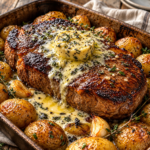
The real secret to this recipe is the homemade garlic herb butter. Fresh garlic, rosemary, thyme, parsley, and softened butter are mixed together to create a fragrant coating that melts over the beef during roasting. As the butter melts, it blends with the natural beef juices to create a rich, savory sauce.
This recipe may look like something served at an expensive steakhouse, but it is surprisingly simple to prepare at home. With a few fresh ingredients and the right cooking method, you can create an impressive centerpiece for Christmas dinner, Thanksgiving, anniversary celebrations, or a memorable weekend meal.
Serve the sliced beef tenderloin with roasted potatoes, creamy mashed potatoes, garlic butter vegetables, or a fresh green salad for a complete and satisfying dinner.
Ingredients
For the Beef Tenderloin
2½–3 pounds center-cut beef tenderloin, trimmed
2 tablespoons olive oil
1½ teaspoons kosher salt
1 teaspoon freshly ground black pepper
1 teaspoon garlic powder
½ teaspoon smoked paprika
For the Garlic Herb Butter
½ cup unsalted butter, softened
6 garlic cloves, finely minced
2 tablespoons fresh rosemary, finely chopped
1 tablespoon fresh thyme leaves
2 tablespoons fresh parsley, chopped
1 teaspoon Dijon mustard
1 teaspoon lemon juice
½ teaspoon black pepper
¼ teaspoon salt
For the Pan Sauce
½ cup low-sodium beef broth
2 tablespoons unsalted butter
1 teaspoon Worcestershire sauce
1 tablespoon fresh parsley, chopped
1 teaspoon fresh thyme leaves
For Garnishing
Fresh rosemary sprigs
Fresh thyme
Extra melted garlic herb butter
Freshly cracked black pepper
Instructions
Step 1: Prepare the Beef Tenderloin
Remove the beef tenderloin from the refrigerator approximately 30 minutes before cooking.
Pat the meat dry thoroughly using paper towels. Removing surface moisture helps the beef develop a beautiful golden-brown crust when seared.
If the tenderloin has any visible silver skin, carefully remove it with a sharp knife. Silver skin is a tough membrane that does not soften during cooking.
For even cooking, tuck the thin end underneath and tie the tenderloin with kitchen twine at approximately 2-inch intervals.
Season the entire surface with kosher salt, black pepper, garlic powder, and smoked paprika.
Step 2: Prepare the Garlic Herb Butter
In a medium mixing bowl, combine the softened unsalted butter, minced garlic, chopped rosemary, thyme leaves, fresh parsley, Dijon mustard, lemon juice, black pepper, and salt.
Mix everything together using a fork or spatula until smooth and evenly combined.
The mixture should be soft enough to spread easily over the beef.
Set the garlic herb butter aside while preparing the meat.
Fresh herbs are highly recommended because they provide a more aromatic and vibrant flavor than dried herbs.
Step 3: Preheat the Oven
Preheat your oven to 425°F (220°C).
Position the oven rack in the center so the beef receives even heat during roasting.
Prepare a large oven-safe skillet or roasting pan.
A cast-iron skillet works especially well because it holds heat effectively and helps create a delicious browned crust.
Step 4: Sear the Beef
Heat two tablespoons of olive oil in a large oven-safe skillet over medium-high heat.
Once the oil is hot, carefully place the seasoned tenderloin into the skillet.
Sear for approximately 2–3 minutes per side, turning the beef until all surfaces develop a rich brown crust.
Use kitchen tongs to rotate the tenderloin gently without piercing the meat.
Searing adds flavor and color through browning, creating a delicious contrast with the tender interior.
Once the beef is evenly browned, remove the skillet from the heat.
Step 5: Coat with Garlic Herb Butter
Allow the skillet to cool slightly so the butter does not burn immediately.
Spread approximately two-thirds of the prepared garlic herb butter evenly over the beef tenderloin.
Use a spoon or spatula to cover the top and sides.
Reserve the remaining butter for finishing and serving.
As the beef roasts, the butter will melt and combine with the garlic and herbs, creating a flavorful coating.
Step 6: Roast the Beef Tenderloin
Transfer the oven-safe skillet to the preheated oven.
Roast for approximately 20–35 minutes after searing, depending on the thickness of the tenderloin and your preferred doneness.
Check the temperature by inserting an instant-read thermometer into the thickest part of the beef.
For a medium-rare roast, remove the tenderloin when the internal temperature reaches approximately 125–130°F (52–54°C). The temperature will continue rising during resting.
For medium doneness, remove it at approximately 135–140°F (57–60°C).
The USDA recommends cooking whole beef cuts to 145°F (63°C), followed by at least a 3-minute rest, for food safety.
Avoid relying only on cooking time because every oven and cut of beef is slightly different.
Step 7: Rest the Beef
Carefully remove the roasted tenderloin from the oven.
Transfer it onto a clean cutting board or serving platter.
Loosely cover with aluminum foil and allow the meat to rest for approximately 15 minutes.
Resting helps reduce moisture loss when the beef is sliced.
Do not cut the tenderloin immediately after removing it from the oven, as this may cause excess juices to escape.
Step 8: Prepare the Garlic Butter Pan Sauce
While the beef rests, return the skillet to the stovetop over medium-low heat.
Remove excess fat if necessary, leaving the flavorful browned bits in the pan.
Pour in the beef broth and Worcestershire sauce.
Stir gently while scraping the bottom of the skillet to release the browned bits.
Allow the liquid to simmer for approximately 3–4 minutes until slightly reduced.
Lower the heat and whisk in two tablespoons of butter.
Add the fresh parsley and thyme.
Stir until the sauce becomes glossy and aromatic.
Taste and adjust the seasoning if needed.
Step 9: Slice the Beef Tenderloin
Remove the kitchen twine from the rested tenderloin.
Using a sharp carving knife, slice the beef into approximately ½-inch to ¾-inch thick pieces.
Cut across the grain for the most tender texture.
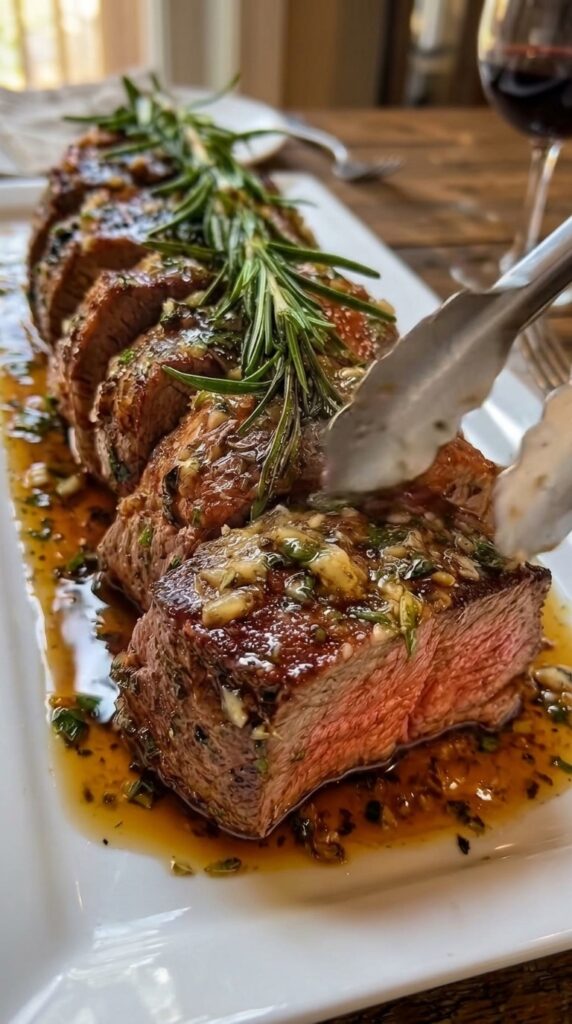
Arrange the slices slightly overlapping on a large white serving platter.
The interior should look juicy and evenly cooked, with a beautifully browned exterior.
Step 10: Add the Garlic Herb Butter Sauce
Melt the reserved garlic herb butter in a small saucepan or microwave-safe bowl.
Drizzle it gently over the sliced beef.
Spoon some of the warm pan sauce around the meat and over the slices.
Garnish with fresh rosemary sprigs, thyme leaves, and freshly cracked black pepper.
Serve immediately while warm.
Recipe Notes
Choosing the Best Beef: Center-cut beef tenderloin is ideal because it has an even thickness, allowing it to cook consistently.
Butter Temperature: Use softened butter rather than completely melted butter when preparing the herb coating. Soft butter sticks better to the beef before roasting.
Fresh Garlic: Freshly minced garlic provides the best flavor. However, avoid placing large pieces of garlic directly against a very hot skillet because they may burn.
Using a Thermometer: A meat thermometer is the most reliable way to determine doneness. It helps prevent overcooking, especially when preparing an expensive cut like tenderloin.
Resting Is Important: Rest the meat before slicing to help retain its juices and improve the overall texture.
Cooking Time: The exact roasting time depends on the tenderloin’s thickness, starting temperature, oven performance, and desired doneness.
Helpful Cooking Tips
Pat the beef dry. Dry meat browns more effectively and develops a better crust.
Tie the tenderloin. Kitchen twine helps maintain an even shape for consistent roasting.
Sear before roasting. Browning adds rich flavor to the finished dish.
Use fresh rosemary and thyme. These herbs pair beautifully with beef and garlic.
Do not overcook. Tenderloin is naturally lean, so excessive cooking may make it dry.
Rest before slicing. Allowing the roast to rest helps reduce moisture loss.
Slice across the grain. This creates tender, easy-to-eat portions.
Serve with warm sauce. The garlic herb butter sauce enhances both flavor and presentation.
Delicious Recipe Variations
1. Garlic Parmesan Butter Beef Tenderloin
Add two tablespoons of finely grated Parmesan cheese to the garlic herb butter.
The Parmesan introduces a slightly nutty, savory flavor that complements the richness of the beef.
2. Rosemary Balsamic Beef Tenderloin
Add one tablespoon of balsamic vinegar to the pan sauce.
This gives the sauce a subtle sweetness and acidity that balances the rich butter.
3. Spicy Garlic Herb Beef
Add ½ teaspoon of crushed red pepper flakes to the herb butter mixture.
This creates a slightly spicy flavor without overpowering the garlic and herbs.
4. Mushroom Garlic Butter Tenderloin
Sauté sliced mushrooms in butter and garlic while the beef rests.
Serve the mushrooms alongside the sliced tenderloin for an earthy and flavorful combination.
5. Lemon Herb Butter Beef
Increase the lemon juice slightly and add one teaspoon of fresh lemon zest.
This creates a brighter, fresher flavor that works beautifully with rosemary and thyme.
Best Side Dishes to Serve
Garlic Herb Butter Roasted Beef Tenderloin pairs wonderfully with both traditional and modern side dishes.
Creamy Mashed Potatoes: Rich, buttery mashed potatoes absorb the flavorful garlic butter sauce and create a comforting combination.
Garlic Parmesan Roasted Potatoes: Crispy roasted potatoes seasoned with garlic and Parmesan provide a delicious contrast to the tender beef.
Honey Glazed Carrots: Sweet roasted carrots balance the savory flavors of the beef.
Roasted Asparagus: Fresh asparagus with olive oil, salt, and lemon adds a lighter vegetable side.
Sautéed Green Beans: Tender green beans cooked with garlic and butter are simple and delicious.
Fresh Garden Salad: A crisp salad with a light vinaigrette helps balance the richness of the meal.
Storage and Reheating Instructions
Refrigerator
Allow leftover beef to cool slightly before storing.
Place the sliced beef in an airtight container and refrigerate within two hours.
Properly stored cooked beef can remain refrigerated for approximately 3–4 days.
Freezer
Wrap leftover beef tightly in freezer-safe packaging.
Store in the freezer for approximately 2–3 months for best quality.
Thaw frozen beef in the refrigerator before reheating.
Reheating
Place the sliced beef in an oven-safe dish with a small amount of beef broth.
Cover with foil and reheat gently in a 275°F (135°C) oven.
Warm until heated through, avoiding unnecessary overcooking. For standard food-safety guidance, reheat leftovers to 165°F (74°C).
Nutritional Information
Estimated per serving, based on 8 servings with sauce. Exact values depend on the beef cut, trimming, butter used, and portion size.
490
Calories
38 g
Protein
3 g
Carbohydrates
37 g
Total Fat
16 g
Saturated Fat
0 g
Fiber
1 g
Sugar
500 mg
Sodium
Nutritional Benefits
1. Excellent Source of Protein
Beef tenderloin provides high-quality complete protein that helps support muscle maintenance, tissue repair, and normal body functions.
2. Rich in Iron
Beef contains heme iron, which the body absorbs efficiently. Iron is important for producing healthy red blood cells and transporting oxygen throughout the body.
3. Provides Vitamin B12
Beef is a natural source of vitamin B12, an essential nutrient that supports nerve function and red blood cell formation.
4. Contains Zinc
Zinc supports normal immune function, wound healing, and many important processes in the body.
5. Suitable for Low-Carb Eating
This recipe is naturally low in carbohydrates, making it suitable for many low-carb meal plans when paired with appropriate side dishes.
6. Contains Flavorful Fresh Herbs
Rosemary, thyme, parsley, and garlic provide aromatic flavor and natural plant compounds.
Because this recipe contains a generous amount of butter, portion control may be helpful for people monitoring saturated fat intake.
Frequently Asked Questions (Q&A)
1. What is the best cut of beef for this recipe?
Center-cut beef tenderloin is the best choice because it is tender and relatively uniform in thickness. This helps the roast cook evenly.
2. Can I use beef sirloin instead of tenderloin?
Yes. Beef sirloin can be used, but it has a different texture and may require adjustments to roasting time. Use a meat thermometer to monitor doneness.
3. Can I prepare garlic herb butter ahead of time?
Absolutely. Garlic herb butter can be prepared up to three days in advance and stored in an airtight container in the refrigerator.
4. How do I prevent the beef from drying out?
Avoid overcooking, use a meat thermometer, and allow the beef to rest before slicing. These steps help preserve tenderness and juiciness.
5. Can I make this recipe without rosemary?
Yes. You can replace rosemary with additional thyme, parsley, or oregano. The flavor will change slightly but remain delicious.
6. Should I cover the beef while roasting?
No. Roast the beef uncovered to develop a flavorful exterior. Cover it loosely with foil only during the resting period.
7. Can I cook this recipe in advance?
Yes. However, beef tenderloin tastes best when freshly roasted. For special occasions, prepare the herb butter and trim the beef in advance to reduce cooking time on the day of serving.
8. What is the ideal internal temperature for medium-rare beef?
For a medium-rare result, chefs commonly remove beef tenderloin at approximately 125–130°F (52–54°C), allowing the temperature to rise as it rests. The USDA’s recommended minimum safe temperature for whole beef cuts is 145°F (63°C) with a three-minute rest.
9. Can I add vegetables to the roasting pan?
Yes. Carrots, potatoes, onions, and mushrooms can be added, but they may need additional cooking time. Partially roast firm vegetables before adding the beef.
10. Is Garlic Herb Butter Roasted Beef Tenderloin suitable for Christmas dinner?
Absolutely. Its elegant presentation, rich flavor, and tender texture make it an excellent main course for Christmas, Thanksgiving, anniversaries, and other celebrations.
Final Thoughts
Garlic Herb Butter Roasted Beef Tenderloin is a beautiful and flavorful main dish that turns a simple beef roast into an impressive homemade dinner.
The combination of perfectly browned beef, fresh rosemary, fragrant garlic, creamy butter, and a rich pan sauce creates a restaurant-quality meal that is surprisingly easy to prepare.
Whether you are planning a holiday feast, romantic dinner, or special family gathering, this recipe offers an excellent balance of elegance, simplicity, and delicious flavor.
Serve it with your favorite vegetables, potatoes, or salad, and enjoy a memorable dinner that everyone at the table will appreciate.


Pingback: Garlic Parmesan Herb-Crusted Roasted Beef – Juicy & Tender