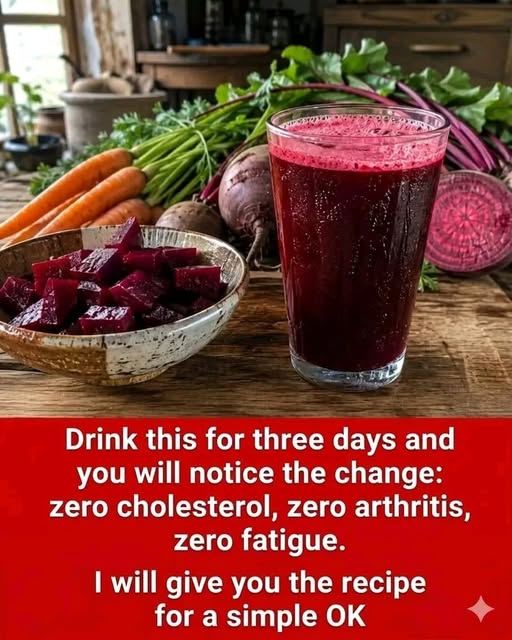

Fresh Beetroot and Carrot Juice with Lemon
Prep Time: 15 minutes
Cook Time: None
Total Time: 15 minutes
Servings: 4 small glasses, approximately 150 ml each
Method: Blend
Description for Fresh Beetroot and Carrot Juice with Lemon
Fresh Beetroot and Carrot Juice is a colorful homemade drink with an earthy, naturally sweet flavor and a refreshing lemon finish. Beetroot gives it a deep ruby color, while carrots soften its stronger flavor. A little lemon juice adds brightness without needing sugar, honey, or bottled juice.
This recipe is inspired by the vegetables shown in your photograph; the original recipe cannot be confirmed from the image alone. The blender method keeps the vegetable pulp, producing a slightly thicker drink with more fiber than strained juice. You can strain it if you prefer a smoother texture.
The photograph’s promise of eliminating cholesterol, arthritis, and fatigue in three days is misleading. Enjoy this as a vegetable drink, without expecting it to cure medical conditions or replace treatment. Research into beetroot juice and blood pressure does not establish those claims.
Ingredients for Beetroot and Carrot Juice Recipe with Lemo
2 small raw beetroots, approximately 200 g after trimming and peeling
2 medium carrots, approximately 120 g after trimming
2 tablespoons freshly squeezed lemon juice
1 cup cold drinking water, plus extra as needed
A few ice cubes, optional
Optional addition
One thin slice of fresh ginger for a gently spicy flavor
Choose firm beetroots and crisp carrots. Avoid pickled beetroot for this recipe because its vinegar, salt, and seasonings will change the flavor considerably.
Instructions for Beetroot and Carrot Juice Recipe with Lemo
1. Prepare your equipment
Set out a blender, chopping board, vegetable peeler, sharp knife, measuring jug, and clean serving glasses. If you want strained juice, have a fine-mesh sieve ready.
Rinse the blender jug thoroughly so no flavors from previous recipes remain. Beetroot stains easily, so protect pale work surfaces and wear an apron if needed.
2. Wash the vegetables
Wash the beetroots and carrots thoroughly under running water, rubbing away visible soil. Trim off the beetroot stems and root ends, then remove the carrot tops.
Peel the beetroot thinly. Peel the carrots if their skins are rough; well-scrubbed, tender carrots can be used without peeling.
3. Cut into small pieces
Chop the beetroot into small cubes, approximately ½ inch across. Slice the carrots into thin rounds.
Raw beetroot is firm, so smaller pieces help the blender process it evenly. Avoid putting whole vegetables or large chunks into a standard blender.
4. Add the ingredients
Pour one cup of cold water into the blender first. Add the chopped beetroot, carrots, and lemon juice. Add the optional ginger if using.
Starting with liquid helps the ingredients circulate around the blades. Secure the lid before switching on the machine.
5. Blend thoroughly
Start on a low setting, then gradually increase the speed. Blend for 60–90 seconds, or until the vegetables are finely processed.
Stop the blender before scraping down the sides. If the mixture is too thick to circulate, add water one tablespoon at a time. Follow your blender’s instructions for processing hard vegetables.
6. Choose your texture
For a drink that retains the pulp, leave the mixture unstrained. It will have a light smoothie-like consistency, with some fine vegetable texture.
For smoother juice, pour it through a fine-mesh sieve over a bowl. Press gently with a spoon to extract liquid. Straining removes some fiber and reduces the yield.
7. Adjust the final volume
Pour the blended drink or strained juice into a measuring jug. Add enough cold water to bring the total volume to approximately 600 ml.
Stir thoroughly. Taste and add a little more lemon juice if you prefer a sharper finish. The sweetness will depend on your vegetables.
8. Serve fresh
Divide into four small glasses, approximately 150 ml each. Add ice if desired, or chill briefly before serving.
Stir again before pouring because natural separation is normal. Serve with a meal rather than sipping it repeatedly throughout the day.
Juicer Variation
Prepare and wash the vegetables as described above, then cut them to fit your juicer’s feed chute. Juice the beetroot and carrots according to the manufacturer’s instructions.
Stir in the lemon juice afterward. Measure the extracted juice and dilute with cold water to your preferred strength. Yield varies between machines, so use the actual finished volume to determine portions.
You do not need to add the blender method’s full cup of water to the juicer. Water is added after extraction.
Recipe Notes for Beetroot and Carrot Juice Recipe with Lemo
Flavor: Beetroot has a distinctive earthy taste. Carrots make it gentler, while lemon provides contrast. If you are trying beetroot juice for the first time, serve it well chilled and begin with a small portion.
Texture: A blender processes the whole vegetables into the drink. A juicer separates much of the pulp. These methods produce different textures and different fiber amounts, even when the ingredients are identical.
Color: The deep red shade comes from the beetroot. A lighter batch does not necessarily mean you have made it incorrectly; vegetable varieties, size, and dilution affect the appearance.
Sweetener: This recipe needs no added sugar. If the flavor seems harsh, adjust the beetroot-to-carrot ratio next time rather than automatically adding honey or syrup.
Tips for Beetroot and Carrot Juice Recipe with Lemo
Use cold ingredients. Refrigerated vegetables and cold water make the juice refreshing immediately.
Chop evenly. Small, similar pieces blend more easily and reduce the chance of noticeable chunks.
Add lemon gradually. Start with the listed amount, then adjust after blending.
Avoid excessive blending. Stop once the texture is smooth enough; prolonged blending can warm the drink.
Stir before serving. Separation does not mean the recipe has failed.
Clean promptly. Rinse utensils and the blender immediately to make beetroot stains easier to remove.
Serving Suggestions for Beetroot and Carrot Juice Recipe with Lemon
Serve a small glass alongside eggs and whole-grain toast, a chickpea salad, or a vegetable sandwich. Its earthy flavor also pairs well with savory breakfasts and simple lunches.
The recipe makes four small servings, rather than one large drink. NHS guidance recommends limiting combined fruit juice, vegetable juice, and smoothies to 150 ml daily and having them at mealtimes. Adding water does not remove their naturally occurring sugars.
This drink contains little protein or fat, so it works best as an accompaniment to food rather than a complete breakfast.
Storage and Make-Ahead Notes
Freshly prepared juice has the brightest flavor. If preparing ahead, transfer it promptly to a clean, covered container and refrigerate at 40°F (4°C) or below.
For this homemade raw drink, prepare only what you can use within 24 hours. Shake or stir before serving. Discard it if it develops an unusual odor, unexpected bubbling, or other signs of spoilage.
You can also wash and chop the vegetables ahead, refrigerate them in a covered container, and blend shortly before serving. Lemon juice adds flavor but does not pasteurize or preserve the drink.
Estimated Nutritional Information for Beetroot and Carrot Juice Recipe with Lemon
Per 150 ml serving, based on four servings of the unstrained blender version:
Calories: Approximately 36
Carbohydrates: 8 g
Naturally occurring sugars: 5 g
Fiber: Approximately 2 g
Protein: 1 g
Fat: Less than 1 g
Sodium: Approximately 55 mg
Added sugar: 0 g
These figures are estimates based on the ingredient weights. Straining removes pulp, so the strained version will contain less fiber and may have different nutritional values.
Nutritional Benefits for Beetroot and Carrot Juice Recipe with Lemon
Vegetable variety: This recipe offers another way to enjoy beetroot and carrots alongside the other vegetables in your meals. Keeping the pulp makes use of more of the ingredients.
Fiber retention: The unstrained version retains vegetable fiber. Strained juice contains less fiber, which is one reason whole vegetables remain valuable in a balanced diet.
No added sweetener: Carrots and beetroot contribute natural sweetness. Leaving out honey, sugar, and syrup keeps the ingredient list simple, although the drink still contains naturally occurring sugars.
Blood pressure research: Beetroot juice has been studied for possible blood pressure benefits. The British Heart Foundation notes that evidence remains insufficient for specific dietary recommendations and that juice should not replace prescribed medication. If you take blood pressure medicine, check with your clinician before making beetroot juice a regular habit.
Make Everyday Cooking Easier
Discover 60+ high-protein, low-carb recipes with simple instructions and everyday ingredients. Explore breakfasts, lunches, dinners, salads, and snacks—plus a 30-day meal plan to help you plan ahead.
Get the Elite Protein Kitchen Cookbook
Questions and Answers for Beetroot and Carrot Juice Recipe with Lemon
Can I make this without carrots?
Yes. Replace the carrots with extra beetroot, keeping the total vegetable weight similar. Expect a stronger earthy flavor and adjust the lemon and water to taste.
Can I use cooked beetroot?
Yes. Plain steamed or boiled beetroot works and blends more easily. Let it cool first. Avoid beetroot packaged in vinegar or strongly seasoned liquid.
Do I have to strain it?
No. Leaving the pulp in gives the drink more body and retains more fiber. Straining is a texture preference, not a necessary step.
Can I add an apple?
Yes. A small cored apple adds sweetness, but it also changes the sugar content, yield, and nutrition estimate. Taste the basic version before adding fruit.
Will drinking it for three days cure arthritis or fatigue?
No reliable evidence supports that promise. Persistent fatigue or joint symptoms need appropriate assessment; this recipe should be enjoyed as food.
Can I drink it on an empty stomach?
You do not need to. Serving juice with a meal follows NHS guidance and avoids treating it as a special fasting remedy.https://ketosl.com/roasted-sweet-potatoes-with-cranberries/






Pingback: Slow Cooker Honey Garlic Pork Belly Recipe