
# Garlic Herb Braised Beef Shanks with Bone Marrow
Prep Time: 20 minutes
Cook Time: 2 hours 45 minutes–3 hours
Servings: 4–5
## Description
Garlic Herb Braised Beef Shanks are a rich, comforting, slow-cooked dish made with thick cross-cut beef shanks simmered until incredibly tender in a savory garlic and herb sauce. Each piece contains a center marrow bone that becomes buttery and flavorful as it cooks, while the beef slowly absorbs the deep flavors of beef broth, onions, garlic, tomato paste, Worcestershire sauce, and fresh herbs.
The secret to this recipe is giving the beef plenty of time to braise gently. First, the shanks are seared in a hot pan to develop a beautiful brown crust. Then they are slowly cooked in a flavorful sauce until the meat becomes fork-tender and the liquid reduces into a glossy, deeply savory gravy.
Fresh parsley and thyme added at the end give the dish a bright finish that balances the rich beef. This is an excellent dinner for colder evenings, Sunday meals, holidays, or whenever you want an impressive comfort-food meal without complicated preparation.
## Ingredients
For the Beef Shanks
– 4–5 thick-cut beef shanks, about 1½–2 inches thick
– 1½ teaspoons salt
– 1 teaspoon freshly ground black pepper
– 1 teaspoon garlic powder
– ½ teaspoon smoked paprika
– 3 tablespoons all-purpose flour
– 2 tablespoons olive oil
For the Braising Sauce
– 1 medium yellow onion, finely chopped
– 5 cloves garlic, minced
– 2 tablespoons tomato paste
– 2 cups beef broth
– ½ cup red wine, optional
– 2 tablespoons Worcestershire sauce
– 1 tablespoon balsamic vinegar
– 1 teaspoon dried thyme
– 1 teaspoon dried rosemary
– 1 bay leaf
– ½ teaspoon red pepper flakes, optional
– 1 teaspoon brown sugar, optional
– 1 tablespoon butter
For Finishing
– 2 tablespoons fresh parsley, chopped
– 1 tablespoon fresh thyme leaves
– Extra black pepper, to taste
– Fresh herbs for garnish
## Instructions
### Step 1: Prepare the Beef
Remove the beef shanks from the refrigerator about 20–30 minutes before cooking.
Pat them thoroughly dry with paper towels. Removing excess moisture is important because it allows the beef to develop a better crust when seared.
Season both sides with salt, black pepper, garlic powder, and smoked paprika.
Lightly dust the beef shanks with flour. Shake off any excess flour so only a thin coating remains.
The flour helps create a golden crust and also slightly thickens the braising sauce during cooking.
### Step 2: Sear the Beef Shanks
Heat the olive oil in a large heavy skillet, Dutch oven, or braising pan over medium-high heat.
Once the oil is hot, carefully add the beef shanks.
Avoid overcrowding the pan. If necessary, cook them in batches.
Sear for about 3–4 minutes on the first side without moving them. Flip and cook for another 3–4 minutes.
The surface should become deeply browned and caramelized.
Remove the beef shanks from the pan and place them temporarily on a plate.
Do not wash the pan because the browned bits stuck to the bottom contain a tremendous amount of flavor.
### Step 3: Cook the Onion
Reduce the heat to medium.
Add the chopped onion to the same pan. Cook for approximately 4–5 minutes, stirring frequently.
The onions should soften and become lightly golden.
If the pan looks too dry, add another teaspoon of olive oil.
### Step 4: Add the Garlic
Add the minced garlic and cook for approximately 30–45 seconds.
Stir constantly so the garlic becomes fragrant without burning.
### Step 5: Add Tomato Paste
Add the tomato paste and stir it into the onions and garlic.
Cook for approximately 1–2 minutes.
Allowing the tomato paste to cook briefly removes its raw flavor and creates a deeper, slightly caramelized taste.
### Step 6: Deglaze the Pan
Pour in the red wine, if using.
Scrape the bottom of the pan with a wooden spoon to release all the browned pieces.
Let the wine simmer for about 2–3 minutes.
For an alcohol-free version, simply replace the wine with an additional ½ cup beef broth.
### Step 7: Build the Braising Sauce
Pour in the beef broth.
Add Worcestershire sauce, balsamic vinegar, dried thyme, rosemary, bay leaf, red pepper flakes, and brown sugar if using.
Stir everything together.
Taste the liquid and adjust the salt and pepper if necessary, remembering that the sauce will become more concentrated while cooking.
### Step 8: Return the Beef to the Pan
Carefully return the seared beef shanks to the pan.
Arrange them in a single layer with the marrow bones facing upward.
The braising liquid should come approximately halfway to two-thirds of the way up the sides of the beef.
Avoid completely submerging the meat.
### Step 9: Braise the Beef
Preheat the oven to 325°F (165°C).
Cover the pan tightly with a lid.
Transfer it to the oven and braise for approximately 2½–3 hours.
Check the meat after about 2 hours.
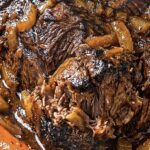
The beef is ready when it is extremely tender and can easily be pulled apart with a fork.
Very thick shanks may require closer to 3 hours.
### Step 10: Reduce the Sauce
Carefully remove the cooked beef shanks from the pan and place them on a serving platter.
Remove the bay leaf.
Place the pan over medium heat on the stovetop.
Allow the sauce to simmer uncovered for approximately 5–10 minutes until it becomes slightly thicker and more concentrated.
Stir in 1 tablespoon of butter.
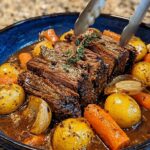
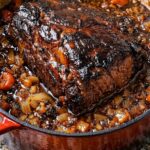
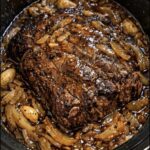
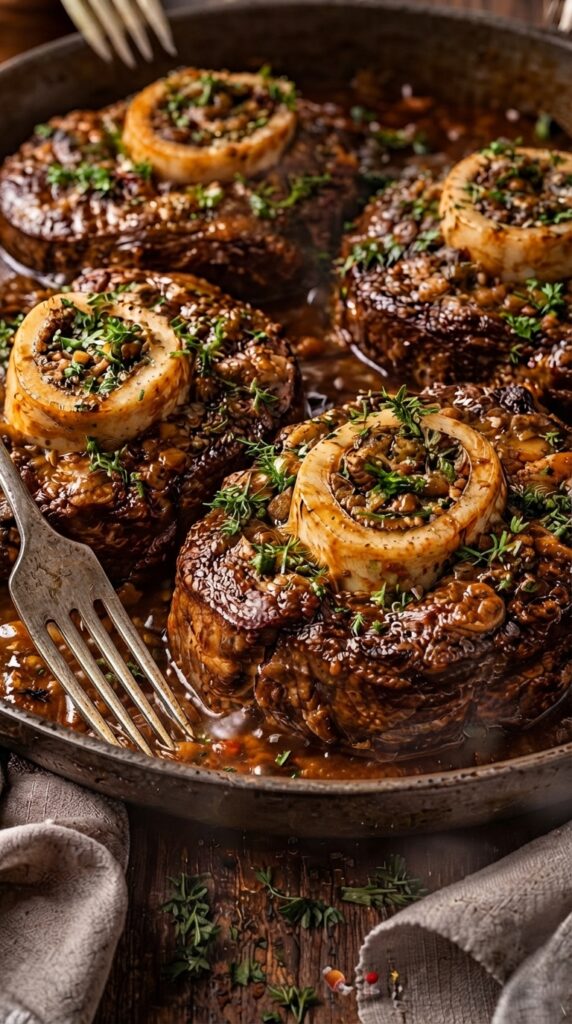
The butter creates a smooth, glossy finish similar to the sauce shown in the picture.
### Step 11: Finish and Serve
Return the beef shanks to the sauce.
Spoon plenty of sauce, onions, and garlic over each piece.
Sprinkle generously with fresh parsley and thyme.
Add freshly cracked black pepper if desired.
Serve immediately while hot.
## Notes
Bone-in beef shanks work particularly well for this recipe because the bones and connective tissues release collagen during the long cooking process. This naturally enriches the sauce and gives it a silky texture.
Choose shanks that are relatively thick and evenly cut so they cook at approximately the same rate.
Do not rush the braising process. Beef shanks contain connective tissue that needs slow cooking to become tender.
If the meat still feels tough after 2 hours, it usually needs more cooking rather than less.
Keep the marrow bones facing upward while braising whenever possible. This helps keep the flavorful marrow inside the center of the bone.
## Tips for the Best Beef Shanks
Make sure the beef is dry before searing. Wet meat tends to steam rather than brown.
Use a heavy Dutch oven or deep oven-safe skillet because it distributes heat evenly.
Do not overcrowd the pan while searing.
Develop a dark golden-brown crust because this contributes significantly to the final flavor.
Keep the braising temperature relatively low. High temperatures can cause the meat to become dry before its connective tissue has fully softened.
Check the liquid halfway through cooking. If too much has evaporated, add another ¼–½ cup of beef broth.
For an even richer sauce, allow the cooked dish to sit for about 10 minutes before serving.
If you prefer a thicker gravy, mix 1 teaspoon cornstarch with 1 tablespoon cold water and stir it into the simmering sauce.
## Serving Ideas
These rich braised beef shanks are excellent served with creamy mashed potatoes because the potatoes absorb the savory sauce.
Other delicious side dishes include:
– Garlic mashed potatoes
– Roasted baby potatoes
– Buttered egg noodles
– Creamy polenta
– Steamed white rice
– Roasted carrots
– Green beans
– Brussels sprouts
– Garlic bread
– Roasted asparagus
For a lighter meal, serve the beef with steamed vegetables and a simple green salad.
A piece of crusty bread is also excellent for soaking up the garlic-herb sauce.
## Storage
Allow leftovers to cool completely before storing.
Place the beef shanks and sauce in an airtight container and refrigerate for up to 3–4 days.
This dish often tastes even better the following day because the flavors continue to develop overnight.
To reheat, place the beef and sauce in a covered skillet over low-medium heat. Add a splash of beef broth if the sauce has become too thick.
You can also reheat individual portions in the microwave.
For freezing, place completely cooled beef shanks and sauce in freezer-safe containers. Freeze for up to 2–3 months.
Thaw overnight in the refrigerator before reheating.
## Nutritional Information
Approximate nutrition per serving, based on 5 servings:
Calories: 480–550
Protein: 40–45 g
Carbohydrates: 12–16 g
Fat: 28–32 g
Saturated Fat: 10–12 g
Fiber: 1–2 g
Sugar: 3–5 g
Sodium: 750–900 mg
Nutrition will vary depending on the size of the beef shanks, amount of marrow consumed, broth used, and portion size.
## Nutrition Benefits
Beef shanks are naturally rich in protein, making this a filling main course. Protein contributes to the maintenance and repair of body tissues and helps make meals more satisfying.
Beef also provides nutrients including iron, zinc, vitamin B12, selenium, and several other B vitamins.
Because beef shanks contain significant connective tissue, slow braising creates a naturally gelatin-rich cooking liquid.
Fresh parsley and herbs add flavor without requiring large amounts of additional salt or heavy sauces.
For a lighter meal, serve one beef shank with roasted vegetables rather than heavier sides.
## Frequently Asked Questions
### What cut of meat is shown in this recipe?
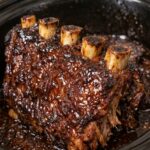
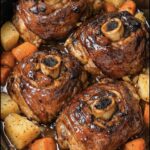
This dish uses cross-cut beef shanks. They are easily recognized by their round shape and the marrow bone in the center.
### Why are my beef shanks still tough?
They probably need additional cooking time. Beef shanks become tender only after their connective tissues have had enough time to soften. Continue braising them for another 20–30 minutes and check again.
### Can I make this recipe without wine?
Yes. Replace the ½ cup wine with an equal amount of beef broth. The recipe will still be rich and flavorful.
### Can I cook beef shanks on the stovetop?
Yes. After preparing the sauce, cover the pan tightly and simmer the beef over very low heat for approximately 2½–3 hours. Check occasionally and add broth if needed.
### Can I make this in a slow cooker?
Yes. Sear the beef first and prepare the onion, garlic, and tomato paste in a skillet. Transfer everything to the slow cooker.
Cook on LOW for approximately 7–8 hours or HIGH for 4–5 hours, until the beef is fork-tender.
### Should I eat the bone marrow?
The marrow inside properly cooked beef shank bones is edible and has a very rich, buttery flavor. It can be enjoyed with the meat or spread onto bread.
### Can I prepare this dish one day ahead?
Yes, and it is actually an excellent make-ahead recipe. Refrigerate the cooked beef in its sauce overnight. The next day, remove any hardened excess fat from the surface and gently reheat.
### What can I substitute for beef shanks?
Beef short ribs or chuck roast can be cooked using a similar braising method, although the cooking time may differ.
### How do I know when the beef is finished?
Insert a fork into the thickest part of the meat. It should slide in easily, and the beef should separate with very little pressure.
### How can I make the sauce richer?
Use good-quality beef broth, properly brown the meat, cook the tomato paste before adding the liquid, and allow the finished sauce to reduce for several minutes. A tablespoon of butter stirred in at the end also creates a richer, glossy finish.
### Can I add vegetables directly to the pan?
Yes. Thick pieces of carrots, mushrooms, celery, or pearl onions can be added during the braising process. Add carrots and celery during the final 60–90 minutes so they remain intact rather than becoming overly soft.
## Final Result
These Garlic Herb Braised Beef Shanks deliver deeply browned, fall-apart tender beef surrounded by a glossy garlic-herb gravy, with rich bone marrow in the center of every piece. The combination of slow braising, beef broth, aromatics, herbs, Worcestershire sauce, and balsamic vinegar creates the deep brown, restaurant-style sauce that pairs beautifully with mashed potatoes, rice, polenta, or crusty bread.