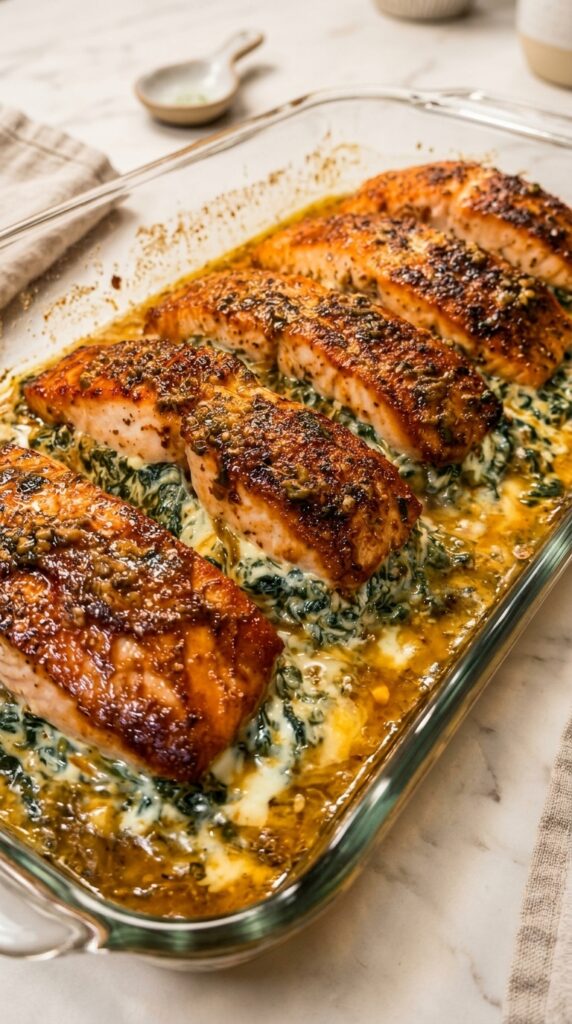

Garlic Butter Baked Salmon with Creamy Spinach
This Garlic Butter Baked Salmon with Creamy Spinach is a rich, comforting dinner featuring tender salmon fillets with a beautifully browned, flavorful crust served over a creamy garlic spinach sauce. The salmon stays moist and flaky inside while the top develops a savory coating from garlic, butter, paprika, herbs, and a touch of lemon.
The creamy spinach underneath absorbs some of the buttery salmon juices while baking, creating a luxurious sauce without requiring complicated preparation. It is an excellent recipe for family dinners, entertaining, or an easy restaurant-style meal at home. Serve it with roasted vegetables, mashed potatoes, rice, or crusty bread to soak up the creamy sauce.
Prep Time: 15 minutes
Cook Time: 25–30 minutes
Total Time: 40–45 minutes
Servings: 6
Ingredients
For the Salmon
6 salmon fillets, about 5–6 ounces each
2 tablespoons olive oil
2 tablespoons unsalted butter, melted
4 garlic cloves, finely minced
1 teaspoon smoked paprika
1 teaspoon garlic powder
1 teaspoon Italian seasoning
½ teaspoon onion powder
¾ teaspoon salt
½ teaspoon freshly ground black pepper
1 tablespoon fresh lemon juice
1 teaspoon lemon zest, optional
1 tablespoon chopped fresh parsley
For the Creamy Spinach
2 tablespoons unsalted butter
3 garlic cloves, minced
8 ounces fresh baby spinach
1 cup heavy cream
½ cup cream cheese, softened
⅓ cup freshly grated Parmesan cheese
½ teaspoon Italian seasoning
¼ teaspoon red pepper flakes, optional
¼ teaspoon black pepper
¼ teaspoon salt, or according to taste
2 tablespoons chicken broth or vegetable broth, if needed
For Finishing
1 tablespoon fresh parsley, chopped
Fresh lemon wedges
Extra grated Parmesan, optional
Instructions
Step 1: Preheat the Oven
Preheat your oven to 400°F or 200°C.
Lightly grease a large 9 x 13-inch baking dish with butter or cooking spray. A glass or ceramic baking dish works particularly well for this recipe because it holds the creamy spinach sauce and salmon juices together.
Step 2: Prepare the Salmon
Pat the salmon fillets dry thoroughly with paper towels. Removing excess moisture helps the seasoning stick to the salmon and allows the surface to develop better color.
Place the salmon on a clean plate.
In a small bowl, combine the olive oil, melted butter, minced garlic, smoked paprika, garlic powder, Italian seasoning, onion powder, salt, black pepper, lemon juice, and lemon zest.
Stir until everything is well combined.
Brush the garlic butter mixture generously over the top and sides of each salmon fillet.
Set the salmon aside while preparing the creamy spinach.
Step 3: Cook the Garlic
Place a large skillet over medium heat.
Add 2 tablespoons of butter and allow it to melt.
Add the minced garlic and cook for about 30–45 seconds, stirring continuously.
Do not brown the garlic because burned garlic can make the sauce bitter. You only want it fragrant and lightly softened.
Step 4: Wilt the Spinach
Add the fresh spinach gradually to the skillet.
It may look like a large amount at first, but spinach reduces dramatically as it cooks.
Stir for approximately 2–3 minutes until the leaves are wilted.
If your skillet is small, add the spinach in two or three batches.
Step 5: Prepare the Cream Sauce
Reduce the heat to medium-low.
Pour in the heavy cream and add the softened cream cheese.
Stir gently until the cream cheese melts into the cream and forms a smooth sauce.
Add the Parmesan cheese, Italian seasoning, red pepper flakes, black pepper, and salt.
Continue stirring for 2–3 minutes until the sauce becomes creamy and slightly thickened.
If the sauce becomes too thick, add 1–2 tablespoons of chicken or vegetable broth.
Remember that the sauce will continue thickening slightly while baking.
Step 6: Transfer to the Baking Dish
Spread the creamy spinach evenly across the bottom of your prepared baking dish.
Make sure the spinach and cream sauce cover most of the bottom.
This creates a flavorful bed for the salmon and prevents the bottom of the fish from drying out.
Step 7: Add the Salmon
Arrange the seasoned salmon fillets over the creamy spinach.
Leave a little space between each piece when possible so the hot air can circulate around the salmon.
Spoon any remaining garlic butter seasoning mixture over the tops.
Step 8: Bake
Transfer the baking dish to the preheated oven.
Bake for approximately 15–20 minutes, depending on the thickness of the salmon.
Thicker fillets may require closer to 20 minutes, while thinner portions may finish earlier.
The salmon should flake easily with a fork and remain moist in the center.
For food safety, the USDA-recommended internal temperature for fish is 145°F or 63°C. You can check the thickest part with an instant-read thermometer.
Step 9: Optional Browning
For a darker, caramelized-looking surface similar to the salmon shown in the picture, switch the oven to broil for approximately 1–2 minutes at the end.
Watch carefully because salmon can brown very quickly under the broiler.
Do not walk away during this step.
Step 10: Finish and Serve
Remove the baking dish from the oven and allow the salmon to rest for approximately 3–5 minutes.
Sprinkle fresh parsley over the top.
Spoon some of the creamy spinach and garlic butter sauce around each salmon fillet.
Serve with fresh lemon wedges so everyone can add additional lemon juice according to taste.
Recipe Notes
Fresh salmon works wonderfully for this recipe, but frozen salmon can also be used. Completely thaw frozen salmon and dry it thoroughly before seasoning.
Skin-on or skinless salmon will both work. If using skin-on salmon, place the skin side down.
Try to choose fillets of approximately equal thickness so they finish cooking at roughly the same time.
Fresh spinach gives the best texture, but frozen spinach can be substituted. Thaw it completely and squeeze out as much liquid as possible before adding it to the sauce.
Heavy cream creates the richest sauce. Half-and-half can be substituted for a lighter version, although the final sauce will be slightly thinner.
Freshly grated Parmesan melts more smoothly than packaged pre-shredded cheese.
Tips for Perfect Salmon
Do not overcook your salmon. Overcooking is the most common reason salmon becomes dry. Begin checking it several minutes before the estimated cooking time ends.
Patting the salmon dry before seasoning is important. A dry surface allows the oil, butter, garlic, and spices to coat the fish properly.
Use real butter for the best flavor. Butter works especially well with salmon because its richness complements the natural oils in the fish.
Fresh garlic provides much more flavor than garlic powder alone, which is why this recipe uses both.
Do not boil the cream sauce. Keep it over medium-low heat once the cream has been added. High heat may cause cream-based sauces to separate.
Taste the sauce before adding additional salt. Parmesan cheese is naturally salty, so you may need less salt than expected.
Broiling at the end is optional but gives the salmon an attractive golden-brown appearance.
Serving Ideas
This creamy salmon works with many easy side dishes.
Serve it with fluffy white rice to absorb the buttery cream sauce.
Garlic mashed potatoes are excellent with the creamy spinach.
Roasted baby potatoes provide a crispy contrast to the soft salmon.
Steamed broccoli, asparagus, or green beans make the meal lighter.
For a lower-carbohydrate dinner, serve the salmon with cauliflower rice, roasted cauliflower, or zucchini.
You can also serve it with warm crusty bread or garlic bread. The bread is especially useful for soaking up the remaining creamy garlic sauce.
A simple cucumber, tomato, and onion salad can provide a fresh contrast to the rich salmon.
Storage
Allow leftover salmon and spinach to cool before transferring them to an airtight container.
Store in the refrigerator for up to 3 days.
Because the recipe contains fish and dairy, do not leave leftovers at room temperature for extended periods.
To reheat, place a portion in a covered baking dish and warm at 300°F for approximately 10–15 minutes.
You can also reheat individual portions gently in the microwave. Use short intervals and avoid overheating because salmon becomes dry quickly.
If the spinach sauce thickens too much during refrigeration, add a small splash of milk, cream, or broth before reheating.
Freezing is possible, but cream-based sauces can sometimes separate after thawing. For the best texture, this dish is better enjoyed fresh or refrigerated rather than frozen.
Approximate Nutritional Information
Nutrition will vary according to the size of the salmon fillets and exact ingredients used.
Per serving:
Calories: approximately 520–570
Protein: approximately 38–42 grams
Fat: approximately 38–42 grams
Carbohydrates: approximately 6–8 grams
Fiber: approximately 2 grams
Sugar: approximately 2–3 grams
Sodium: approximately 550–700 mg
The recipe is naturally relatively low in carbohydrates and high in protein.
Nutritional Benefits
Salmon is an excellent source of high-quality protein, which helps support muscle maintenance and tissue repair.
It is particularly well known for providing omega-3 fatty acids. These fats are important components of a balanced diet and are associated with normal heart and brain function.
Salmon also provides several important micronutrients, including vitamin B12, selenium, vitamin D, and several other B vitamins.
Spinach contributes vitamins A, C, and K along with folate and minerals such as iron and magnesium.
Garlic adds flavor without requiring large amounts of extra salt and contains naturally occurring plant compounds.
Although the recipe contains nutritious ingredients, the heavy cream, butter, cream cheese, and Parmesan also make it calorie-dense and relatively high in saturated fat. If you want a lighter meal, you can reduce the cream and cream cheese or replace part of the heavy cream with half-and-half.
Frequently Asked Questions
Can I make this recipe with frozen salmon?
Yes. Thaw the salmon completely in the refrigerator before cooking. Pat it very dry before adding the seasoning.
Can I use frozen spinach?
Yes. Use approximately 10 ounces of frozen spinach. Thaw it and squeeze out excess water extremely well before adding it to the skillet.
Can I make the recipe without heavy cream?
Yes. Half-and-half can be substituted, although the sauce will be thinner. You can also use evaporated milk for a lighter alternative.
What can I substitute for cream cheese?
Mascarpone can be used for an especially creamy sauce. You can also omit the cream cheese and slightly increase the Parmesan.
How do I know when salmon is cooked?
The salmon should separate easily into moist flakes when gently pressed with a fork. For food safety, the center should reach 145°F or 63°C.
Why did my salmon turn out dry?
It was most likely cooked too long. Salmon continues cooking slightly after being removed from the oven, so avoid extending the baking time unnecessarily.
Can I prepare this dish ahead of time?
You can prepare the creamy spinach sauce several hours ahead and refrigerate it. Season the salmon separately. When ready to cook, place the spinach in the baking dish, arrange the salmon on top, and bake.
Can I add mushrooms?
Yes. Sauté sliced mushrooms before cooking the garlic and spinach. Mushrooms pair especially well with the creamy Parmesan sauce.
Can I add sun-dried tomatoes?
Yes. Chopped sun-dried tomatoes can be stirred into the spinach sauce. They add sweetness, acidity, and additional Mediterranean-style flavor.
Can I use another type of fish?
Yes. Thick cod, halibut, or other firm white fish can work, but cooking times may need to be adjusted according to thickness.
What vegetables can I add?
Mushrooms, artichoke hearts, asparagus pieces, roasted red peppers, or sun-dried tomatoes all work well.
Is this recipe spicy?
No. The red pepper flakes are optional and provide only gentle heat. Leave them out completely for a mild version.
Final Cooking Note
The key to this Garlic Butter Baked Salmon with Creamy Spinach is keeping the salmon moist while creating a deeply flavorful top crust. The creamy Parmesan spinach beneath the salmon catches the garlic butter and natural juices released during baking, producing a sauce that tastes rich without requiring a separate complicated preparation. A short broil at the end gives the fillets the beautifully browned appearance seen in the photo, while fresh lemon and parsley balance the richness of the cream and butter.
For the best result, serve the salmon immediately after its brief resting time with plenty of creamy spinach spooned underneath and a little of the buttery pan sauce drizzled over the top.