
Apple & Brie Stuffed Chicken Breasts
Prep Time: 15 minutes
Cook Time: 25–30 minutes
Servings: 4
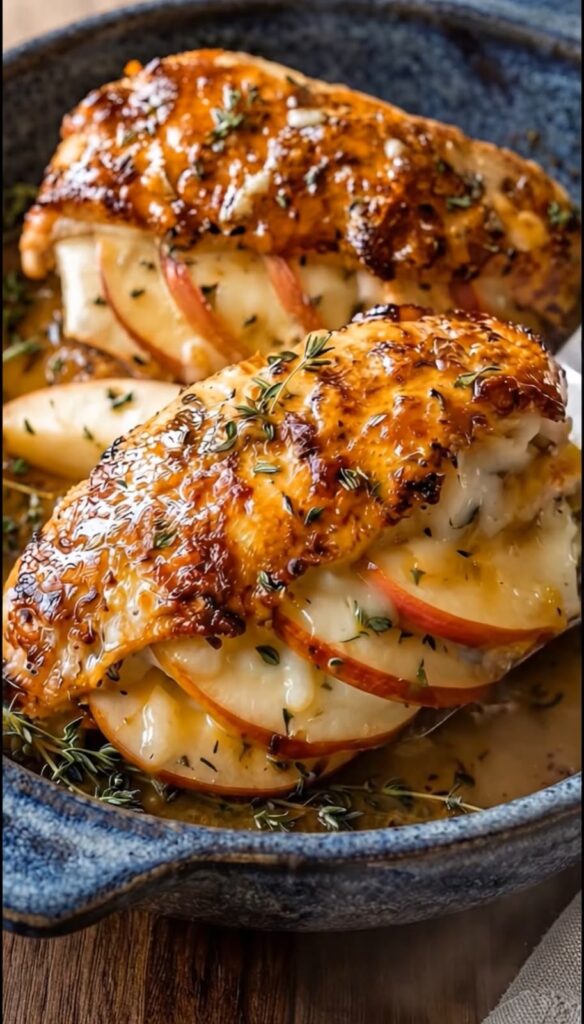
Apple & Brie Stuffed Chicken Breasts bring together savory chicken, tender apple slices, and creamy melted cheese. A honey-Dijon glaze adds gentle sweetness and a little tang, while garlic and thyme give the dish its warm, savory flavor. Everything finishes in one skillet, where the chicken broth mixes with the glaze and cooking juices to make a sauce for serving.
The dish looks impressive when sliced, but the preparation is straightforward: cut a pocket in each breast, add the filling, sear the outside, and finish cooking in the oven. Serve it for a family dinner or make it when you want a main course that feels a little special.
Ingredients
For the chicken
- 4 boneless, skinless chicken breasts, preferably similar in size
- 1 large crisp apple, thinly sliced
- 5 oz Brie cheese, thinly sliced
- 1 tablespoon olive oil
- 1 tablespoon butter
- ½ teaspoon salt
- ½ teaspoon freshly ground black pepper
- ½ teaspoon paprika
- ½ cup chicken broth
For the honey-Dijon glaze
- 2 tablespoons honey
- 1 tablespoon Dijon mustard
- 2 garlic cloves, minced
- 1 teaspoon fresh thyme leaves
Optional for serving
- Extra fresh thyme
- A few fresh apple slices
- Roasted potatoes or vegetables
Instructions
- Preheat the oven. Set your oven to 400°F (200°C). If your chicken breasts are very large, allow a little extra cooking time. A meat thermometer will give you the most reliable way to check when they are done.
- Prepare the filling. Slice the apple into thin pieces so it has time to soften inside the chicken. Cut the Brie into slices that will fit inside each pocket. The rind is edible and can stay on; remove it only if you prefer.
- Cut the chicken pockets. Place one chicken breast flat on a cutting board. Hold it steady with your hand and carefully cut into its thick side with a sharp knife. Make a deep pocket, leaving the other three sides intact. Repeat with the remaining breasts. Avoid cutting all the way through, since an intact pocket helps hold the apple and cheese in place.
- Season the chicken. Pat the chicken dry with paper towels. Sprinkle the salt, black pepper, and paprika over both sides. Season around the opening of each pocket as well, taking care not to tear the meat.
- Add the apple and Brie. Tuck alternating slices of apple and Brie into each chicken pocket. Aim for a generous filling while leaving enough room to close the opening. If a pocket will not stay closed, secure its edge with one or two toothpicks. Keep track of how many toothpicks you use so you can remove them before serving.
- Make the glaze. In a small bowl, stir together the honey, Dijon mustard, minced garlic, and fresh thyme. The mixture should be easy to brush over the chicken. If the honey is very thick, warm it briefly so it mixes smoothly with the mustard.
- Sear the chicken. Heat an oven-safe skillet over medium-high heat. Add the olive oil and butter. When the butter has melted and the skillet is hot, carefully add the stuffed chicken breasts. Sear for about 2–3 minutes per side, until the outside is lightly golden. Turn them gently so the filling stays in the pockets. The chicken will finish cooking in the oven.
- Add the glaze and broth. Brush the honey-Dijon mixture over the tops of the chicken breasts. Pour the chicken broth into the skillet around the chicken, rather than directly over it, so the glaze remains mostly on top. As the dish bakes, the broth will combine with the pan juices to create a light sauce.
- Bake until cooked through. Transfer the skillet to the oven and bake for 18–22 minutes. Start checking near the end of that range, especially if the breasts are small. Insert a meat thermometer into the thickest part of the chicken, away from the Brie filling. The chicken is ready when it reaches 165°F (74°C).
- Rest and serve. Let the chicken rest for about 5 minutes. Remove any toothpicks, then spoon the warm pan juices over each breast. Finish with a little fresh thyme if you like. Serve whole or slice each breast to show the apple and Brie filling.
Tips
Choose an apple that holds its shape. Honeycrisp, Pink Lady, and Gala are good choices. Each has enough sweetness to complement the mustard and enough firmness to keep some texture after baking. A softer apple can still work, but its slices may become very tender inside the chicken.
Keep the slices thin. Thick apple pieces may remain firm by the time the chicken is cooked. Thin slices soften more evenly and fit neatly beside the Brie. There is no need to peel the apple unless you prefer it without the skin.
Use similar-sized chicken breasts. Pieces that are close in size tend to cook at the same rate. If one breast is much smaller, check its temperature first and remove it when done. Cooking times are a guide; the thermometer reading matters more than the clock.
Leave room inside each pocket. Brie melts as it heats, so a little may escape into the skillet. That is fine—it will add flavor to the sauce. Overstuffing, however, makes the pockets harder to close and can cause most of the cheese to run out before serving.
Watch the heat while searing. Honey can darken quickly, which is why the glaze goes on after the chicken is seared. If the skillet looks very hot before it goes into the oven, reduce the heat briefly as you add the broth.
For a glossier finish, reserve a little glaze. Before brushing the chicken, set aside a small spoonful of the honey-Dijon mixture in a separate clean bowl. Brush this reserved glaze over the chicken during the final few minutes of baking. Do not reuse a brush or glaze that has touched raw chicken unless it has been thoroughly cooked.
Make use of the pan sauce. Once the chicken is done, stir the liquid in the skillet gently to bring together the broth, honey, mustard, and any melted Brie. Spoon it over the chicken just before serving. If the sauce seems thin, let it simmer briefly on the stovetop after removing the chicken from the pan.
Storage
Allow leftover chicken to cool, then place it in an airtight container with some of the pan juices. Refrigerate for up to 3 days. Keeping a little sauce with the chicken helps it stay moist when reheated.
For the best texture, warm leftovers gently in a covered baking dish until heated through. Add a spoonful of broth or water if the sauce has thickened in the refrigerator. You can also reheat an individual portion in the microwave in short intervals. The Brie will soften again, though some of it may melt into the sauce.
If you want to prepare the dish ahead, stuff and season the raw chicken several hours before cooking. Keep it covered in the refrigerator. Mix the glaze separately, then sear and bake the chicken when you are ready to serve it.
Serving Ideas
Roasted potatoes are an easy match for the honey-Dijon pan sauce. Spoon a little sauce over both the chicken and potatoes to bring the plate together. Creamy mashed potatoes work just as well if you want something softer and comforting.
For vegetables, try green beans, asparagus, or roasted carrots. Green beans and asparagus add freshness to a rich main course, while carrots bring out the sweetness of the apple and honey. A simple green salad with a light vinaigrette is another good choice, especially if you want a lighter meal.
You can also serve the chicken over rice or alongside warm bread to catch the pan juices. If you slice the chicken before serving, use a sharp knife and cut carefully so the layers of apple and Brie remain visible. A sprinkle of fresh thyme adds color and a final herbal note.
For a dinner with guests, prepare the potatoes or vegetables first, then cook the chicken shortly before serving. Give the chicken its brief rest while you finish the sides. Bring the skillet to the table if it is suitable for serving, or arrange the breasts on a platter and spoon the sauce over them.
Nutrition Benefits
Chicken breast is a source of protein, making this a filling main dish. Apples add some fiber and natural sweetness, which helps build flavor without needing a large amount of honey. Brie contributes calcium and gives the filling a creamy texture; a few slices in each breast provide plenty of richness.
The exact nutrition per serving depends on the size of the chicken breasts, the amount of cheese used in each one, and how much pan sauce is served. Using the ingredients listed, a serving is roughly 400–500 calories. For a more precise estimate, calculate the nutrition using the weights and brands you use at home.
To round out the meal, add a generous serving of vegetables. If you prefer a less rich version, use slightly less Brie and serve the chicken with a crisp salad. For a heartier dinner, pair it with potatoes or rice and enjoy the extra sauce.
Q&A
Can I use another type of cheese?
Yes. Camembert has a creamy texture similar to Brie. Gouda or mild white cheddar will give the dish a different flavor and may melt differently. Mozzarella also works if you prefer a milder filling. Cut whichever cheese you choose into pieces that fit comfortably inside the chicken.
Do I need to peel the apple?
No. The peel softens during cooking and adds color to the filling. Wash and dry the apple, then slice it thinly. If you prefer a softer, more uniform filling, peeling it is fine too.
Can I use a different apple variety?
Yes. Choose one you enjoy eating that has a fairly crisp texture. A tart apple will make the filling less sweet and give the honey glaze more contrast. With a sweeter apple, the dish will have a gentler sweet-savory flavor.
Can I make the chicken ahead of time?
You can stuff and season the breasts several hours ahead and keep them covered in the refrigerator. Wait to sear and bake them until you are ready to eat. This gives you much of the preparation done early while still letting you serve the chicken warm with freshly melted Brie.
What if I do not have an oven-safe skillet?
Sear the chicken in a regular skillet, then carefully move it to a baking dish. Add the broth around the chicken and brush on the glaze before baking. Any juices left in the skillet can be poured into the baking dish for extra flavor.
How can I keep the cheese inside?
Do not cut through the bottom of the chicken pocket, and avoid packing in more filling than it can hold. Close the opening with toothpicks if needed. A little Brie may still melt out as the chicken cooks; spoon it back over the finished dish with the pan sauce.
How do I know the chicken is fully cooked?
Check the thickest part of each breast with a meat thermometer, making sure the tip is in the chicken rather than the filling. It should read 165°F (74°C). Remove the chicken when it reaches that temperature so it stays as juicy as possible.
Can I double the recipe?
Yes. Use a larger skillet or sear the chicken in batches so the pieces have room to brown. Transfer them to a baking dish if necessary. Check each breast for doneness, since a fuller pan and different-sized pieces may affect the baking time.