
Prep Time: 20 minutes
Cook Time: 18–22 minutes
Chill Time: 15 minutes
Servings: 8 biscuits
Ingredients
For the biscuits:
2½ cups (300 g) all-purpose flour, plus extra for shaping
¼ cup (50 g) granulated sugar
1 tablespoon baking powder
¼ teaspoon baking soda
¾ teaspoon salt
½ cup (113 g) unsalted butter, very cold
¾ cup (180 ml) cold buttermilk, plus 1–2 tablespoons if needed
1 teaspoon vanilla extract
1 cup (150 g) fresh blueberries, washed and thoroughly dried
1 teaspoon finely grated lemon zest, optional
For the tops:
1 tablespoon buttermilk
1 tablespoon melted butter, optional, for brushing after baking
Instructions
Prepare the baking tray.
Line a baking sheet with parchment paper. Keep the butter and buttermilk refrigerated until needed. If your kitchen is warm, chill the mixing bowl for a few minutes too. Cold ingredients help create flaky layers and prevent the biscuits from spreading excessively.
Combine the dry ingredients.
In a large bowl, whisk together the flour, sugar, baking powder, baking soda, and salt. Break up any small lumps so the leavening ingredients distribute evenly. If using lemon zest, rub it into the sugar with your fingertips before combining everything.
Add the cold butter.
Grate the cold butter on the large holes of a box grater directly into the flour mixture. Alternatively, cut it into small cubes and work it in with a pastry cutter. Toss until coated, leaving visible small pieces of butter throughout the flour.
Add the blueberries.
Gently toss the dry blueberries into the butter and flour mixture. Handle them carefully to avoid crushing them. Small or medium blueberries are easiest to distribute and less likely to burst during shaping.
Mix in the buttermilk.
Combine the cold buttermilk and vanilla, then pour over the dry ingredients. Stir gently with a fork or spatula until a shaggy dough forms. If loose flour remains that will not incorporate when pressed, add extra buttermilk, one tablespoon at a time. The dough should feel slightly tacky, not wet.
Bring the dough together.
Turn the dough onto a lightly floured work surface. Use your hands or a bench scraper to gently press the loose pieces together. Avoid kneading as you would bread dough. A few rough edges and visible butter pieces are desirable.
Create the layers.
Pat the dough into a thick rectangle. Fold one third toward the center, then fold the opposite third over it, like a letter. Turn the dough, gently flatten, and repeat once. Work carefully around the blueberries; a few purple streaks are normal.
Cut the biscuits.
Pat the folded dough approximately 1 inch thick. Using a lightly floured 2½-inch round cutter, press straight down without twisting. Gather the scraps gently and cut again to make approximately eight biscuits. Avoid repeatedly reshaping the scraps, which can make the final biscuits tougher.
Chill and preheat.
Arrange the biscuits on the prepared tray approximately ½ inch apart. Refrigerate for 15 minutes. Meanwhile, preheat the oven to 425°F (220°C). Brush the chilled biscuit tops lightly with buttermilk, keeping it from running down the sides.
Bake until golden.
Bake on the middle rack for 18–22 minutes, until the biscuits have risen and developed golden tops. The sides should look set, and the centers should no longer appear doughy. If the tops brown too quickly, loosely cover with foil for the remaining baking time.
Finish and serve.
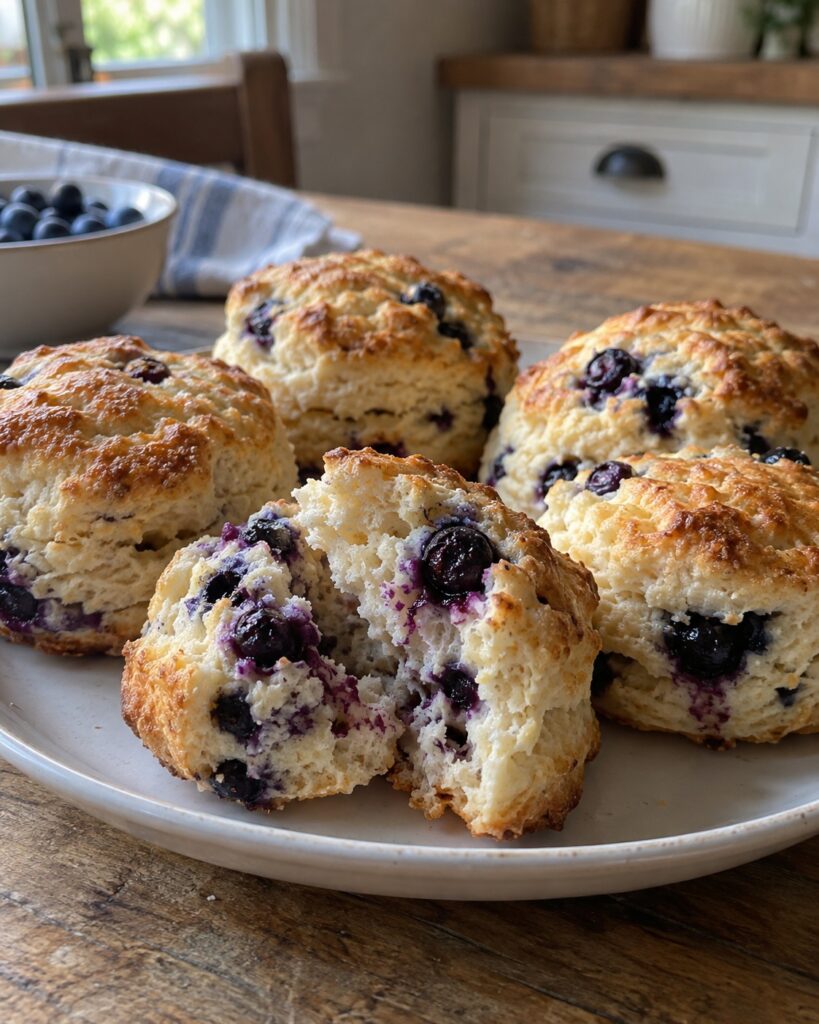
Remove from the oven and brush with melted butter if desired. Let the biscuits cool on the tray for 5 minutes, then transfer to a wire rack. Serve warm, splitting them gently to reveal the soft crumb and juicy blueberry pockets.
Description
These fluffy blueberry biscuits combine the tender, buttery layers of an American buttermilk biscuit with bursts of sweet blueberries. They have lightly crisp golden tops, soft centers, and just enough sugar to complement the fruit without becoming overly sweet.
The biscuits are delicious plain, with softened butter, or alongside a spoonful of blueberry jam. Their rustic appearance makes them especially inviting for breakfast, brunch, or an afternoon snack. Unlike yeast breads, they require no rising time; baking powder, baking soda, and a hot oven provide the lift.
Notes
Measure flour carefully. For the most consistent result, use the gram measurement. If measuring by cups, fluff the flour, spoon it into the cup, and level it without packing.
Buttermilk contributes tang and tenderness while providing acidity for the baking soda. If unavailable, combine 2¼ teaspoons lemon juice or white vinegar with enough milk to make ¾ cup. Let stand for 5–10 minutes before using. This substitute is thinner than cultured buttermilk, so add it gradually.
Frozen blueberries also work. Add them directly from the freezer without thawing. They may tint the dough and require a few extra minutes of baking.
Tips
Keep the butter cold. If it softens during shaping, refrigerate the dough before continuing.
Dry fresh blueberries thoroughly to avoid adding unnecessary moisture.
Mix only until the dough comes together. Overworking develops gluten and creates tougher biscuits.
Use minimal flour on the work surface. Too much can make the biscuits dry.
Press the cutter straight down. Twisting can compress the edges and interfere with an even rise.
Bake in a fully preheated oven for the strongest initial lift.
Leave the tops unglazed to match the pictured biscuits, or add a light lemon glaze after cooling.
Storage
Allow the biscuits to cool completely before storing. Keep in an airtight container at room temperature for up to 2 days, or refrigerate for up to 5 days. Refrigeration may dry them slightly, so warm before serving.
Freeze cooled biscuits individually wrapped in a freezer-safe bag for up to 3 months. Thaw at room temperature, then warm in a 325°F (165°C) oven for approximately 8–10 minutes. Cover loosely with foil if needed to prevent excess browning.
Nutritional Information
Approximate nutrition per biscuit, based on eight biscuits and excluding optional melted butter:
Calories: 300
Carbohydrates: 44 g
Protein: 5 g
Fat: 12 g
Saturated Fat: 7 g
Fiber: 2 g
Sugar: 10 g
Sodium: 430 mg
Values vary with ingredient brands, biscuit size, and substitutions.
Benefits
Blueberries contribute fiber and naturally occurring plant compounds. Buttermilk provides small amounts of protein and calcium, while flour supplies carbohydrates for energy.
Making biscuits at home lets you control their size, sweetness, and ingredients. These remain a buttery baked treat; pair one with eggs or plain yogurt and additional fruit for a more balanced breakfast.
Q&A
Can I prepare the dough ahead?
Yes. Shape the biscuits, cover, and refrigerate for several hours before baking. For longer storage, freeze the unbaked biscuits and bake from frozen, allowing extra time.
Why did my biscuits turn out flat?
Warm butter, old baking powder, thin dough, or an insufficiently heated oven can reduce their rise. Keep the dough cold and approximately 1 inch thick.
Why are the centers gummy?
They may be underbaked or contain excess moisture from wet berries. Check the center of one biscuit and return the tray to the oven if necessary.
Can I leave out the sugar?
Yes, although the flavor will be less sweet and the tops may brown differently. For a mildly sweet version, reduce it to 2 tablespoons.
Can I add a glaze?
Yes. Stir ½ cup powdered sugar with 2–3 teaspoons lemon juice or milk. Drizzle over cooled biscuits so it stays visible rather than soaking in.