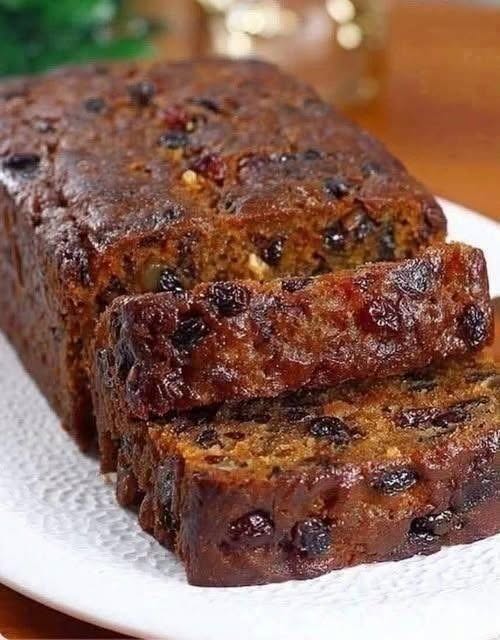

Moist Mixed Fruit Loaf Cake
Prep Time: 25 minutes
Soaking Time: 4 hours or overnight
Cook Time: 75–90 minutes
Cooling Time: Approximately 2 hours
Servings: 12 slices
Pan Size: 9 × 5-inch loaf pan
Description
This moist mixed fruit loaf cake is inspired by the rich, dark loaf in your photo. Packed with raisins, sultanas, chopped dates, and dried cranberries, it has a tender, closely textured crumb and a beautifully browned crust. Strong black tea softens the dried fruit before baking, while brown sugar, butter, and warm spices give the cake its comforting flavor.
Unlike a light sponge cake, this fruit loaf is pleasantly substantial, making it ideal for slicing and serving with tea or coffee. The fruit provides plenty of sweetness and keeps the inside moist, while a little orange zest adds freshness. An optional apricot glaze creates a gently glossy finish similar to the pictured loaf.
This version contains no alcohol and requires no electric mixer. It also tastes even better the following day, once the moisture has settled throughout the cake and the flavors have developed.
Ingredients
For the soaked fruit:
1 cup (150 g) raisins
1 cup (150 g) sultanas or golden raisins
½ cup (75 g) dried cranberries
½ cup (75 g) pitted dates, chopped
¾ cup (180 ml) hot, strong black tea
1 tablespoon finely grated orange zest
For the cake batter:
½ cup (115 g) unsalted butter, softened
½ cup (100 g) packed dark brown sugar
2 large eggs, at room temperature
1 teaspoon vanilla extract
1½ cups (190 g) all-purpose flour
1½ teaspoons baking powder
1 teaspoon ground cinnamon
¼ teaspoon ground nutmeg
¼ teaspoon salt
For the optional glaze:
2 tablespoons smooth apricot jam
1 teaspoon water
Instructions
1. Soak the dried fruit
Place the raisins, sultanas, dried cranberries, and chopped dates in a large heatproof bowl. Pour the hot black tea over the fruit and stir in the orange zest. Cover and leave for at least 4 hours, stirring occasionally, or refrigerate overnight.
The fruit should become plump and softer. This step helps prevent it from drawing too much moisture out of the cake during baking.
2. Prepare the oven and pan
Preheat the oven to 325°F (160°C), or approximately 285°F (140°C) for a fan oven. Grease a 9 × 5-inch loaf pan and line the base and sides with baking parchment.
Leave some parchment extending above the long sides so you can lift out the baked loaf. If the fruit was refrigerated, take it out while preparing the other ingredients.
3. Drain and reserve the soaking liquid
Tip the soaked fruit into a sieve set over a bowl. Let it drain for about 5 minutes without pressing it dry. Reserve the liquid.
Measure ¼ cup (60 ml) of the reserved tea. If there is less than this, add enough fresh tea or water to reach the amount. Keeping the liquid measured helps produce a consistent batter.
4. Cream the butter and sugar
In a large mixing bowl, beat the softened butter and brown sugar together with a wooden spoon or hand mixer until lighter and well combined, about 2–3 minutes.
The mixture does not need to become extremely fluffy. However, the butter should be soft enough to blend smoothly, with no large lumps remaining.
5. Add the eggs and vanilla
Beat in the eggs one at a time, mixing well after each addition. Stir in the vanilla extract.
If the mixture looks slightly curdled, add a tablespoon of the measured flour and mix briefly. This can happen when the eggs are cooler than the butter and usually will not affect the finished cake.
6. Mix the dry ingredients
In a separate bowl, whisk together the remaining flour, baking powder, cinnamon, nutmeg, and salt.
Distributing the baking powder evenly is particularly important in a dense fruit cake. It helps the loaf rise consistently without leaving pockets of raising agent in the crumb.
7. Finish the batter
Fold the dry ingredients into the butter mixture in two additions, alternating with the measured ¼ cup of tea. Mix gently until no dry flour remains.
Fold in the drained fruit and orange zest. The batter should be thick and spoonable, with enough mixture to coat all the fruit. Avoid vigorous beating once the flour has been added.
8. Fill the loaf pan
Spoon the batter into the prepared pan and spread it into the corners. Smooth the surface with the back of a spoon.
Press any exposed pieces of fruit lightly into the batter to reduce scorching. Leave approximately 1 inch of space above the batter; if your pan is unusually shallow, bake excess batter separately in a lined muffin cup.
9. Bake until cooked through
Bake on the middle oven rack for 75–90 minutes. Start checking at 70 minutes because pan material and oven performance can affect the baking time.
If the top becomes deeply browned before the center is ready, cover it loosely with foil. The cake is done when a skewer inserted into the center comes out without wet batter. Moist fruit residue is normal.
10. Cool and glaze
Leave the cake in its pan for 20 minutes, then lift it onto a wire rack using the parchment. Let it cool completely before slicing.
For a glossy finish, gently warm the apricot jam with the water and brush a thin layer over the top. For the neatest slices, wrap the cooled loaf and leave it overnight before cutting.
Recipe Notes
This recipe produces a fruit-filled loaf with a close, moist crumb. It should hold together when sliced, but it will not have the airy texture of a plain butter cake.
You can replace the dried fruits with equal weights of chopped dried apricots, currants, or other raisins. Keep the total dried fruit weight at 450 g so the balance of fruit and batter stays similar.
Strong black tea adds depth without making the cake taste strongly of tea. For a caffeine-free alternative, use rooibos. Avoid substituting fresh fruit directly, because its higher water content changes the batter.
The apricot glaze is optional. It improves the shine but is not necessary for moisture.
Tips for the Best Fruit Loaf
Weigh the ingredients: Dried fruit and flour can vary considerably when measured in cups. Weights give more dependable results.
Use soft butter: Butter should yield easily when pressed but should not be melted or oily.
Chop larger fruit: Cut dates and apricots into raisin-sized pieces so they distribute evenly.
Watch the crust: A fruit-heavy loaf needs time to cook through. A loose foil cover protects the top during the final baking stage.
Cool before cutting: Warm fruit cake can crumble even when properly baked. Patience gives cleaner slices.
Check the center carefully: Insert the skewer in two nearby places if it hits a large piece of sticky fruit.
Serving Suggestions
Serve the loaf in moderately thick slices with tea, coffee, or warm milk. It is flavorful on its own, though a thin spread of butter makes it especially comforting.
For a simple dessert, pair a slice with a spoonful of plain Greek yogurt. You can also toast an unglazed slice lightly in a skillet and serve it warm. Cut smaller portions for a tea-time platter alongside fresh fruit and nuts.
Storage and Freezing
Once completely cool, wrap the loaf tightly or place it in an airtight container. Store in a cool room for up to 3 days. In a hot or humid kitchen, refrigerate it instead.
Refrigerated cake keeps well for about 1 week. Bring individual slices to room temperature before serving for a softer texture.
For longer storage, wrap individual slices, place them in a freezer-safe container, and freeze for up to 3 months. Thaw while wrapped to help retain moisture. Discard the cake if you notice mold or an unusual smell.
Approximate Nutritional Information
Per slice, based on 12 equal slices, without the optional glaze:
Calories: 300
Protein: 4 g
Carbohydrates: 53 g
Total Fat: 9 g
Saturated Fat: 5 g
Fiber: 3 g
Total Sugars: 35 g
Sodium: 125 mg
Values are estimates and vary with ingredient brands, especially sweetened dried cranberries. Total sugars include both naturally occurring fruit sugars and added sugar.
Benefits
Dried fruit contributes fiber and small amounts of minerals such as potassium and iron. Eggs provide some protein, while the generous fruit content gives each slice a satisfying texture.
This is still a sweet cake rather than a high-protein meal. Enjoying a moderate slice alongside plain yogurt or another protein source can make a more substantial snack. Its ability to freeze in individual portions also makes it convenient for serving only what you need.
Questions and Answers
Can I skip soaking the fruit?
Soaking is strongly recommended for this recipe. Unsoaked fruit can make the cake drier and chewier. If short on time, use hot tea and soak for at least 1 hour, though a longer soak gives better results.
Can I reduce the sugar?
You can reduce the brown sugar to ⅓ cup, approximately 65 g. The dried fruit will still provide sweetness, although the cake may be slightly less tender.
Why did my loaf sink?
Common causes include underbaking, adding too much liquid, or using a pan that is too small. Measure the reserved tea carefully and check the center before removing the cake.
Can I add nuts?
Yes. Fold in up to ½ cup of chopped walnuts or pecans. For a similar overall volume, replace an equal weight of dried fruit with the nuts.
Why is the cake crumbly?
It may have been sliced while warm, overbaked, or made with too much flour. Weigh the flour and let the loaf cool fully, preferably overnight.
Can I make it ahead?
Yes. This loaf is particularly suitable for baking a day before serving. Wrap it once fully cooled so the crumb stays moist as the flavors develop.