
Pan-Seared Garlic Butter Steak Medallions
Description
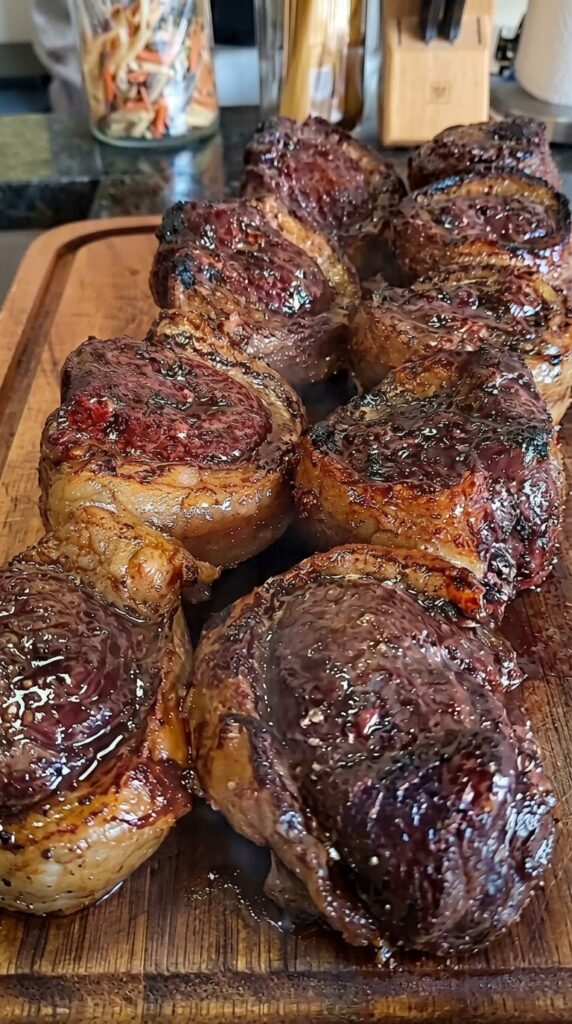
Pan-Seared Garlic Butter Steak Medallions are thick, juicy pieces of beef cooked over high heat until they develop a deep golden-brown crust while staying tender and succulent inside. The steaks are finished with butter, garlic, and fresh herbs, giving them a glossy surface and rich steakhouse-style flavor.
This recipe works especially well with filet mignon, beef tenderloin medallions, ribeye medallions, or other thick, tender steaks. The key to achieving the beautiful crust is to dry the meat thoroughly, season it generously, and place it into a very hot heavy skillet. Once the steaks are seared, butter, garlic, and herbs are added and spooned repeatedly over the meat.
The result is a simple but impressive main course that works for family dinners, holidays, date nights, celebrations, or weekend meals. Pair these steak medallions with creamy mashed potatoes, roasted vegetables, asparagus, mushrooms, green beans, or a crisp salad.
Prep Time
15 minutes
Cook Time
12–18 minutes
Resting Time
8–10 minutes
Total Time
About 35–40 minutes
Servings
6 servings
Ingredients
For the Steak
- 6 thick beef tenderloin or steak medallions, about 6–8 oz each
- 2 tablespoons olive oil
- 2 teaspoons kosher salt
- 1½ teaspoons freshly ground black pepper
- 1 teaspoon garlic powder
- ½ teaspoon onion powder
Garlic Butter
- 4 tablespoons unsalted butter
- 4 garlic cloves, lightly crushed
- 3 sprigs fresh rosemary
- 4 sprigs fresh thyme
Optional Finishing Ingredients
- Flaky sea salt
- Freshly cracked black pepper
- Chopped parsley
- Extra melted garlic butter
Instructions
1. Prepare the Steaks
Remove the steaks from the refrigerator about 25–30 minutes before cooking.
Place them on a clean cutting board or tray and pat every surface thoroughly dry with paper towels.
Removing surface moisture is one of the most important steps in getting a deep brown crust. Wet steak releases steam when it touches the hot pan, which can prevent proper browning.
If your steaks have a thick strip of exterior fat, you can trim away excessive fat but leave a moderate amount for flavor.
2. Season Generously
Combine the salt, black pepper, garlic powder, and onion powder.
Season every side of each steak, including the edges.
Press the seasoning gently into the meat.
Because these medallions are thick, they can handle generous seasoning.
Let them sit for about 10 minutes while the pan heats.
3. Preheat the Pan
Place a heavy cast-iron skillet or stainless-steel pan over medium-high to high heat.
Allow it to heat for approximately 3–4 minutes.
A properly heated pan is essential for creating the dark caramelized exterior.
Add the olive oil.
When the oil begins to shimmer, the pan is ready.
Avoid using delicate extra-virgin olive oil at extremely high temperatures. A neutral high-heat oil such as avocado oil can also be used.
4. Sear the First Side
Carefully place the steak medallions into the hot skillet.
Do not overcrowd the pan.
If you are preparing six steaks, it may be necessary to cook them in two or three batches.
Once the steaks touch the skillet, leave them alone for approximately 3–4 minutes.
Moving them too early prevents the crust from developing properly.
You should hear a strong sizzling sound.
5. Flip the Steaks
Once the underside has developed a deep brown crust, turn each steak using stainless-steel tongs.
Sear the second side for another 3–4 minutes.
If the steaks are especially thick, use the tongs to briefly sear the edges as well.
Hold each steak upright against the hot skillet for about 30–45 seconds per side, especially along any fatty edge.
This helps render some of the fat and creates a more evenly browned appearance.
6. Add Garlic Butter
Reduce the heat slightly to medium.
Add the butter, crushed garlic cloves, rosemary, and thyme to the skillet.
As the butter melts, tilt the skillet slightly so the butter collects on one side.
Using a large spoon, repeatedly scoop the hot garlic-herb butter and pour it over the steaks.
Continue basting for approximately 1–2 minutes.
The butter should foam and become lightly golden, but it should not burn.
This technique coats the steaks with rich flavor and gives them the beautiful glossy surface associated with restaurant-style steak.
7. Check the Internal Temperature
The most reliable method of determining doneness is an instant-read meat thermometer.
Insert the thermometer into the thickest part of the steak from the side.
Approximate final temperatures are:
- Rare: 120–125°F
- Medium-rare: 130–135°F
- Medium: 140–145°F
- Medium-well: 150–155°F
- Well done: 160°F or above
Remove the steaks from the heat a few degrees before reaching the desired final temperature because they will continue cooking slightly while resting.
For thick tenderloin medallions, medium-rare to medium generally gives the juiciest texture.
8. Oven Finish for Very Thick Steaks
If your steaks are more than 1½–2 inches thick, they may brown before the center reaches the desired temperature.
After searing, transfer the oven-safe skillet to a 400°F or 200°C oven.
Cook for approximately 4–8 minutes, checking frequently with a thermometer.
Remove when they are just below your preferred final internal temperature.
9. Rest the Steaks
Transfer the finished medallions to a wooden board or warm serving platter.
Loosely cover them with foil.
Allow the steaks to rest for 8–10 minutes.
Do not skip this step.
Resting allows the juices to redistribute through the meat. If you cut the steaks immediately, much of that flavorful moisture can escape onto the cutting board.
10. Finish and Serve
Before serving, spoon a little of the garlic herb butter from the skillet over each steak.
Sprinkle with flaky salt and freshly cracked black pepper if desired.
Serve whole for an impressive steakhouse presentation, or slice just before serving.
Recipe Notes
Filet mignon and beef tenderloin medallions are especially suitable for this recipe because they are naturally tender and cook quickly.
Ribeye medallions can also be used if you prefer a richer, more marbled steak.
Steak thickness affects cooking time much more than weight. Always use temperature as your main guide.
If using salted butter, slightly reduce the salt in the initial seasoning.
Fresh rosemary and thyme are recommended, but dried herbs can be used in smaller quantities.
For more garlic flavor, lightly crush the garlic cloves instead of finely mincing them. Minced garlic burns quickly in a very hot skillet.
Tips for Perfect Steak Medallions
Choose Thick Steaks
Steaks about 1½–2 inches thick are easier to sear deeply while maintaining a juicy interior.
Very thin steaks may overcook before developing a proper crust.
Dry Them Thoroughly
Moisture is the enemy of browning.
Pat every surface dry just before seasoning.
Use a Heavy Pan
Cast iron retains heat extremely well and produces excellent browning.
A heavy stainless-steel skillet is another good choice.
Do Not Crowd the Skillet
Too many steaks lower the pan temperature and produce steam.
Cook in batches if necessary.
Turn With Tongs
Avoid piercing the meat repeatedly with a fork.
Tongs allow you to turn the steaks without unnecessarily puncturing them.
Use Butter Near the End
Butter contains milk solids that can burn over very high heat.
Add it after the main searing process rather than at the beginning.
Rest Before Serving
Resting is essential for juicy steak.
Even eight minutes can noticeably improve the final texture.
Always Check Temperature
Cooking time is only a guideline.
Thickness, starting temperature, stove strength, and pan material can all affect how fast the steak cooks.
Serving Suggestions
These garlic butter steak medallions pair beautifully with classic steakhouse sides.
Try them with creamy mashed potatoes and roasted asparagus for a traditional plate.
Garlic roasted potatoes, loaded baked potatoes, or crispy potato wedges are also excellent choices.
For vegetables, consider:
- Green beans
- Roasted carrots
- Brussels sprouts
- Broccoli
- Asparagus
- Creamed spinach
- Sautéed mushrooms
A fresh garden salad or Caesar salad makes a lighter accompaniment.
You can also serve the steak with mushroom sauce, peppercorn sauce, red wine sauce, chimichurri, or additional garlic herb butter.
Nutritional Information
Approximate nutrition per serving using a 7-ounce beef tenderloin steak:
- Calories: 470–540
- Protein: 45–50 g
- Carbohydrates: 1–3 g
- Fat: 30–36 g
- Saturated Fat: 13–16 g
- Fiber: less than 1 g
- Sugar: less than 1 g
- Sodium: 600–800 mg
- Iron: approximately 3–4 mg
These values are estimates.
Actual nutrition varies according to the specific cut and size of beef, the amount of visible fat, and how much butter is consumed.
Benefits
High in Protein
Beef is an excellent source of complete protein.
Protein provides essential amino acids that support muscle maintenance, tissue repair, and many normal processes throughout the body.
Good Source of Iron
Beef naturally contains heme iron, which is generally absorbed more efficiently than non-heme iron from plant foods.
Iron is involved in healthy red blood cell formation and oxygen transport.
Rich in Vitamin B12
Beef is naturally high in vitamin B12.
Vitamin B12 contributes to healthy nerve function, DNA synthesis, and red blood cell formation.
Provides Zinc
Steak contains zinc, an essential mineral involved in immune function, cell growth, and wound healing.
Contains Selenium
Beef provides selenium, which plays roles in antioxidant defense and normal thyroid function.
Satisfying Main Course
Because steak is rich in protein and fat, it can be very satisfying, especially when paired with vegetables and a balanced side dish.
Storage
Allow leftover steak to cool before storing.
Place the medallions in an airtight container.
Refrigerate for up to 3–4 days.
If possible, store them with a small amount of the garlic butter or cooking juices to help maintain moisture.
For longer storage, wrap each steak tightly and place in a freezer-safe container.
Freeze for up to 2–3 months.
Thaw overnight in the refrigerator before reheating.
Reheating
Steak is best reheated gently so it does not become tough.
Preheat your oven to 275–300°F.
Place the steak in a small baking dish and add a tablespoon of broth, water, or garlic butter.
Cover lightly with foil.
Warm until heated through.
You can also reheat it briefly in a skillet over low heat with butter.
Avoid cooking it for too long because reheating can increase the internal doneness.
Frequently Asked Questions
What type of steak is shown in this style of recipe?
Thick beef tenderloin medallions, filet mignon, or similarly shaped premium steak cuts work best.
Can I use ribeye?
Yes.
Ribeye has more marbling and will produce a richer, fattier result.
Can I cook these without a cast-iron skillet?
Yes.
A heavy stainless-steel frying pan works very well.
Why didn’t my steak develop a dark crust?
The pan may not have been hot enough, the steak may have been too wet, or the skillet may have been overcrowded.
Should I marinate the steaks?
It is not necessary for tender cuts like filet mignon.
Salt, pepper, garlic, butter, and herbs provide plenty of flavor while allowing the natural beef flavor to remain prominent.
Should I wash raw steak?
No.
Raw beef does not need to be washed. Simply pat it dry with paper towels before seasoning.
Why does the steak need to rest?
Resting allows the juices to redistribute through the meat instead of flowing out immediately when the steak is cut.
What is the best temperature for a juicy steak?
Many people prefer medium-rare at around 130–135°F or medium at 140–145°F.
Can I use only butter instead of oil?
It is better to sear with oil first because regular butter can burn at high temperatures. Add butter during the final stages for flavor.
Can I add mushrooms?
Yes.
Sauté mushrooms separately or cook them in the skillet after removing the steak.
Can I make a sauce from the pan?
Yes.
After removing the steaks, add a little beef broth, heavy cream, or red wine to the skillet and scrape up the browned bits. Simmer until slightly reduced.
Can I grill these instead?
Absolutely.
Preheat the grill to high heat and cook the steaks for approximately 3–5 minutes per side, depending on thickness and preferred doneness.
How can I make restaurant-style steak at home?
Use thick, high-quality steak, dry it thoroughly, season generously, use a very hot heavy pan, develop a proper crust, baste with garlic butter, monitor internal temperature, and rest before serving.
What side dishes work best?
Mashed potatoes, roasted potatoes, mushrooms, asparagus, green beans, roasted carrots, salads, and creamed spinach all pair beautifully.
Can I prepare the steaks ahead?
You can season them several hours ahead and refrigerate uncovered. Remove them shortly before cooking, pat dry if needed, and cook fresh for the best texture.
How do I keep steak tender?
Start with a tender cut, avoid overcooking, use a thermometer, and allow the meat to rest before slicing.