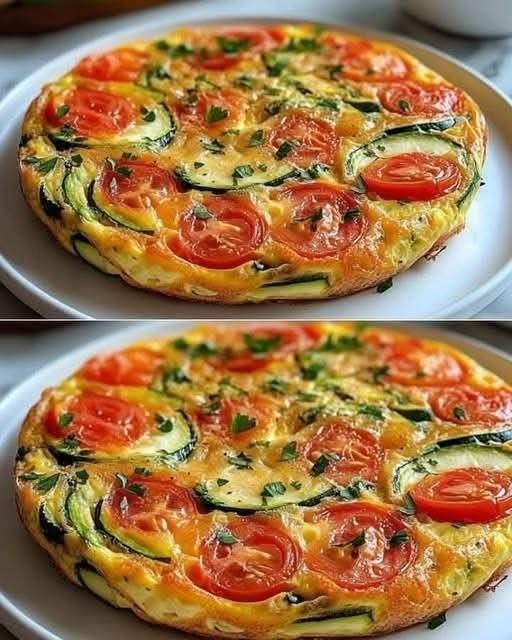

Mediterranean Zucchini and Tomato Frittata
A colorful, savory Mediterranean-style frittata made with tender zucchini, juicy cherry tomatoes, creamy feta, and fluffy eggs. It is simple enough for a weekday breakfast but elegant enough for brunch or a light dinner. The combination of vegetables, eggs, and feta creates a satisfying dish with plenty of flavor, while herbs and olive oil add a classic Mediterranean touch.
Recipe at a Glance
- Prep Time: 15 minutes
- Cook Time: 25–30 minutes
- Total Time: About 40–45 minutes
- Servings: 4–6
- Difficulty: Easy
- Cuisine: Mediterranean
- Best Served: Breakfast, brunch, lunch, or light dinner
Ingredients
Main Ingredients
- 6 large eggs
- ½ cup milk or heavy cream
- 1 medium zucchini, sliced into thin rounds
- 1 cup cherry tomatoes, halved
- ½ cup feta cheese, crumbled
- 2 tablespoons extra-virgin olive oil
- 2 cloves garlic, minced
- ¼ cup finely chopped red onion
- 1 tablespoon fresh parsley, chopped
- 1 tablespoon fresh basil or 1 teaspoon dried basil
- ½ teaspoon dried oregano
- ½ teaspoon salt
- ¼ teaspoon freshly ground black pepper
Optional Ingredients
For additional Mediterranean flavor, you can add:
- ¼ cup sliced Kalamata olives
- ¼ cup chopped roasted red peppers
- 2 tablespoons chopped sun-dried tomatoes
- ¼ teaspoon red pepper flakes
- 2 tablespoons grated Parmesan
- Fresh dill or mint for garnish
Description
This Mediterranean Zucchini and Tomato Frittata is a fluffy baked egg dish packed with fresh vegetables and salty feta cheese.
The zucchini becomes tender and lightly caramelized, while the cherry tomatoes soften and release their juices into the eggs. Feta adds a creamy, tangy, slightly salty flavor that complements the vegetables beautifully.
Unlike an omelet, a frittata is designed to be cooked as one large dish and sliced into wedges or squares. It can be prepared entirely on the stovetop or finished in the oven. For the easiest and most reliable method, this recipe uses an oven-safe skillet and finishes the frittata in the oven.
It is naturally versatile, and you can easily adjust the vegetables, cheese, and herbs according to what you have available.
How to Make Mediterranean Zucchini and Tomato Frittata
Step 1: Preheat the Oven
Preheat your oven to 375°F (190°C).
Lightly grease a 10-inch oven-safe skillet with olive oil.
A cast-iron skillet works especially well, but any oven-safe nonstick or stainless-steel skillet can be used.
Step 2: Prepare the Vegetables
Wash and dry the zucchini and cherry tomatoes.
Slice the zucchini into thin, approximately ⅛-inch rounds.
Cut the cherry tomatoes in half.
Finely chop the red onion and mince the garlic.
Keeping the zucchini slices relatively thin allows them to become tender without requiring a long cooking time.
Step 3: Whisk the Eggs
Crack the 6 eggs into a large mixing bowl.
Add:
- ½ cup milk or cream
- Salt
- Black pepper
- Oregano
- Basil
Whisk until the eggs are completely combined and slightly frothy.
Don’t whip excessively; you simply want an even mixture.
Set aside.
Step 4: Sauté the Onion and Garlic
Heat 2 tablespoons of olive oil in your oven-safe skillet over medium heat.
Add the chopped red onion.
Cook for approximately 2–3 minutes, stirring occasionally, until the onion begins to soften.
Add the minced garlic and cook for another 30–60 seconds.
Be careful not to burn the garlic.
Step 5: Cook the Zucchini
Add the sliced zucchini to the skillet.
Spread the slices into an even layer.
Cook for approximately 4–6 minutes, turning occasionally, until the zucchini begins to soften and develop lightly golden edges.
You don’t need to cook it completely because it will continue cooking in the oven.
Step 6: Add the Tomatoes
Add the halved cherry tomatoes.
Cook for approximately 2 minutes.
The tomatoes should begin to soften but should still hold their shape.
If the vegetables release a lot of liquid, allow some of it to evaporate before adding the eggs.
This is important because excessive moisture can make the finished frittata watery.
Step 7: Add the Egg Mixture
Reduce the heat to low.
Pour the whisked egg mixture evenly over the vegetables.
Gently shake the skillet so the eggs settle around the zucchini and tomatoes.
Do not stir once the egg mixture has been added.
Step 8: Add the Feta
Sprinkle the crumbled feta evenly over the top.
Add olives, roasted peppers, or red pepper flakes at this stage if desired.
The feta will soften as the frittata cooks and develop delicious golden edges.
Step 9: Bake
Transfer the skillet carefully to the preheated oven.
Bake for approximately 12–18 minutes.
The frittata is ready when:
- The center is set.
- The eggs look puffed.
- The edges are lightly golden.
- The center no longer looks liquid.
Avoid overbaking.
Eggs continue cooking from residual heat after they come out of the oven, so removing the frittata when it is just set helps keep it tender.
Step 10: Rest and Garnish
Remove the skillet from the oven and allow the frittata to rest for 5–10 minutes.
Garnish with fresh parsley, basil, dill, or mint.
For extra Mediterranean flavor, drizzle a tiny amount of extra-virgin olive oil over the top before serving.
Slice into wedges and serve warm.
Important Tips for the Best Frittata
1. Don’t use too much liquid
Milk or cream makes the eggs tender, but excessive dairy can prevent the frittata from setting properly.
For 6 eggs, ½ cup is plenty.
2. Cook watery vegetables first
Zucchini and tomatoes contain considerable water.
Sautéing them before adding the eggs allows some of that moisture to evaporate.
This produces a firmer, more flavorful frittata.
3. Don’t overcook the eggs
Overcooked eggs become rubbery and dry.
Remove the frittata from the oven as soon as the center is set.
4. Season carefully
Feta is naturally salty, so start with ½ teaspoon salt.
Taste and adjust next time if necessary.
5. Use fresh herbs when possible
Fresh parsley, basil, dill, and mint can dramatically improve the flavor.
Add delicate fresh herbs near the end rather than cooking them for a long time.
6. Let it rest
Resting for 5–10 minutes allows the eggs to finish setting and makes the frittata easier to slice.
7. Don’t overcrowd the pan
Too many vegetables can release excessive moisture and prevent the eggs from setting properly.
If you double the recipe, use a larger baking dish rather than cramming everything into a small skillet.
Serving Suggestions
This frittata is delicious on its own, but it pairs particularly well with Mediterranean-style sides.
Serve it with:
- Greek salad
- Cucumber and tomato salad
- Fresh fruit
- Whole-grain toast
- Roasted potatoes
- Hummus
- Warm pita bread
- Avocado
- Fresh greens
- Tzatziki
For brunch, serve a slice alongside a simple green salad and fresh fruit.
For dinner, pair it with roasted vegetables and a small portion of whole-grain bread.
Easy Variations
Spinach & Feta Frittata
Add 1 cup fresh spinach after cooking the zucchini. Sauté until wilted, then add the eggs.
Mediterranean Olive Frittata
Add ¼ cup sliced Kalamata olives for a stronger salty, savory flavor.
Roasted Pepper Frittata
Add ¼ cup chopped roasted red peppers.
Mushroom & Zucchini Frittata
Add 1 cup sliced mushrooms and cook them thoroughly before adding the eggs.
Spicy Frittata
Add ¼ teaspoon red pepper flakes or a finely chopped chili.
Herb Frittata
Use a combination of fresh parsley, dill, basil, and mint for an especially fresh flavor.
Approximate Nutritional Information
Nutrition will vary depending on whether you use milk or heavy cream and how much feta and olive oil are used.
Estimated per serving, assuming 6 servings and milk:
- Calories: 190–220 kcal
- Protein: 12–14 g
- Carbohydrates: 5–7 g
- Fat: 13–15 g
- Fiber: 1–2 g
- Sugar: 3–4 g
- Calcium: approximately 150–200 mg
- Sodium: approximately 350–450 mg
These are estimates and can vary substantially by brand and ingredient quantities.
Using heavy cream instead of milk will increase calories and fat.
Potential Benefits
Eggs
Eggs provide high-quality protein and several essential nutrients, including vitamin B12 and choline. Protein can also contribute to satiety.
Zucchini
Zucchini is naturally low in calories and provides fiber, potassium, vitamin C, and other micronutrients.
Tomatoes
Cherry tomatoes contribute vitamin C, potassium, and carotenoid compounds such as lycopene.
Feta
Feta contributes protein and calcium, although it can also be relatively high in sodium.
Olive Oil
Extra-virgin olive oil provides predominantly monounsaturated fat and is a traditional component of Mediterranean-style eating patterns.
Important: These benefits are based on the nutritional properties of the ingredients; this frittata is not intended to prevent or treat any medical condition.
Frequently Asked Questions
Q1. Can I make this frittata without an oven?
Yes. Cook the vegetables in a covered nonstick skillet, add the eggs and feta, reduce the heat to very low, cover, and cook until the center is set.
The oven method generally produces more even cooking.
Q2. Can I use regular cheese instead of feta?
Absolutely. Try mozzarella, cheddar, goat cheese, Parmesan, or a Mediterranean cheese blend.
Feta gives the recipe its characteristic salty, tangy flavor.
Q3. Can I use frozen zucchini?
Fresh zucchini is preferable. Frozen zucchini contains more water, so thaw it completely and squeeze out excess moisture before cooking.
Q4. Can I prepare it ahead of time?
Yes. Cook the frittata, allow it to cool, cover, and refrigerate.
It can be reheated gently in the oven or microwave.
Q5. How long does it last in the refrigerator?
Store it in an airtight container and use within approximately 3–4 days.
Q6. Can I freeze frittata?
Yes. Cut it into individual portions, wrap well, and freeze.
Thaw in the refrigerator and reheat gently. The texture may be slightly different after freezing because of the vegetables’ water content.
Q7. Why is my frittata watery?
The most likely cause is excess moisture from zucchini or tomatoes.
Sauté the vegetables first and allow excess liquid to evaporate before adding the eggs.
Q8. Why is my frittata rubbery?
It was probably cooked too long or at too high a temperature.
Remove it from the oven as soon as the center is just set.
Q9. Can I make it dairy-free?
Yes. Replace the milk with an unsweetened plant-based milk and omit the feta or use a suitable dairy-free cheese alternative.
Q10. Can I make this recipe vegetarian?
It already is vegetarian as written.
Q11. Can I add meat?
If desired, cooked chicken, turkey, ham, or sausage can be added. Make sure any meat is fully cooked before incorporating it into the frittata.
Q12. Can I make individual frittatas?
Yes. Divide the mixture among greased muffin cups and bake until the egg mixture is set, usually around 15–20 minutes, depending on the size of the cups.
Recipe Notes
For a richer frittata: Use heavy cream instead of milk.
For a lighter version: Use low-fat milk and reduce the feta slightly.
For more vegetables: Add spinach, bell peppers, mushrooms, or roasted peppers, but avoid adding too many watery vegetables.